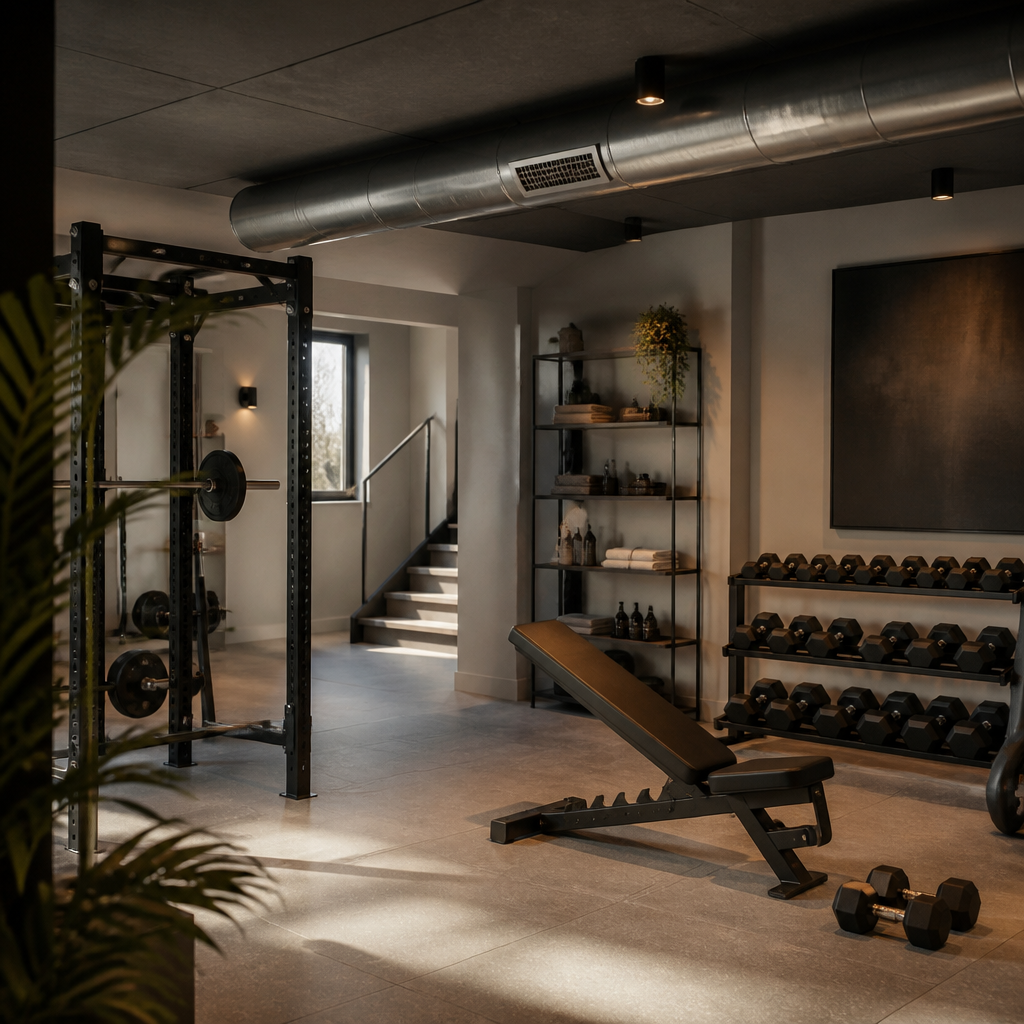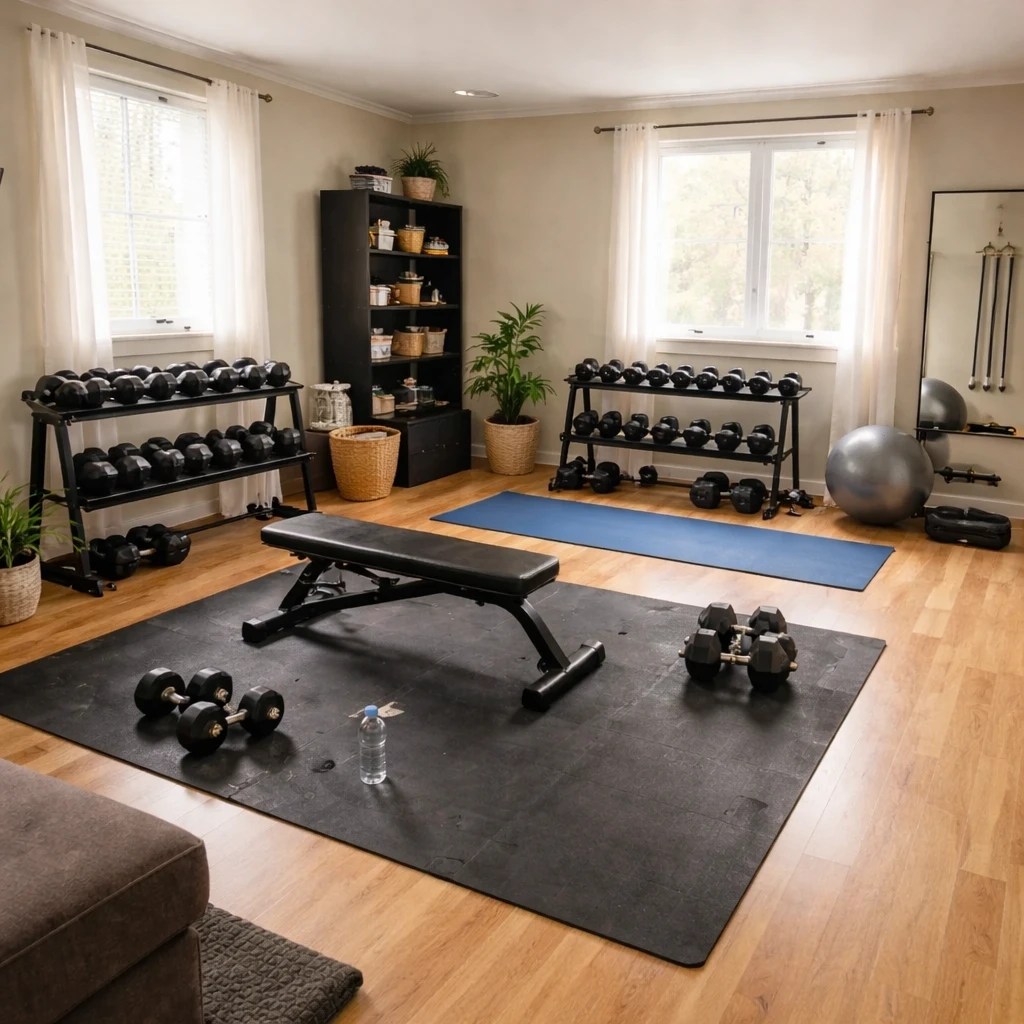
Home gyms fail when they are inconvenient or uncomfortable. Equipment that requires awkward setup or workouts in cramped spaces quickly become expensive coat racks. Success requires honest assessment of what you will actually use and designing the space to make working out easier than not working out. Location matters: a gym you walk past every day gets used more reliably than one tucked into a remote corner of the basement.
Clearance is the first design rule. Leave roughly 24 inches minimum around most equipment, more where loading, spotting, or dynamic movement happens, and at least 36 inches between stations if more than one zone is active. Divide the room into three working zones: strength, cardio, and floor work or mobility. These can overlap in small rooms, but they should still be mentally clear. A rack or bench area needs stable flooring and enough overhead height for safe lifting. Ceiling height is not a technical footnote: 8 feet may handle basic standing lifts, but 9 feet is far more comfortable for overhead work.
Flooring and environmental control determine whether the gym gets used consistently. Rubber flooring at about 3/8 inch thick is a common minimum for general strength use, while 1/2 inch or more makes more sense for heavier free weights. Carpet traps sweat and resists stable footing. If the gym shares walls with living space, acoustic isolation becomes a real priority. Basements and garages often need dehumidification and active ventilation. Mirrors should be placed for form checking, not vanity, and lighting should be bright enough to support safe movement without glare. The best home gym is not the one with the most equipment. It is the one that removes excuses.
What matters most
A home gym should be planned around movement patterns, not equipment wish lists. The most common mistake is filling the room with machines and then discovering there is nowhere safe to actually use them. Clearance is the first design rule: roughly 24 inches minimum around most equipment, more where loading, spotting, or dynamic movement happens, and at least 36 inches between stations if more than one zone is active. The room is not successful because a rack fits. It is successful because the rack, the user, the plates, and the exit path can all coexist without drama.
Good home gyms usually divide into three working zones: strength, cardio, and floor work or mobility. These can overlap in small rooms, but they should still be mentally clear. A rack or bench area needs stable flooring and overhead confidence, while a bike or treadmill zone needs airflow and sightline comfort, and a mobility zone needs unobstructed floor area that is not constantly being cleared of dumbbells. Ceiling height is not a technical footnote here. Around 8 feet may handle basic lifting, but 9 feet is far more comfortable for overhead movement, and anything involving jumping or suspension work benefits from even more.
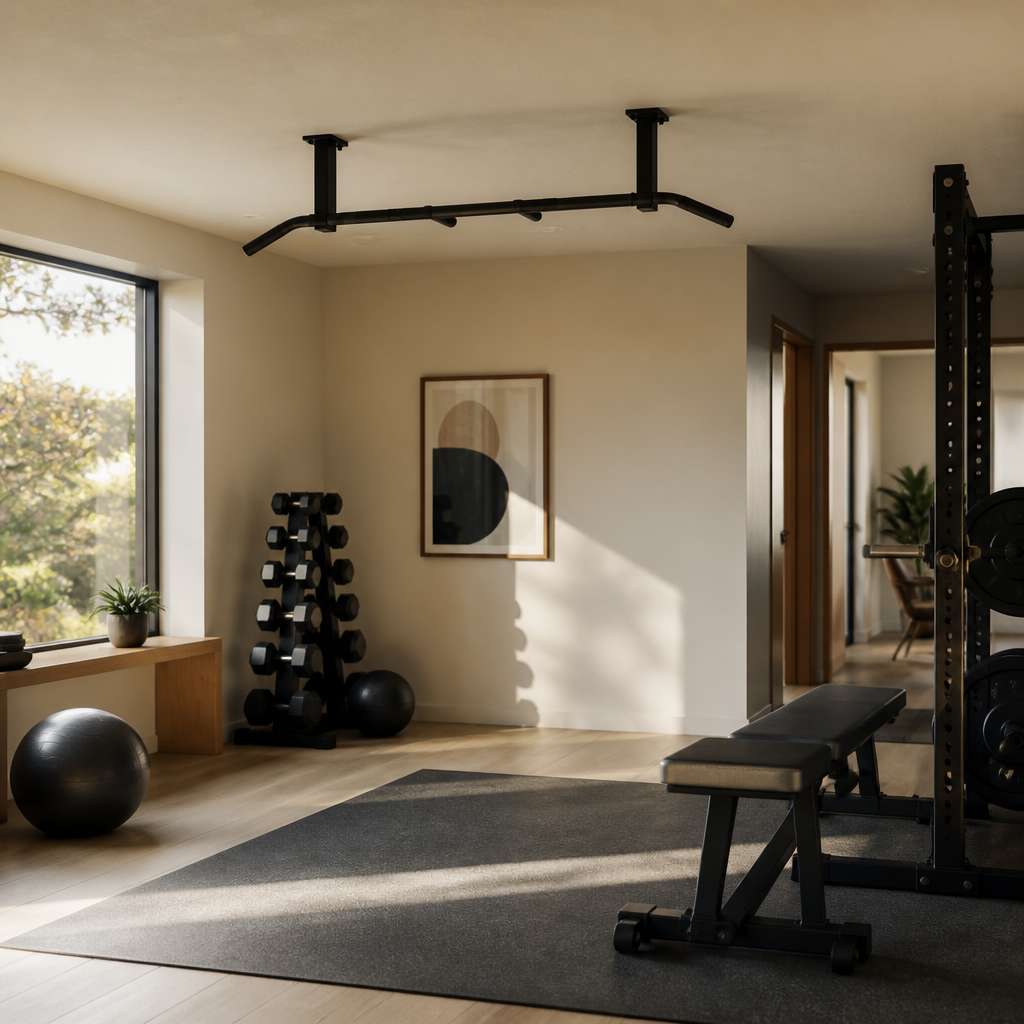
Flooring and acoustics are what make a home gym feel serious rather than improvised. Rubber flooring at about 3/8 inch thick is a common minimum for general strength use, while 1/2 inch or more makes more sense for heavier free weights or dropped loads. Carpet is usually a bad compromise because it traps sweat and resists stable footing; bare concrete is punishing on joints and loud under impact. If the gym shares walls or floors with living space, underlayment, isolation pads, and selective acoustic absorption are worth real money because noise transfer is often what determines whether the gym remains usable at actual household hours.
How to approach it
Measure the room and map immovable constraints
Record floor dimensions, ceiling height (you need at least 8 feet for overhead presses and jump rope), door widths for equipment delivery, and power outlet locations. A lat pulldown that cannot fit through the door is an expensive decoration for the garage.
Choose rubber or foam flooring appropriate to the activity
3/8-inch rubber tiles for weight areas (they protect the subfloor and resist indentation from dropped loads), foam tiles for yoga and stretching zones, and modular vinyl for mixed-use areas. Bare concrete destroys equipment, joints, and dropped weights alike.
Plan equipment placement with 24-inch minimum clearances
Allow at least 2 feet of clearance on every side of each piece of equipment for safe entry, exit, and movement. Verify that doors can still open and that no exercise motion blocks a path to the room exit. Emergency access is not optional.
Zone the room by workout type, not by equipment brand
Cardio zone with proper impact surface and ventilation. Free weight zone with rubber flooring and mirror. Stretching and mobility zone with foam surface and wall space. Mobility work should not happen under a squat rack.
Install mirrors for form checking, not aesthetics
Full-length mirrors on at least one wall, positioned so you can see your squat depth, deadlift starting position, and overhead press lockout. Wall-mounted mirrors eliminate the frame and take zero floor space compared to leaning floor mirrors.
Add ventilation, lighting, and sound for sustained use
A ceiling fan or wall-mounted fan for air circulation, bright task lighting at 4000K-5000K for safety during lifting, and an accessible speaker or headphone holder. Gyms that are hot, dim, and silent get used for two weeks and abandoned.
What to pressure-test
Environmental control matters more than aesthetics in fitness spaces. Air quality, humidity, and temperature all affect whether the room gets used consistently. Basements and garages often need dehumidification and active ventilation; fitness planning guidance commonly targets around 6 air changes per hour to keep the room from feeling stale or damp. Mirrors should be placed for form checking, not vanity, and lights should be bright enough to support safe movement without glare. This is one room where slightly cooler, cleaner light often works better than residential mood lighting because the task is physical accuracy, not relaxation.
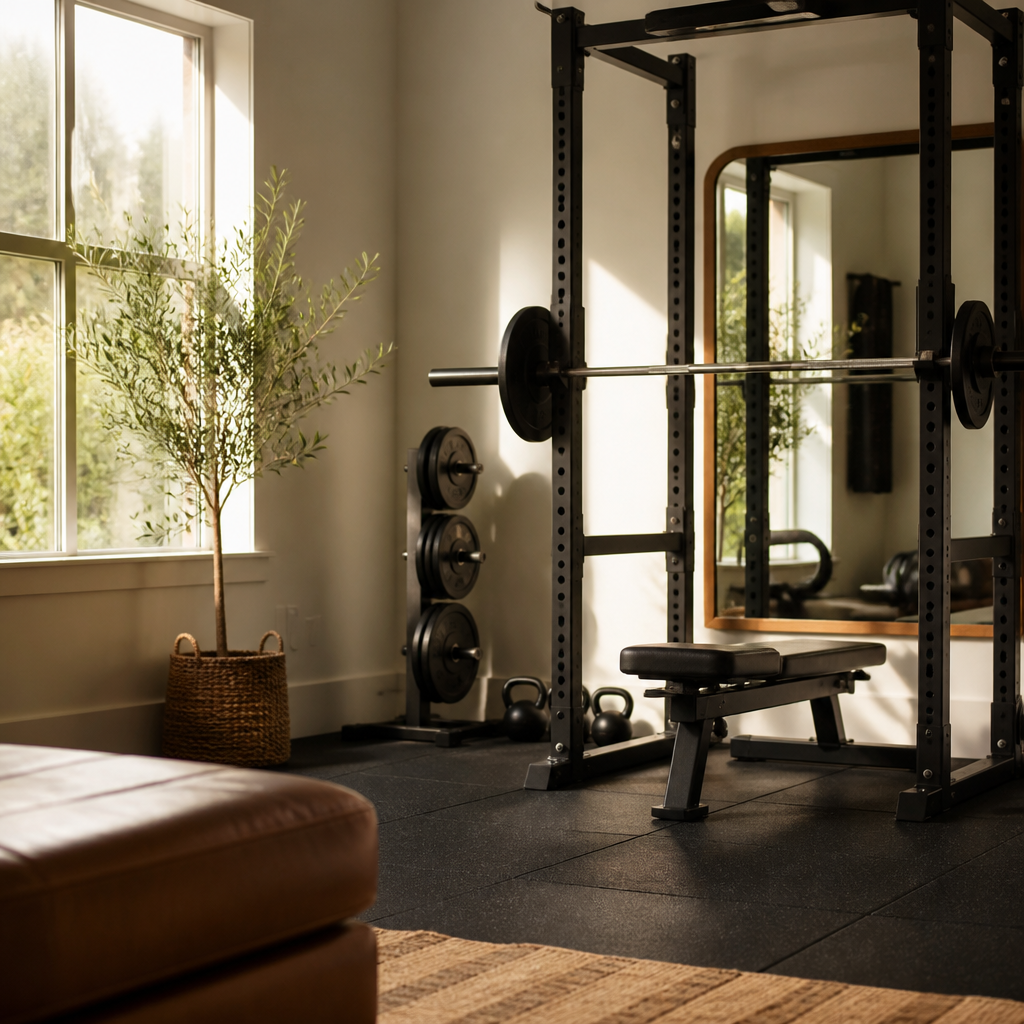
The best home gyms are not the ones with the most equipment. They are the ones that remove excuses. The room should let you enter, move, lift, stretch, wipe down, and leave without rearranging half the space first. That efficiency is what keeps the gym in rotation after the novelty fades. Design it for the workout you actually do three times a week, not the fantasy routine you imagine doing once you own more machines.