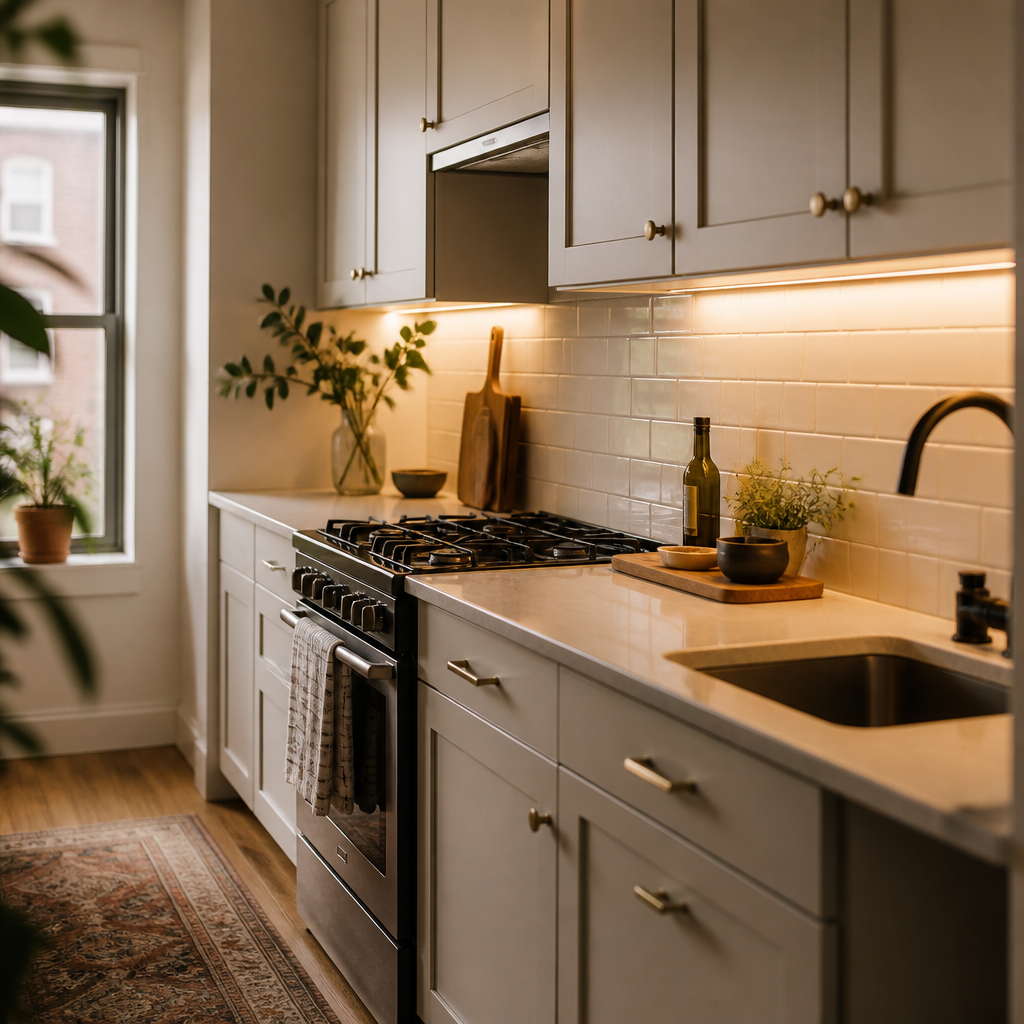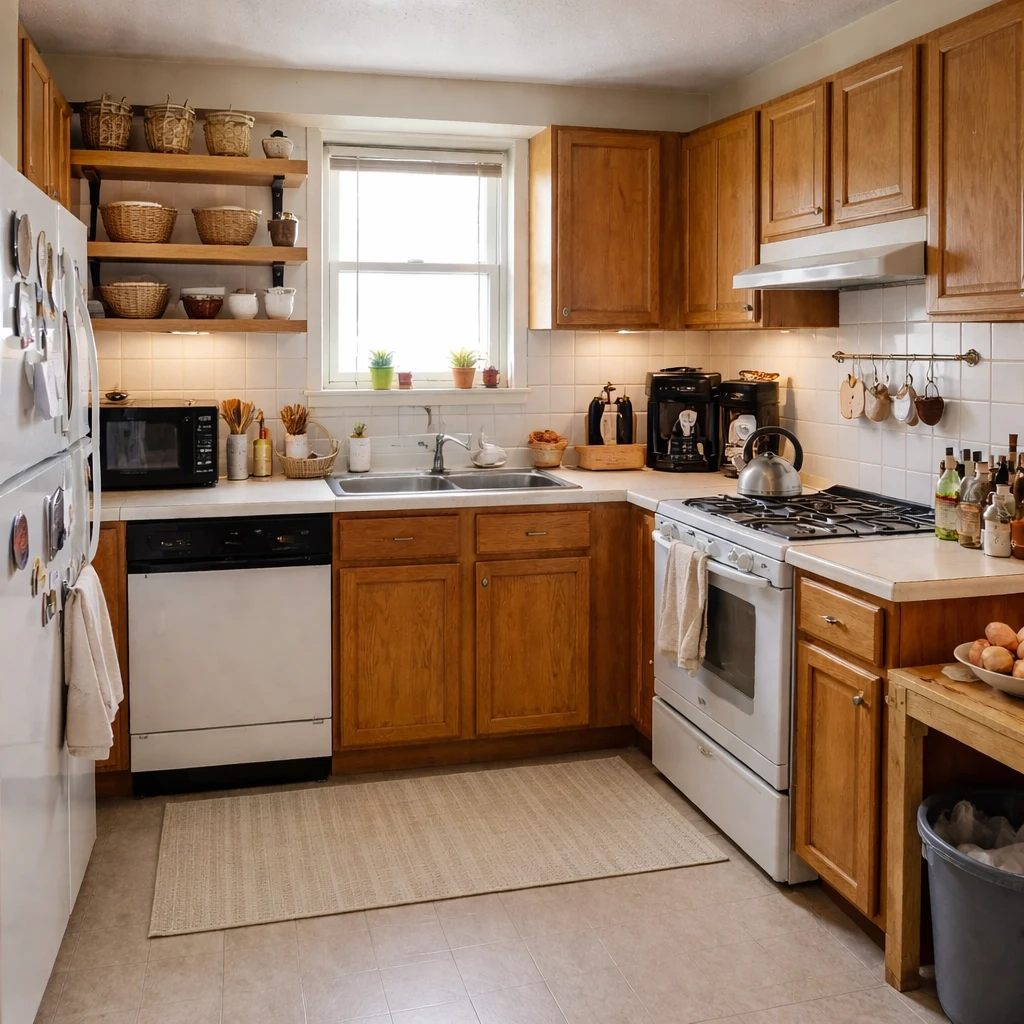
Rental kitchen upgrades need to balance improvement with reversibility. The right changes make the room easier to cook in and calmer to look at without risking your deposit or requiring landlord permission for permanent alterations. Three tests should guide every decision: does it improve function, does it improve appearance, and can it be removed cleanly? That filter eliminates most fantasy kitchen projects quickly.
Lighting is usually the highest-return first move. Many rental kitchens are lit by a single overhead fixture that flattens counters and leaves corners dim by late afternoon. Under-cabinet LED strips in the 2,700K to 3,000K range, ideally with CRI above 90, usually cost under fifty dollars and make prep surfaces visibly more usable. Plug-in versions work with standard outlets and require no hardwiring. Better light also makes standard laminate counters and basic cabinets look more deliberate than they did under a cold fixture.
Hardware and surface updates come next because they modernize the room without structural interference. Swapping dated pulls and knobs is inexpensive but requires matching hole spacing. Peel-and-stick backsplash tiles can help dramatically if the product is rated for kitchen heat and moisture, but they should never be placed where direct stove heat will degrade the adhesive. The rule is simple: if the improvement cannot tolerate splatter, steam, and cleaning, it is the wrong improvement for a kitchen.
Storage should be solved with movable pieces that respect the room's clearances. Rolling carts, shelf risers, over-sink boards, magnetic knife strips, and tension-rod under-sink organizers can all add function, but the kitchen should still keep at least 36 inches of clearance where people actually move. A cart that steals the aisle is not storage; it is a future bruise. The most valuable rental-kitchen mindset is portability: buy pieces that solve this kitchen well and are likely to solve the next one too.
What smaller rooms need most
Rental kitchen upgrades should be judged by three tests at once: do they improve function, do they improve appearance, and can they be removed without a deposit argument? That filter eliminates most fantasy projects quickly. The best-performing changes are usually small and reversible: better hardware, stronger task lighting, freestanding prep surfaces, and visual editing that makes a tired kitchen read cleaner. A rental kitchen does not need to impersonate a custom remodel. It needs to become easier to cook in and calmer to look at.
Lighting is usually the highest-return first move. Many rental kitchens are lit by one overhead fixture that flattens counters and turns corners dingy by late afternoon. Under-cabinet LED strips in the 2,700K to 3,000K range, ideally with CRI above 90, usually cost less than a modest dinner out and make prep surfaces visibly more usable. Even a plug-in lamp in a safe corner can soften the room more effectively than another decorative object ever will. Better light also makes laminate, standard cabinets, and basic paint look more deliberate than they did under a cold or inadequate fixture.
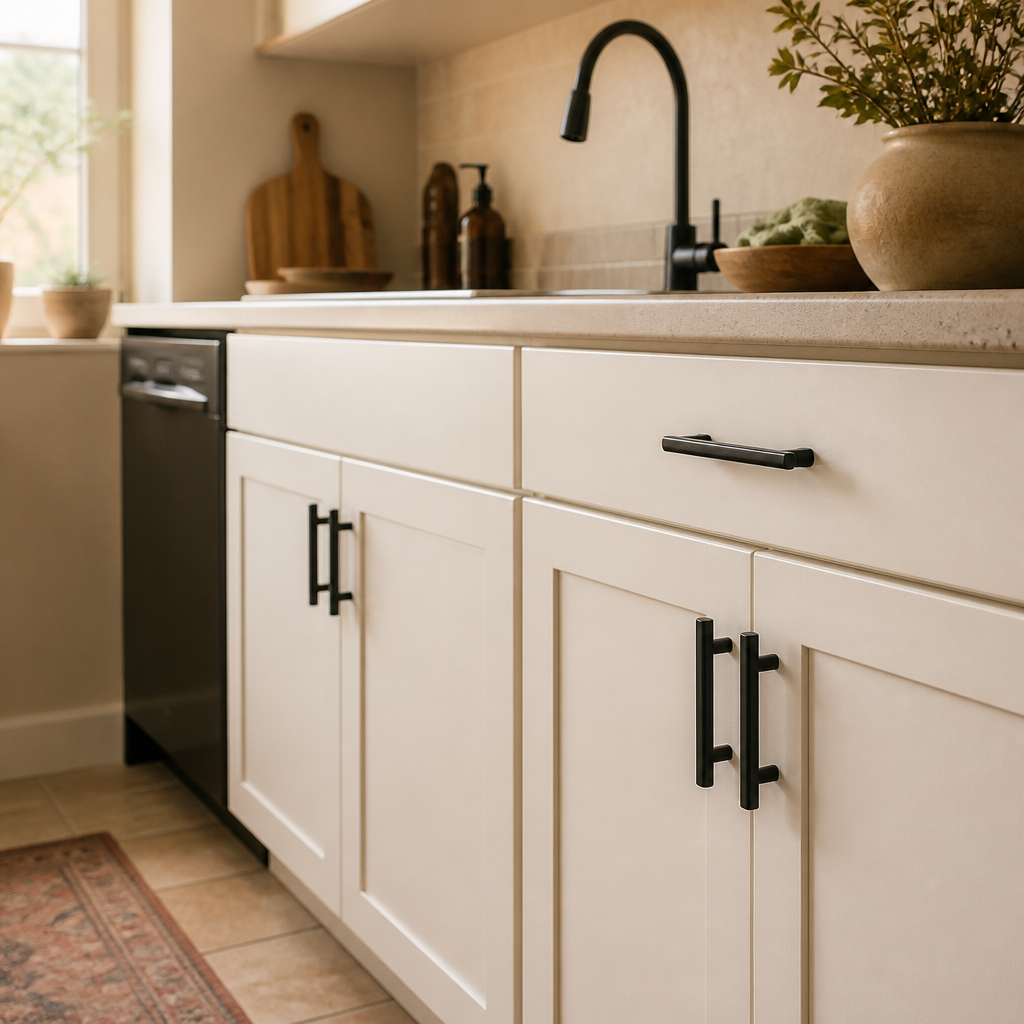
Hardware and surface correction come next because they modernize the room without structural interference. Swapping dated pulls and knobs is inexpensive, but hole spacing must match unless you plan to restore everything perfectly later. Peel-and-stick backsplash can help if the product is rated for kitchen heat and moisture, but it should never be placed where direct stove heat will degrade adhesive or create a gummy failure. In general, surfaces that get hot, wet, or greasy need more caution than online before-and-after culture admits. The rule is simple: if the improvement cannot tolerate splatter, steam, and cleaning, it is the wrong improvement for a kitchen.
How to make the space work better
Document lease restrictions
Check your lease for rules about painting, hardware changes, and fixture modifications. Know what is reversible and what requires permission before starting.
Deep clean and declutter
Remove everything from countertops and cabinets. Clean thoroughly. This costs nothing and transforms the room more than any purchase. You cannot evaluate a dirty kitchen accurately.
Upgrade cabinet hardware
Replace drawer pulls and cabinet knobs with modern alternatives. This takes 30 minutes, costs under $50, and updates the entire kitchen aesthetic instantly.
Improve lighting
Add under-cabinet LED strips and replace harsh overhead fixtures with warm pendant lights. Lighting transforms how cabinet colors read and how the room feels at night.
Optimize storage
Use freestanding shelving, magnetic knife strips, and drawer organizers. Maximize vertical space without drilling. Good storage eliminates countertop clutter.
Add removable backsplash or accents
Apply peel-and-stick backsplash tiles or removable wallpaper to a single accent wall. These changes add personality and remove cleanly at move-out.
What usually makes compact rooms feel worse
Storage should be solved with movable pieces and honest clearances. Rolling carts, shelf risers, over-sink boards, magnetic racks, and tension-rod under-sink organization can all add function, but the kitchen should still keep at least about 36 inches of passage where people actually move. A cart that steals the aisle is not storage; it is a future bruise. Vertical additions should stay within practical reach, usually under 72 inches for daily-use items, and should be easy to wipe down. In a rental kitchen, a smart movable solution almost always beats a clever permanent hack.
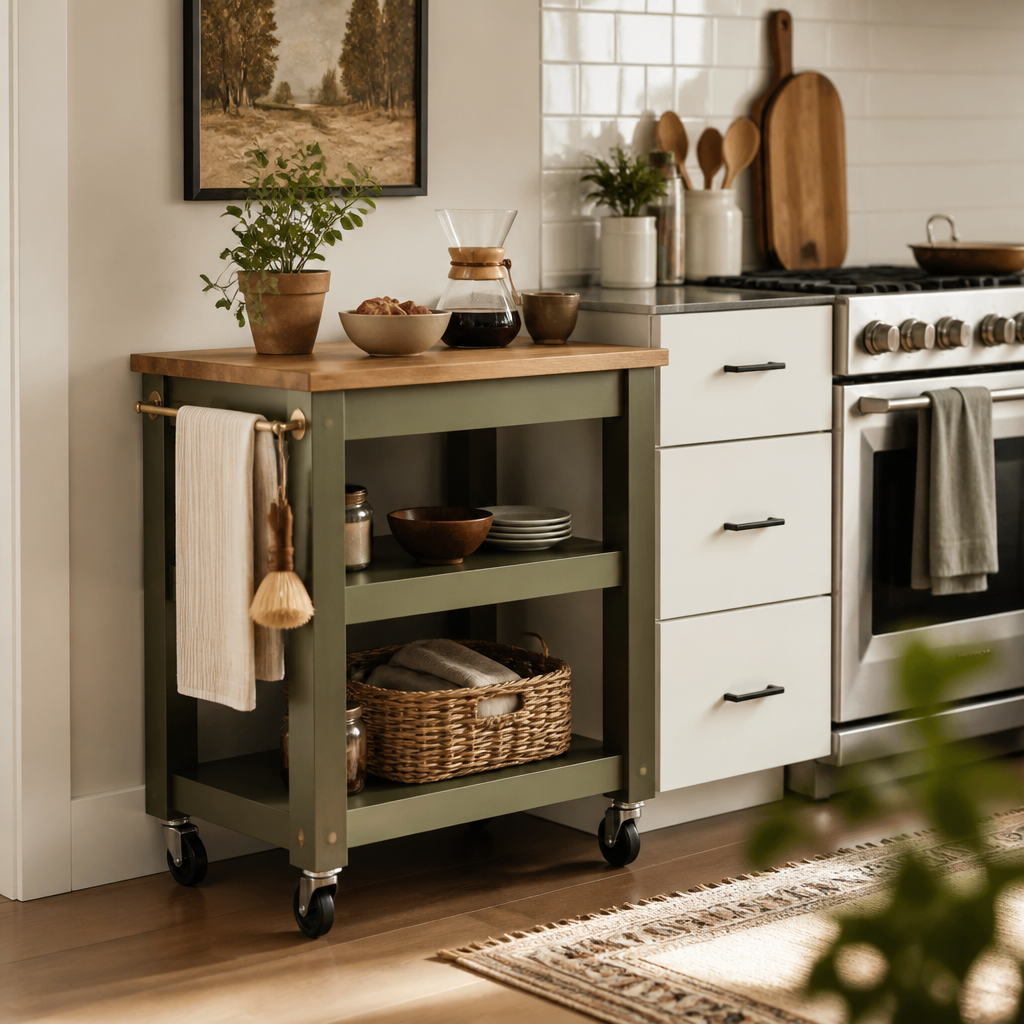
The most valuable rental-kitchen mindset is portability. If a light, cart, liner, or organizer solves this kitchen well, it should ideally solve the next one too. That shifts spending away from unit-specific tricks and toward a reusable kit of better hardware, warmer light, improved storage, and a few strong textiles. The best rental kitchen plan leaves the landlord's property intact, lowers everyday friction, and gives the renter something worth carrying forward instead of something they regret peeling off the wall at move-out.