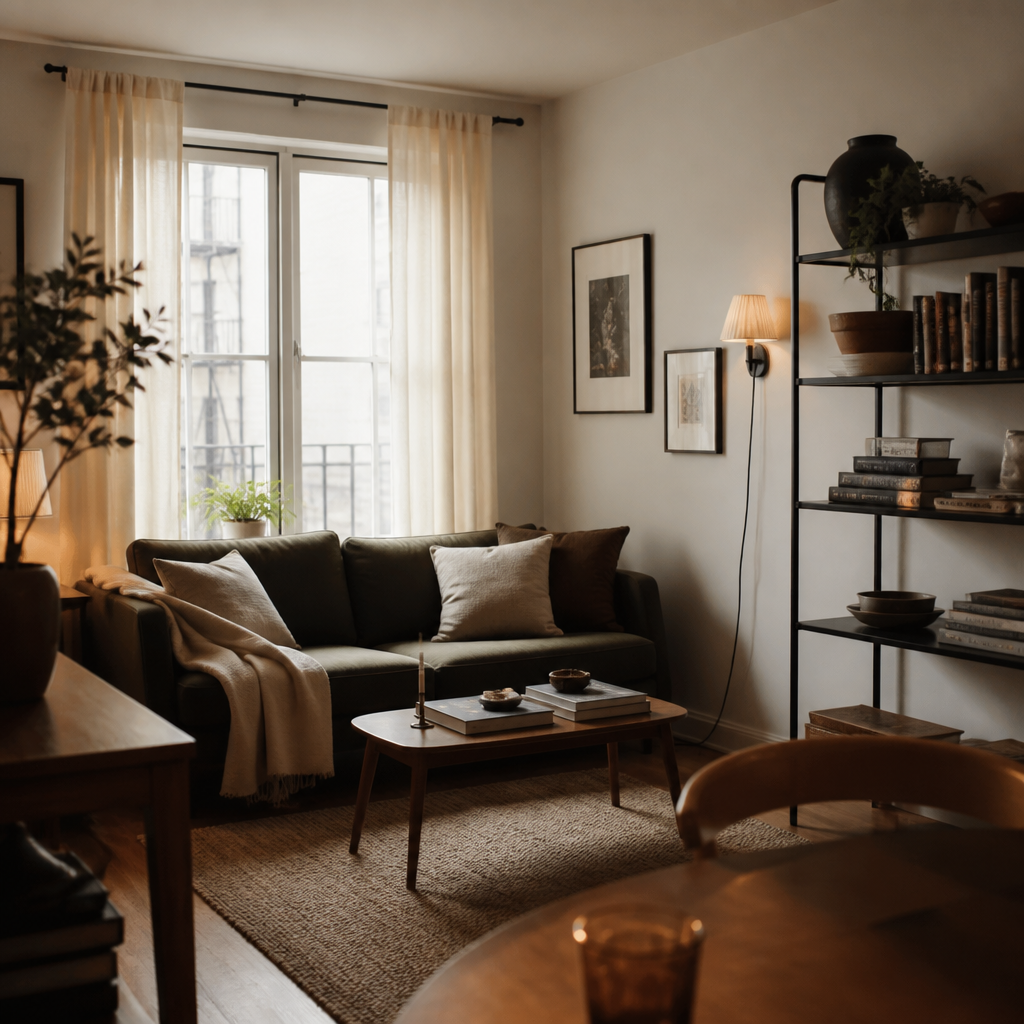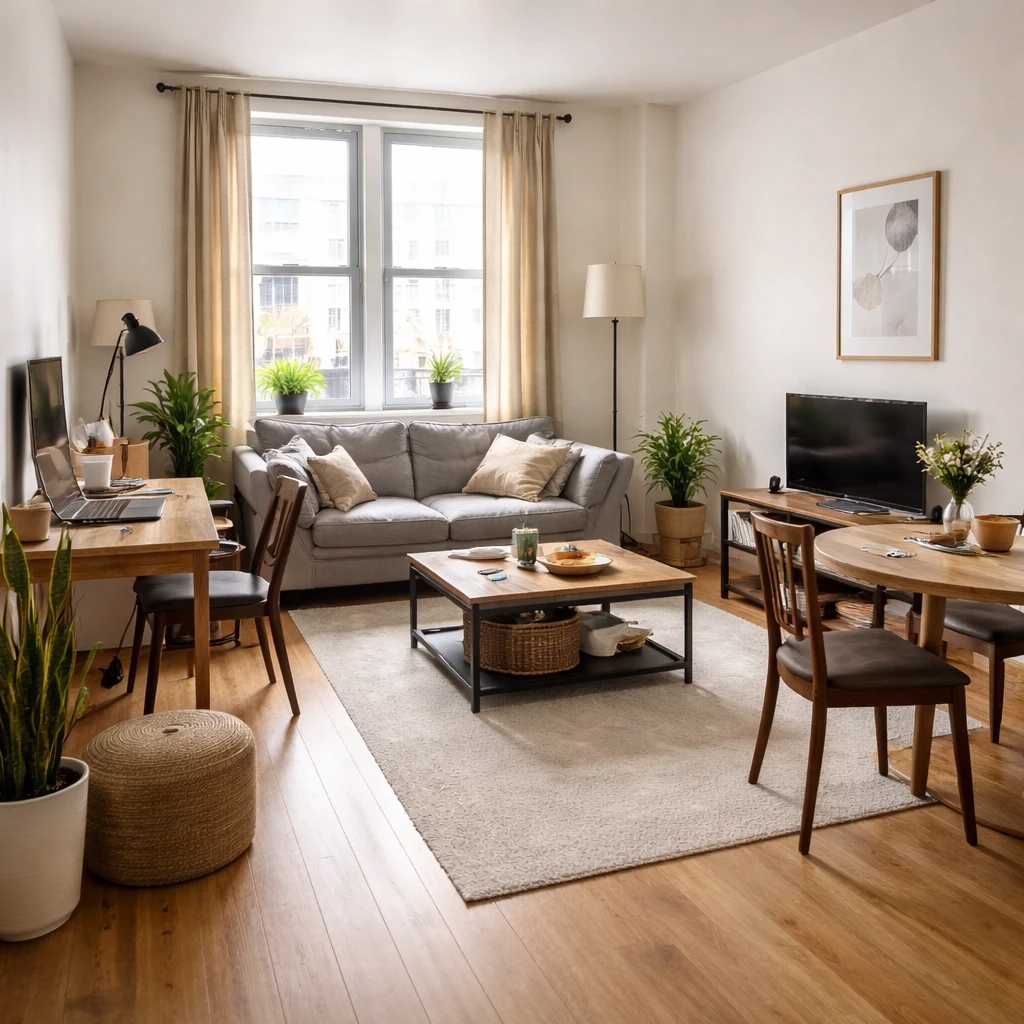
Furnishing a new apartment fast is really a sequencing problem. The challenge is deciding what needs to work immediately, what can wait, and which purchases will quietly control every later decision about scale and layout. Most rushed apartment setups fail not because the budget was too small but because the sequence was wrong.
The first wave should solve sleeping, sitting, lighting, and basic eating or working. A mattress or bed, the main seating, enough lamps to use the apartment at night, and one practical surface usually do more than a dozen accessory purchases. These categories make the apartment usable immediately and establish the room's scale before decorative impulses take over. Temporary storage such as bins, carts, and under-bed systems can hold the apartment together while you learn what more permanent storage the space actually wants.
Phase spending across the first month rather than buying everything in one weekend. Live with the first setup long enough to notice what the apartment still lacks: more task light, a better entry drop zone, another chair, or a dining surface. Early restraint prevents the classic first-apartment mistake of buying the wrong-sized anchor pieces too soon. A fast apartment setup should feel progressively more coherent, not instantly finished. Speed is useful only when it protects function instead of replacing planning.
What smaller rooms need most
Fast apartment furnishing is really a sequencing problem. The challenge is deciding what the apartment needs immediately, what can wait, and which purchases will quietly control every later decision about scale and layout.
This guide focuses on those first waves of buying: anchors, lighting, temporary storage, and the logic of setting up the most used zones before spending on full-room completion. That is what keeps speed from turning into costly overbuying.
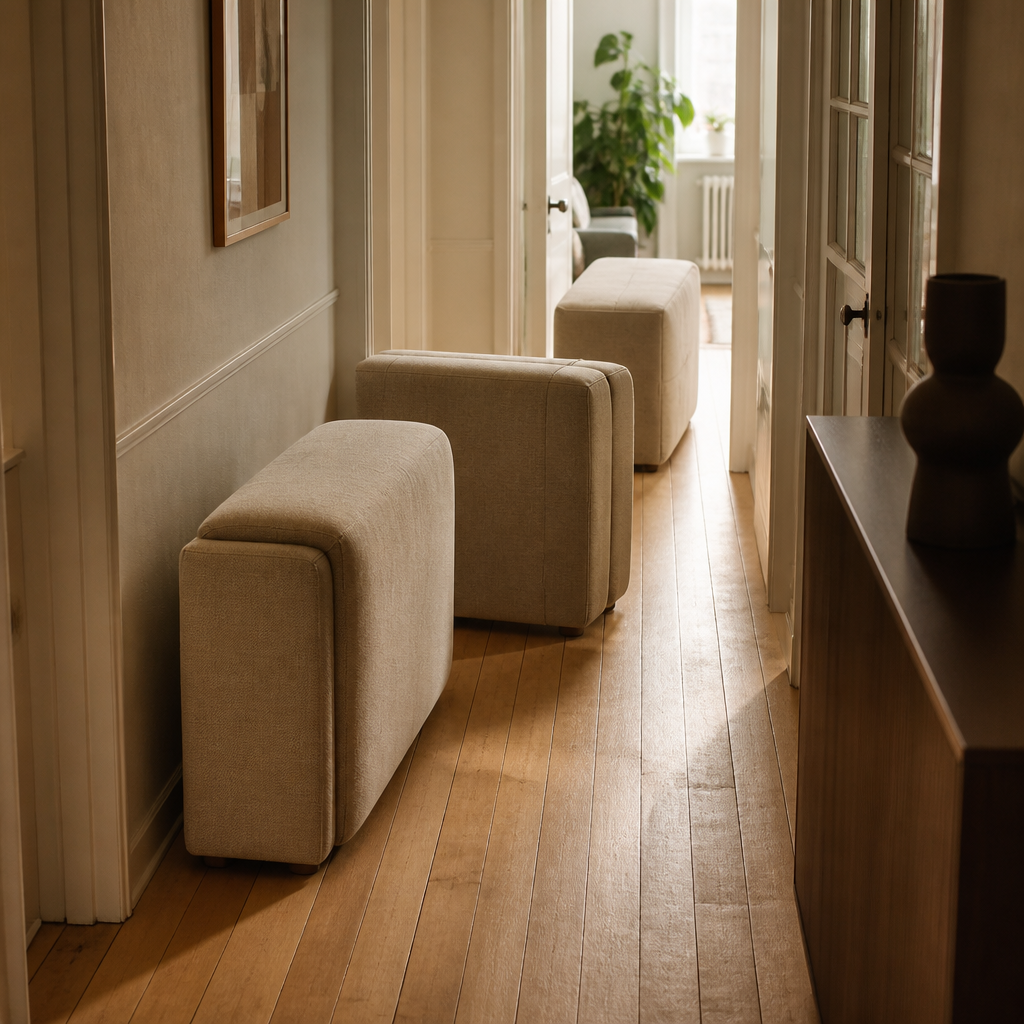
The point is not to leave the apartment unfinished forever. It is to let the room's real needs emerge before decorative enthusiasm spends the budget in the wrong order. Most new apartments improve faster when function comes into focus first.
How to make the space work better
Measure first and rank the essential functions
Know what must work immediately: sleeping, sitting, lighting, eating, and basic storage. That keeps the first purchases disciplined.
Buy the biggest anchor pieces in week one
Start with the bed or mattress, the main seating, and the table or desk that defines the room's primary use.
Add enough lighting to make the apartment usable at night
Portable lamps often improve comfort and atmosphere faster than decorative accessories or extra small furniture do.
Use temporary storage to stabilize the move-in mess
Bins, under-bed systems, carts, and shelves can solve disorder quickly while you learn what more permanent storage the apartment really needs.
Delay decorative buying until the layout settles
Live with the anchors long enough to spot what is still missing before rugs, art, and smaller pieces start steering the budget.
Refine room by room instead of all at once
A fast apartment setup still works best when the most used zones are solved first and secondary areas follow once the core layout is proven.
What usually makes compact rooms feel worse
A good fast-furnishing plan produces an apartment that works almost immediately and still leaves enough flexibility to get smarter over the next few weeks.