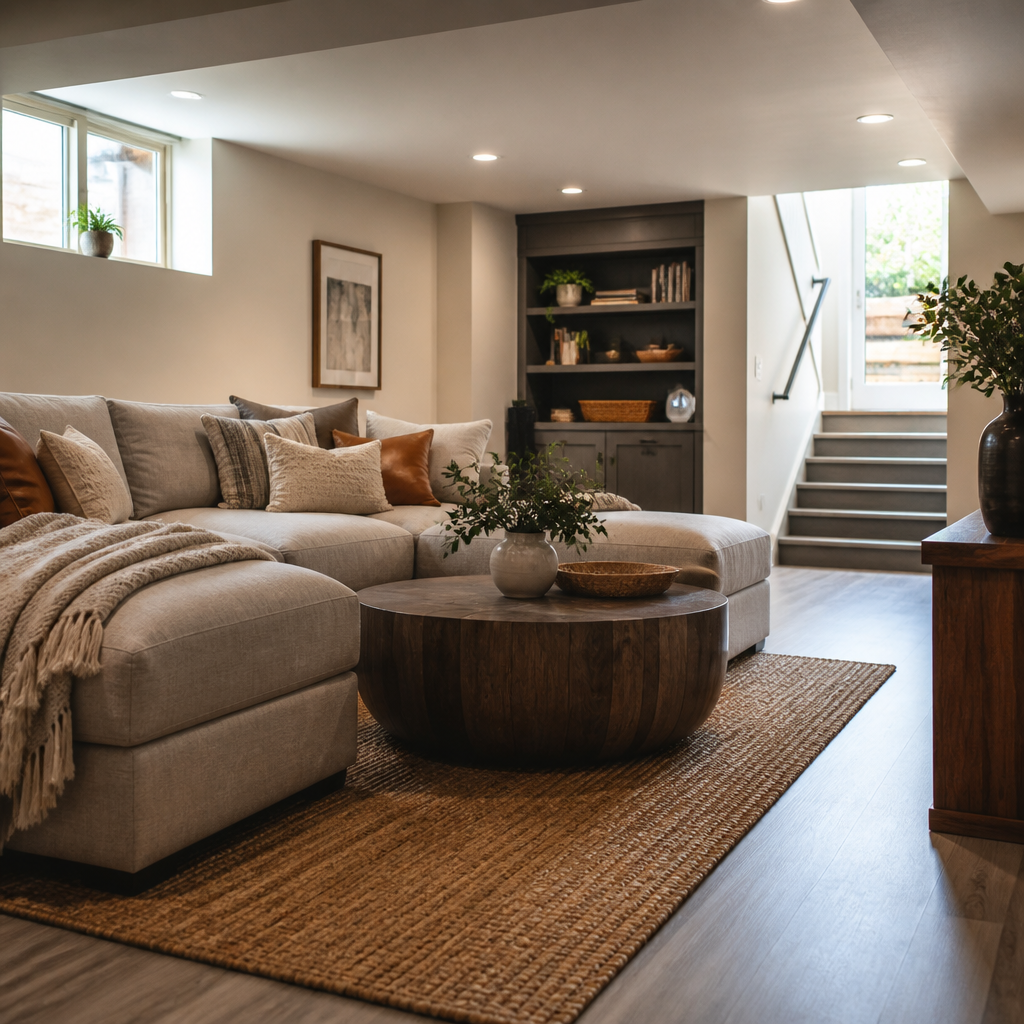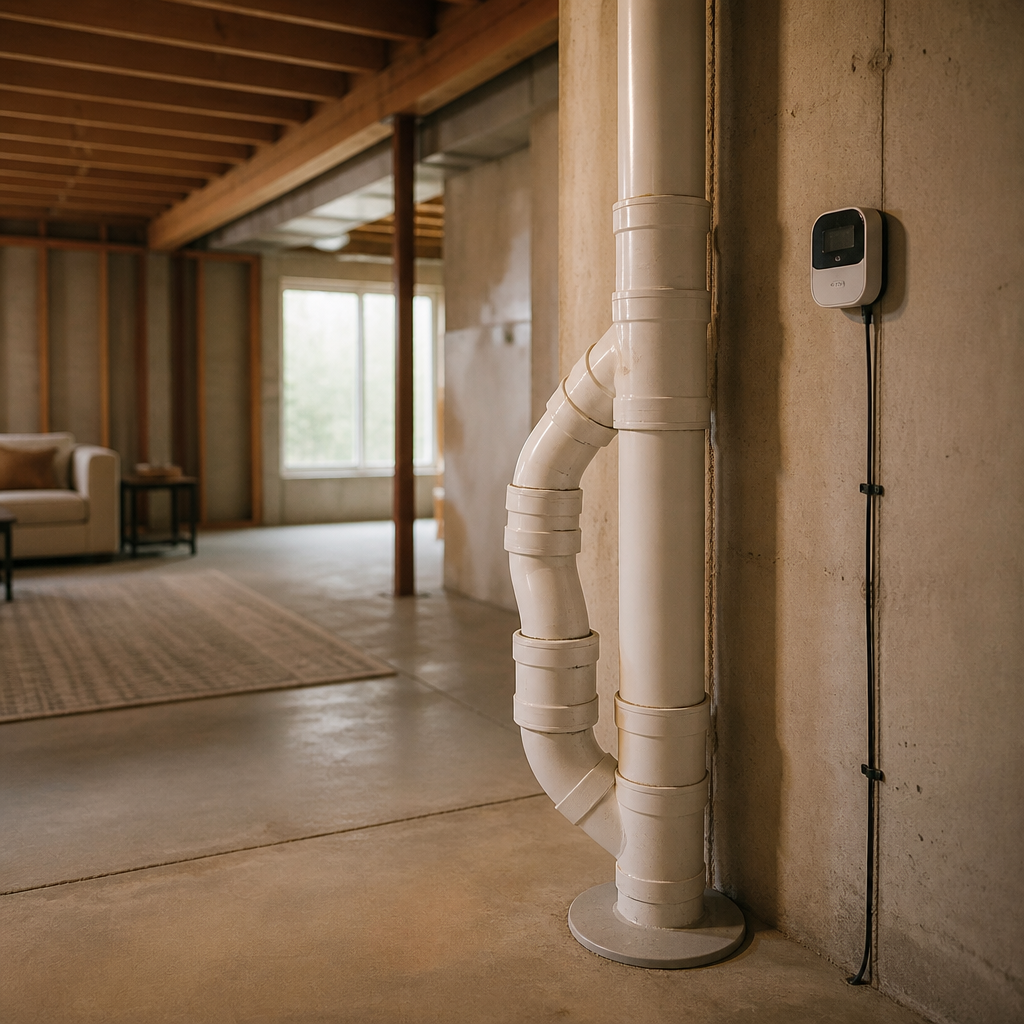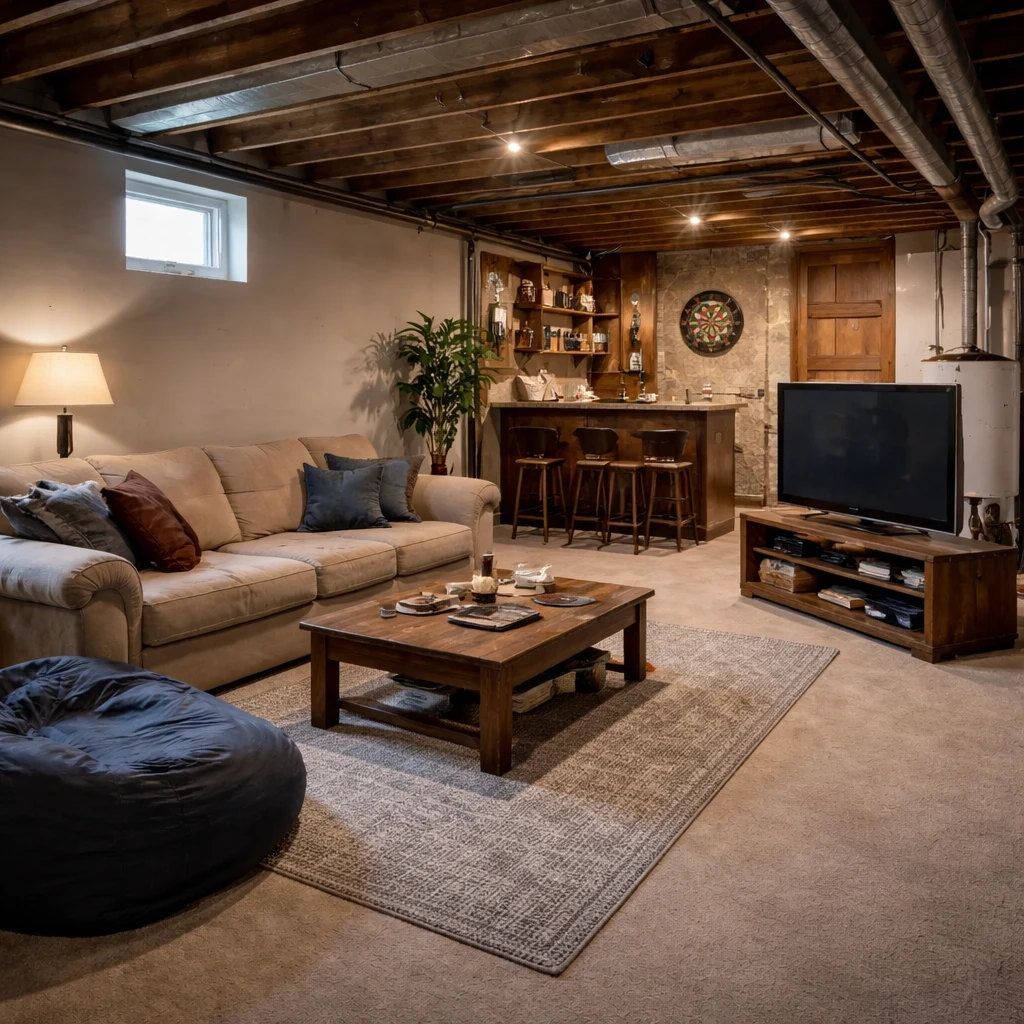
Basements offer valuable extra square footage but come with unique challenges: often limited natural light, potential moisture issues, and ceiling height constraints. Before finishing a basement, address any moisture problems first—water infiltration will destroy finished spaces. A dehumidifier is often necessary even in finished basements to prevent mold and maintain comfort.
Lighting is the most transformative element in basements. Since windows are limited, layered artificial lighting (ambient, task, and accent) becomes essential. Light colors on walls and ceilings help reflect available light and combat the cave-like feel many basements have. Mirrors strategically placed also help bounce light around the space.
Basements work well for flexible-use spaces: home theaters, game rooms, home gyms, guest bedrooms, or home offices. Since these uses often conflict, defining zones with different flooring (carpet for living areas, rubber flooring for gym zones) or partial walls helps delineate spaces without full construction. Always check local building codes before finishing.
Start with the room itself
Basements have a specific set of design constraints that make them different from above-grade rooms. Ceiling heights below 7 feet create psychological compression. Limited natural light disrupts circadian rhythm. Concrete floors are cold, hard, and unforgiving. Moisture is a constant concern. Below-grade rooms require a different material and lighting strategy than main-floor rooms: flush-mount or recessed fixtures rather than pendants, layered artificial lighting that creates depth rather than simply brightness, and thermal and acoustic moderation through rugs, cork underlayments, or rubber flooring depending on the room's use.
Basements usually work best when their function is chosen honestly. Media rooms benefit from low-back seating, dimmable 2700K lighting, and controlled glare. Home gyms need durable flooring, equipment clearances of at least 24 inches on all sides, and ceiling heights that support movement. Guest suites require warmth, textiles, and storage that counteract the psychological feeling of being below grade. Workshops need task lighting, durable surfaces, and wall-mounted organization more than decorative treatment. The International Residential Code mandates egress windows with a minimum opening of 5.7 square feet and sill height no more than 44 inches above the floor for any basement room used as living space.
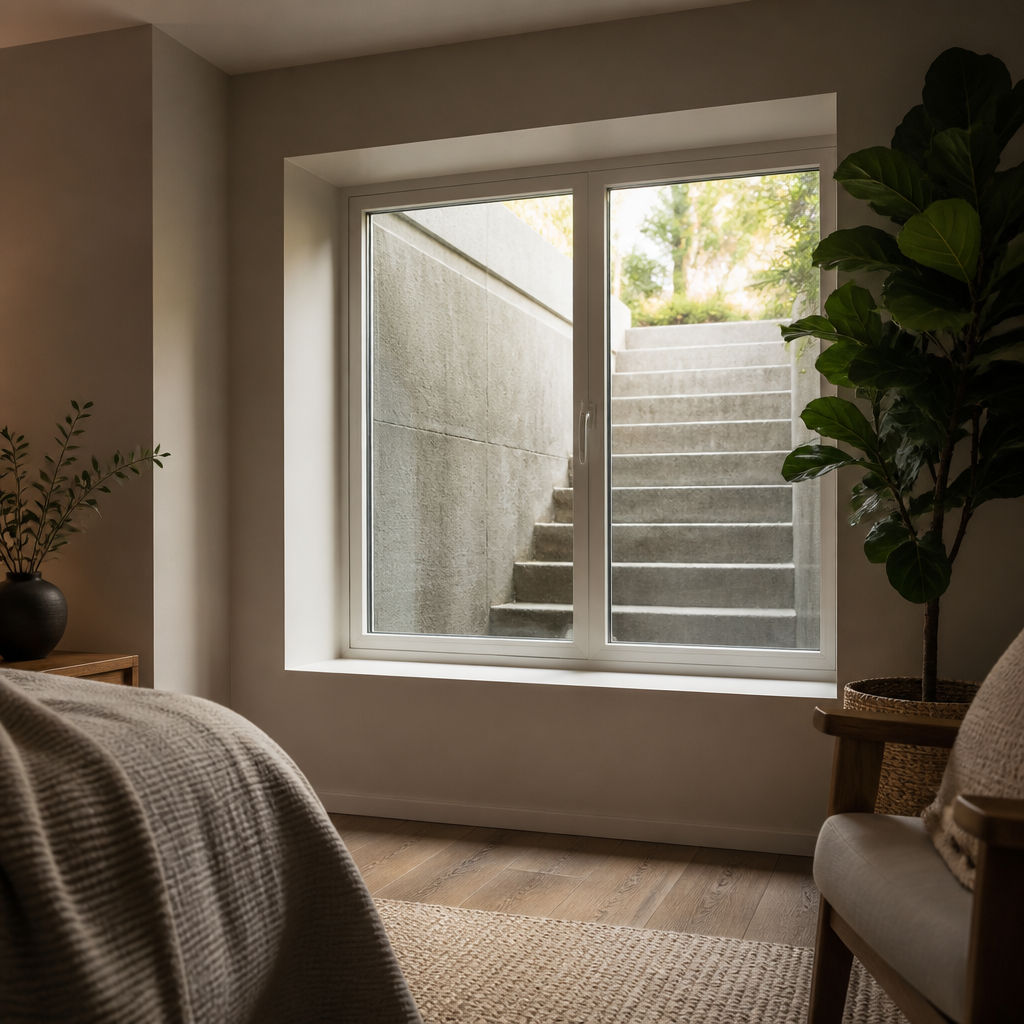
Furniture and finish choices should always respect the basement's environmental reality. Moisture-resistant storage, lower-profile seating, washable textiles, and materials that tolerate temperature fluctuation outperform delicate wood veneers and overly thick upholstery. A properly sized dehumidifier rated at 30 to 50 pints per day for typical residential basements keeps humidity between 30 and 50 percent, which is essential for preventing mold growth. The goal is not to disguise the room as an upstairs sunroom. It is to make the basement comfortable on its own terms.
How to plan it cleanly
Assess structural realities before choosing a function
Measure ceiling height (under 7 feet limits furniture choices), check for moisture and water marks on walls, locate sump pumps and utility access, and test outlets for grounding. Basements have dealbreakers that main floors do not.
Address moisture, insulation, and egress first
Waterproof the foundation, add insulation to perimeter walls (R-13 minimum for below-grade walls in most codes), and verify egress windows or an exterior door if the space will serve as a bedroom. These are not design decisions; they are safety and building-code requirements.
Plan lighting in layers, not a single grid of recessed cans
Basements lack natural light. Compensate with warm ambient light at 2700K-3000K, task lighting where needed (50+ foot-candles at work surfaces), and accent lighting on architectural features. A single row of ceiling cans makes a basement feel like a hallway.
Choose basement-appropriate materials
Vinyl plank flooring with a moisture barrier underlayment, moisture-resistant drywall (purple board in bathrooms), and closed-cell insulation. Skip solid hardwood, untreated MDF, and anything that absorbs water. Basements will get wet eventually; plan for it.
Define zones with rugs, lighting, and furniture arrangement
A large basement divided by furniture groupings, area rugs, and pendant lights feels like distinct rooms without the cost of framing. A sectional and rug define a living zone; a desk and task lamp define a work zone.
Ventilate and dehumidify as part of the design
Include a dedicated dehumidifier rated for the square footage, add return-air ducts if possible, and consider an ERV (energy recovery ventilator) for occupied basements. Musty air undermines every design decision you make.
What makes the room fail in practice
Define what the room needs to do and what the structure will permit before choosing finishes: six-seat movie viewing, a squat rack with safe overhead clearance, a guest room with proper egress, or a clean utility workshop. Once that function is clear, the design decisions become mechanical rather than vague.