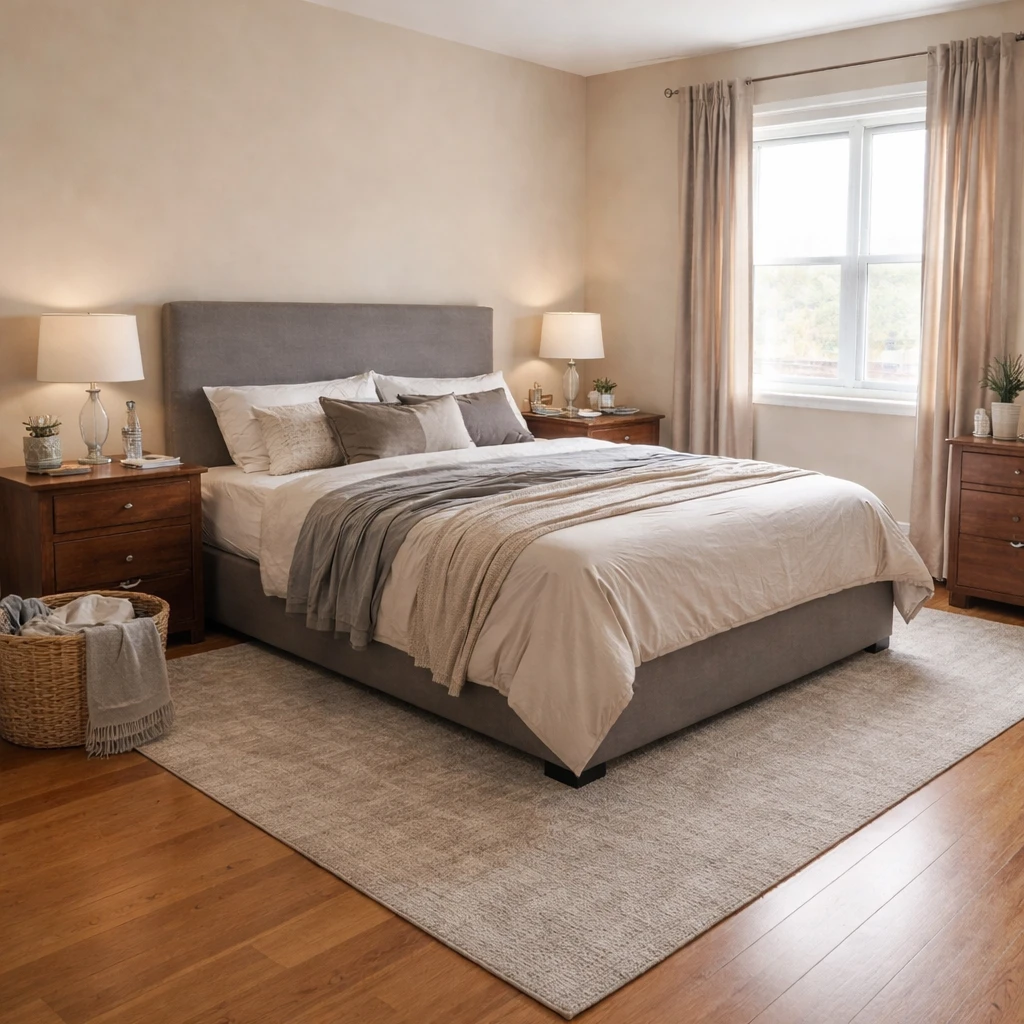
Bedroom design should prioritize rest above everything else. The most important questions are environmental: where the bed should go, how dark the room becomes at night, whether visual clutter is controlled, and how lighting changes as evening sets in. Bed placement sets the whole room. Once that wall is right, nightstands, rugs, lamps, and storage pieces fall into place more naturally. If the bed is forced into the wrong position, every later decision compensates for that mistake.
A good bedroom usually feels calm because its major decisions were made in the right order. Bed placement comes first, then circulation, then storage, then lighting, and only after that do color, textiles, and decorative layers start to matter. Reversing that sequence often produces attractive rooms that still do not feel restful. Scale is particularly important here: nightstands should relate to mattress height, rugs should feel generous underfoot, and wardrobes should not dominate the bed wall unless storage demands truly require it.
Most bedroom problems come from a few ordinary causes: too much visible storage, bad bedside lighting, poor blackout control, or furniture that is simply too large for the room. Those real issues are more useful to solve than endlessly changing colors or bedding. The best bedrooms feel quieter, dimmer, and easier to inhabit by evening. They respect the daily routine without demanding a perfect performance every night.
Start with the room itself
Bedroom design is less about visual novelty than about building a room that supports sleep reliably. The most important questions are environmental: where the bed should go, how dark the room becomes at night, whether noise and visual clutter are controlled, and how lighting changes as the day winds down.
A good bedroom usually feels calm because its major decisions were made in the right order. Bed placement comes first, then circulation, then storage, then lighting, and only after that do color, textiles, and decorative layers start to matter. Reversing that sequence often produces attractive rooms that still do not feel restful.
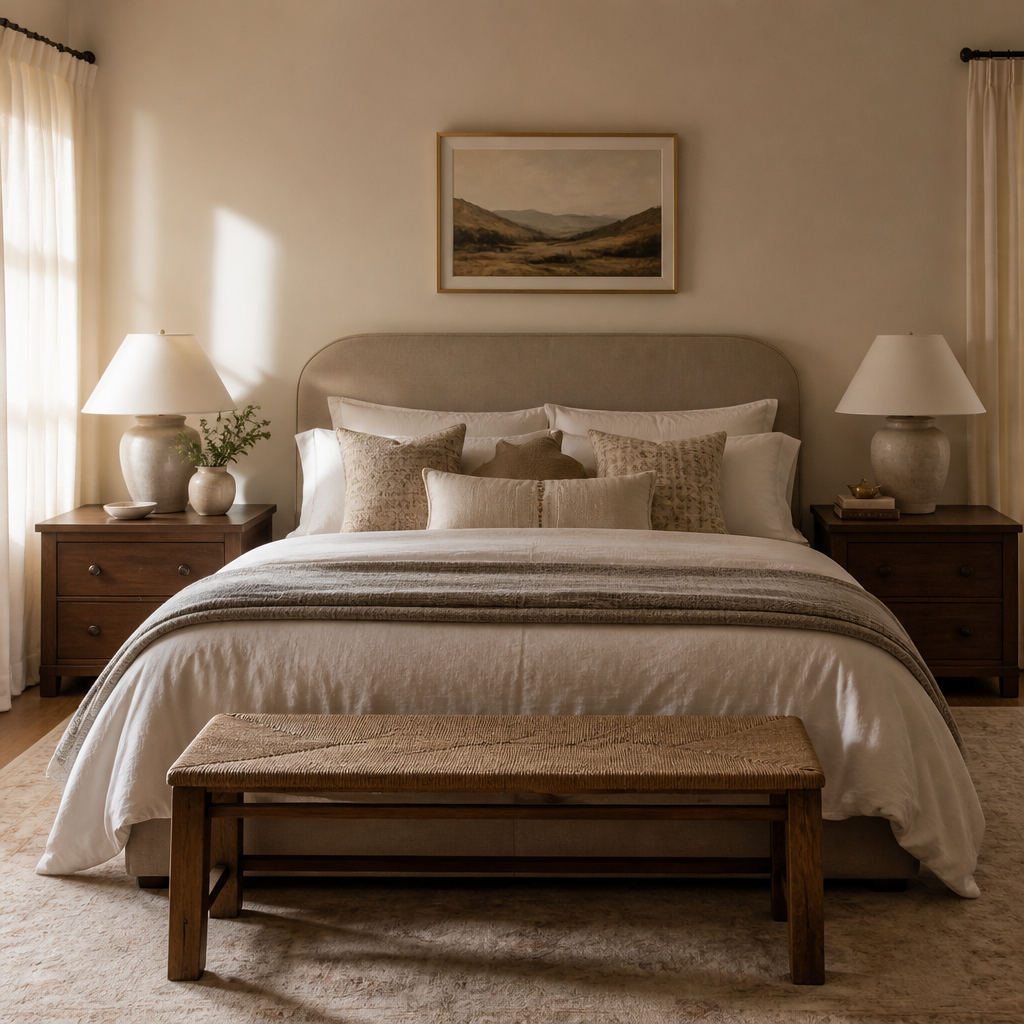
Scale is particularly important here. Nightstands should relate to mattress height, rugs should feel generous underfoot rather than undersized, and wardrobes or dressers should not dominate the bed wall unless storage demands truly require it. The room should feel protective, not crowded.
How to plan it cleanly
Map the room before moving furniture
Measure wall lengths, note window placement, closet doors, and the direction every door swings. Bedrooms often fail because circulation and storage access were treated as afterthoughts.
Place the bed for comfort first
Prioritize a bed position with clear sightlines to the door, practical access on both sides when possible, and enough clearance for nightstands and walking space.
Control light, sound, and temperature
Address blackout needs, lamp placement, noise sources, and airflow before decorative choices. Sleep quality is influenced directly by darkness, thermal comfort, and reduced visual clutter.
Scale surrounding furniture to the bed
Nightstands should relate to mattress height, and rugs should extend beyond the bed perimeter enough to feel intentional underfoot. Oversized storage can make the room feel more restless than restful.
Layer lighting for evening use
Combine ambient light with bedside reading light and softer low-level illumination. Warm light below 3000K supports winding down more effectively than bright blue-rich light late at night.
Finish with restraint
Once layout, storage, and sleep conditions are working, add textiles and artwork sparingly. The best bedrooms feel quiet and resolved rather than fully occupied.
What makes the room fail in practice
This guide focuses on the practical side of bedroom planning: what supports circadian rhythm, how to think about light and temperature, and which proportions quietly improve comfort. The goal is not a fashionable bedroom. It is a room that helps people recover every night.
Sleep architecture follows a predictable nightly cycle of four distinct stages. Stage 1 and 2 are light sleep characterized by slowed brain waves and reduced body temperature; Stage 3 is deep slow-wave sleep critical for physical restoration and immune function; and REM sleep supports memory consolidation and emotional regulation. A typical adult cycles through these stages four to six times per night, with each cycle lasting roughly 90 to 120 minutes. Environmental factors directly influence this architecture: exposure to light with wavelengths between 460 and 480 nanometers, the blue-enriched peak of LED and screen emissions, suppresses melatonin production by up to 50 percent, fragmenting sleep onset and reducing REM duration. Warm lighting below 3000K beginning two hours before bedtime helps preserve circadian signaling and supports uninterrupted sleep cycling.
Mattress technology has evolved substantially from innerspring dominance to layered foam, hybrid, and adjustable air systems. The modern mattress market emphasizes zoned support and pressure relief, with research from the Sleep Research Society indicating that medium-firm mattresses generally improve sleep quality and reduce chronic back pain more effectively than very firm or very soft alternatives. Bedroom air quality is equally consequential: the EPA identifies indoor air as typically two to five times more polluted than outdoor air, and bedrooms with poor ventilation can accumulate volatile organic compounds from furniture, textiles, and cleaning products. Maintaining relative humidity between 30% and 50% reduces dust mite proliferation and mold risk. Feng shui principles, while culturally specific, align with practical ergonomics in recommending bed placement with a clear view of the doorway without direct alignment, a position that minimizes draft exposure and creates psychological security through environmental control.
