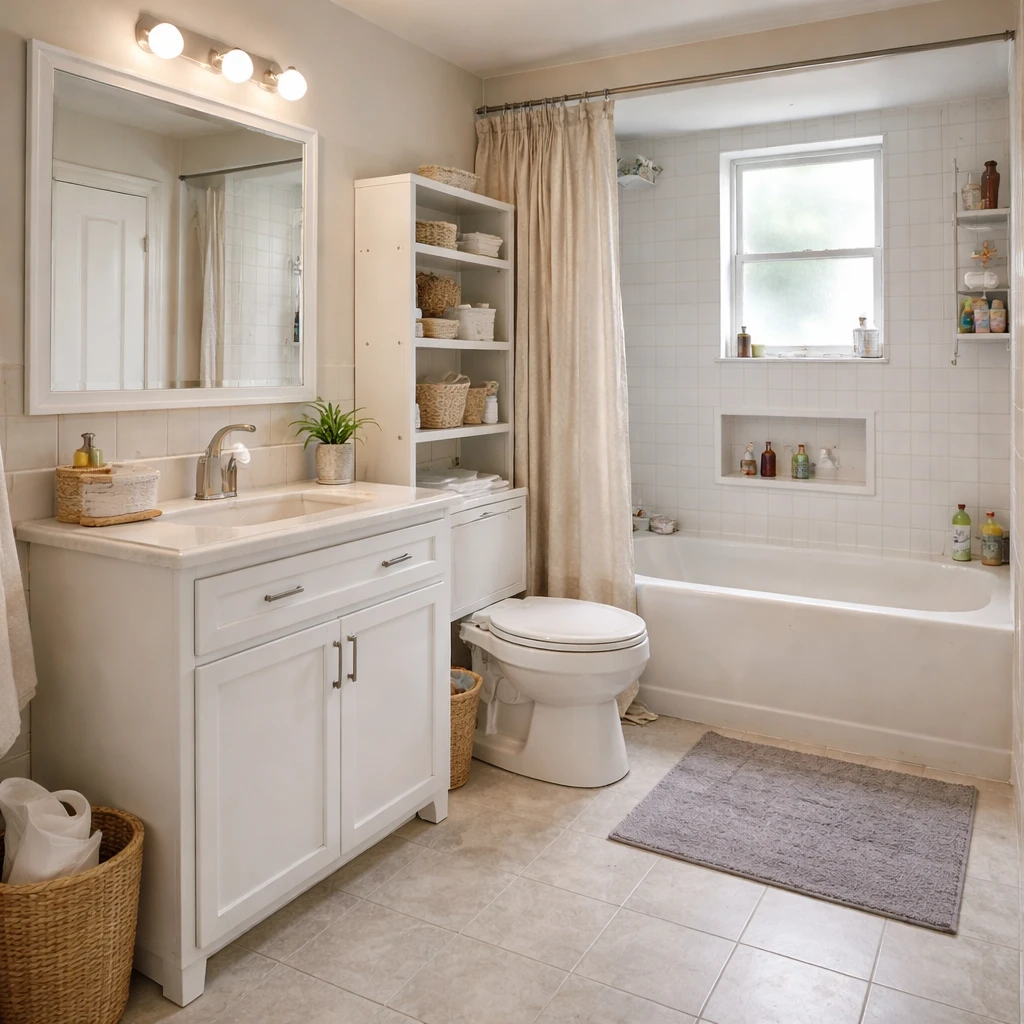
Bathroom design starts with what the room can actually support. Plumbing locations, door swings, fixture clearances, and wet-zone planning all limit how far a redesign can realistically go before the budget changes category. A vanity that is too deep compromises movement. Poor mirror lighting makes daily grooming frustrating. A weak waterproofing strategy can cause damage far beyond what is visible on the surface. The most useful bathroom decisions are practical first: what stays, what demands better lighting, what needs more storage, and whether the room requires a refresh or a true renovation.
Key clearance rules prevent functional problems. Allow at least 30 inches in front of each fixture, and 36 inches between opposite-facing fixtures. Shower doors need swing clearance. Ventilation is non-negotiable because bathrooms need exhaust fans to prevent mold. Material choices should prioritize water resistance: properly sealed natural stone, porcelain, and quality tile all perform well, but they need the right substrate and waterproofing behind them to last.
Storage is typically the biggest challenge. Use vertical space with medicine cabinets and over-toilet shelving. Vanity storage almost always outperforms a pedestal unless the room is extremely tight. Counter clutter, towel storage, backup supplies, and shower products all need believable homes or the room starts looking messy no matter how beautiful the materials are. A successful bathroom feels straightforward in use, even when the footprint is small.
Start with the room itself
Bathroom planning is shaped by codes, plumbing, and water management more than by almost any other room in the house. Clearances in front of fixtures, minimum shower dimensions, door swing conflicts, and moisture exposure all restrict what can work safely and comfortably.
Because the room is small, small measurement errors feel large. A vanity that is a few inches too deep can compromise movement; poor mirror lighting can make daily grooming frustrating; a weak waterproofing strategy can cause damage far beyond what is visible on the surface.
The most useful bathroom decisions are therefore practical first: what can stay in place, what demands better lighting, what needs more storage, and whether the room requires a refresh or a true renovation. Once those questions are answered, finishes become easier to choose intelligently.
How to plan it cleanly
Measure every fixed condition
Record vanity width, toilet location, tub or shower size, ceiling height, and the distance in front of each fixture. Bathrooms are small rooms with very little tolerance for guessing.
Confirm required clearances
Respect minimum functional space in front of toilets and lavatories, verify shower dimensions, and make sure door swings do not collide with fixtures or storage.
Treat plumbing locations as major constraints
Vanity swaps are straightforward when supply and drain lines stay put. Moving toilets, showers, and main drains changes the project category and the budget with it.
Prioritize lighting at the face
Vanity lighting should reduce shadows rather than emphasize them. Sconces mounted near face height often perform better than a single overhead light for grooming tasks.
Choose wet-area materials carefully
Focus on slip resistance, cleanability, moisture tolerance, and grout maintenance. Bathrooms fail more from water management problems than from style mistakes.
Differentiate refresh from renovation
Paint, mirrors, hardware, and lighting are one category of decision; waterproofing, tile replacement, and fixture relocation are another. Keep those scopes separate while planning.
What makes the room fail in practice
This guide is written to help readers think in those terms, with attention to code-adjacent clearances, fixture sizing, aging-in-place considerations, and moisture-tolerant materials. Bathrooms reward precision more than improvisation.
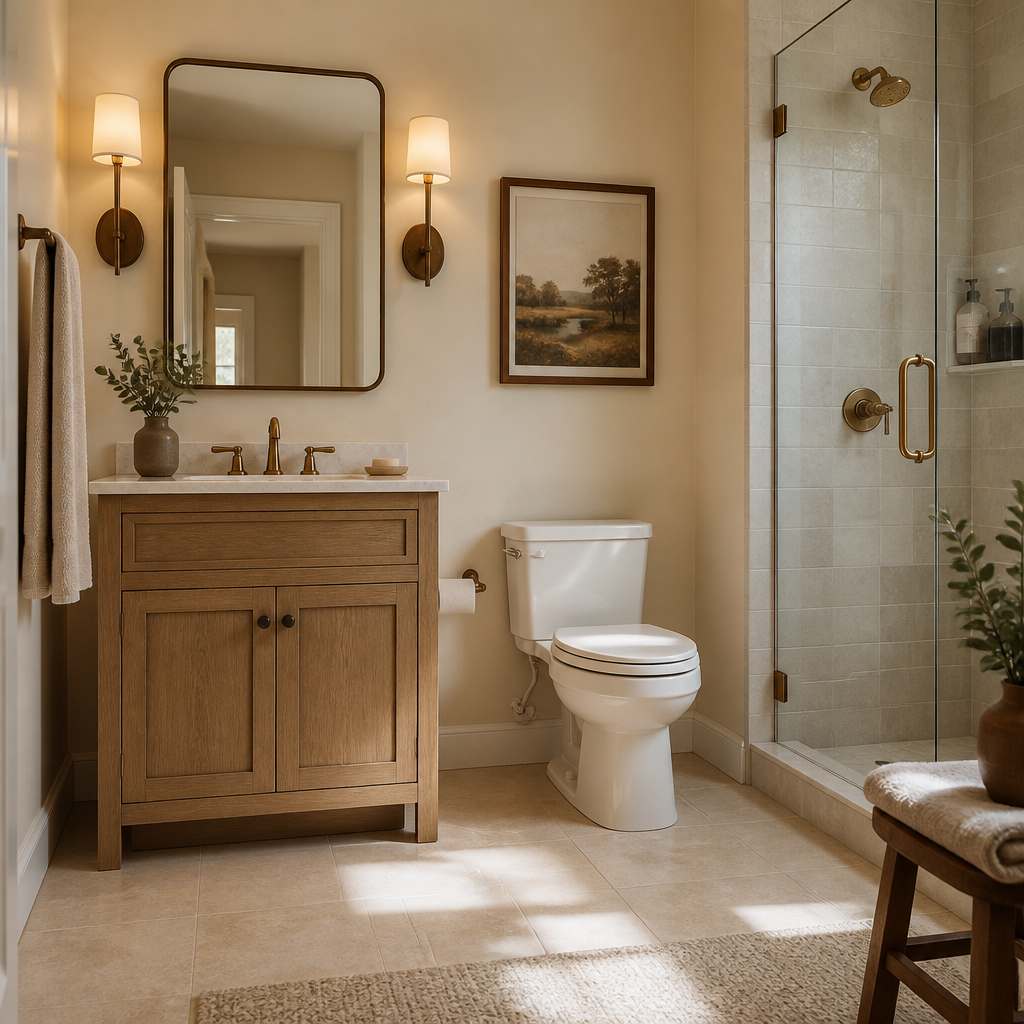
The bathroom has undergone a cultural transformation from utilitarian hygiene space to personal wellness retreat. This shift mirrors the spa industry's growth, which has influenced residential design toward features like rainfall showerheads, steam enclosures, and chromatherapy lighting. Spa design principles emphasize hydrotherapy, temperature contrast, and sensory deprivation to trigger parasympathetic nervous system activation. Residential bathrooms can approximate these benefits through targeted fixtures: thermostatic mixing valves maintain water temperature within 2 degrees Fahrenheit, preventing scalding while supporting consistent hydrotherapy sessions. Water conservation fixtures have also advanced significantly; WaterSense-labeled toilets use 1.28 gallons per flush or less, compared to 3.5 to 7 gallons in pre-1994 models, while maintaining effective waste removal through improved trapway engineering and pressure-assisted flush mechanisms.
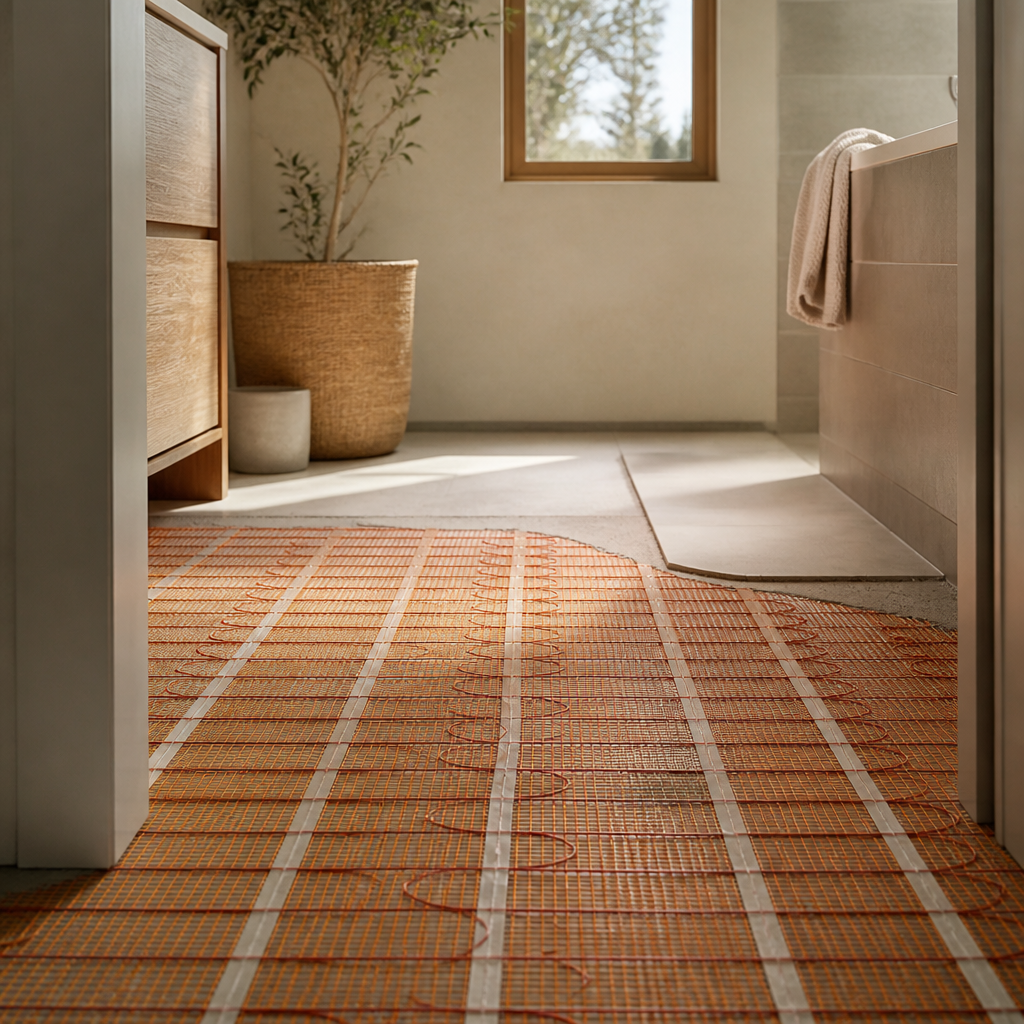
Heated flooring systems, typically electric resistance mats or hydronic tubing embedded in thinset, consume roughly 12 watts per square foot and can raise floor surface temperatures to 75 to 85 degrees Fahrenheit, creating thermal comfort that allows ambient air temperatures to be set lower, yielding energy savings when paired with programmable thermostats. Aging-in-place modifications extend beyond grab bars, though these remain essential: properly installed grab bars must be anchored into structural blocking or blocking reinforcement capable of withstanding 250 pounds of dynamic load, mounted at 33 to 36 inches above the finished floor. Curbless showers with linear drains eliminate tripping hazards and allow wheelchair access, though they require precise floor slope of one-quarter inch per foot toward the drain and full-room waterproofing to prevent subfloor damage. These modifications transform the bathroom from a risk-prone environment into one that supports independence across the lifespan.
