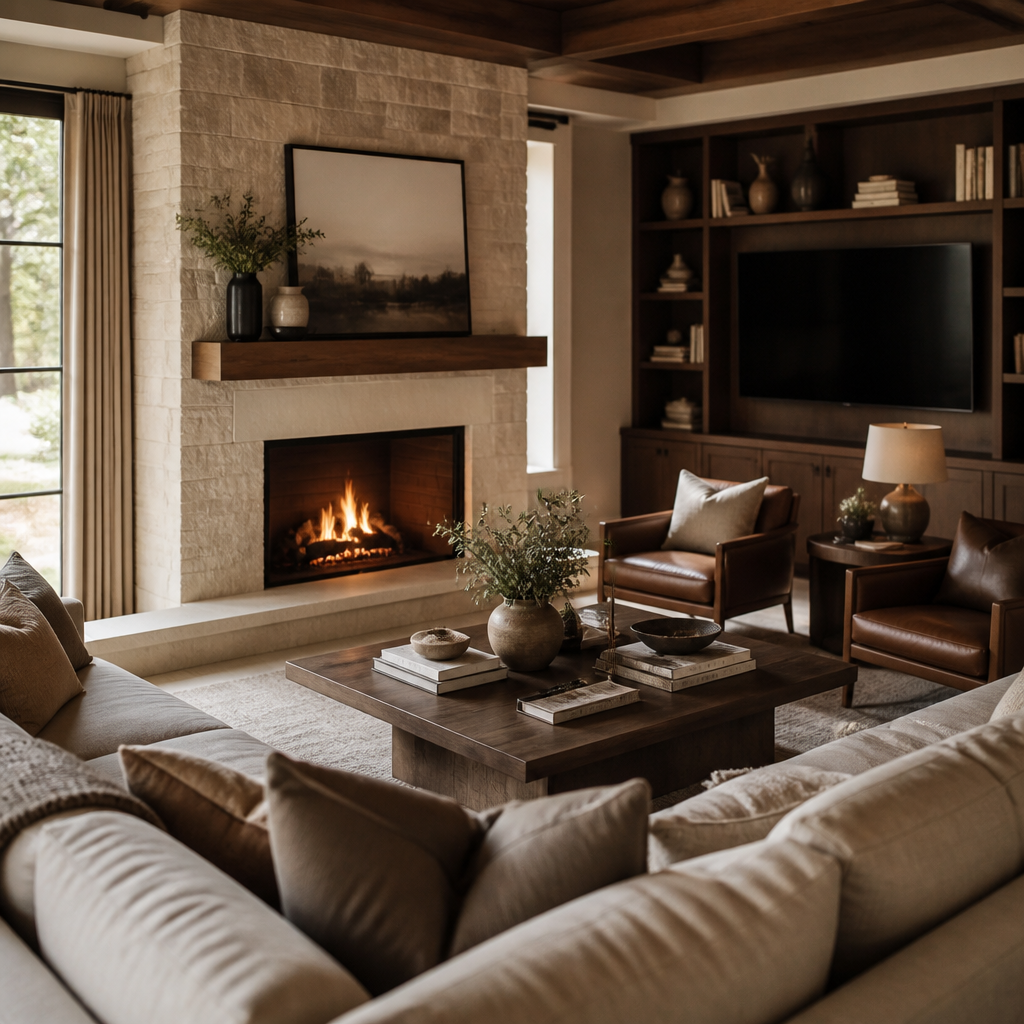
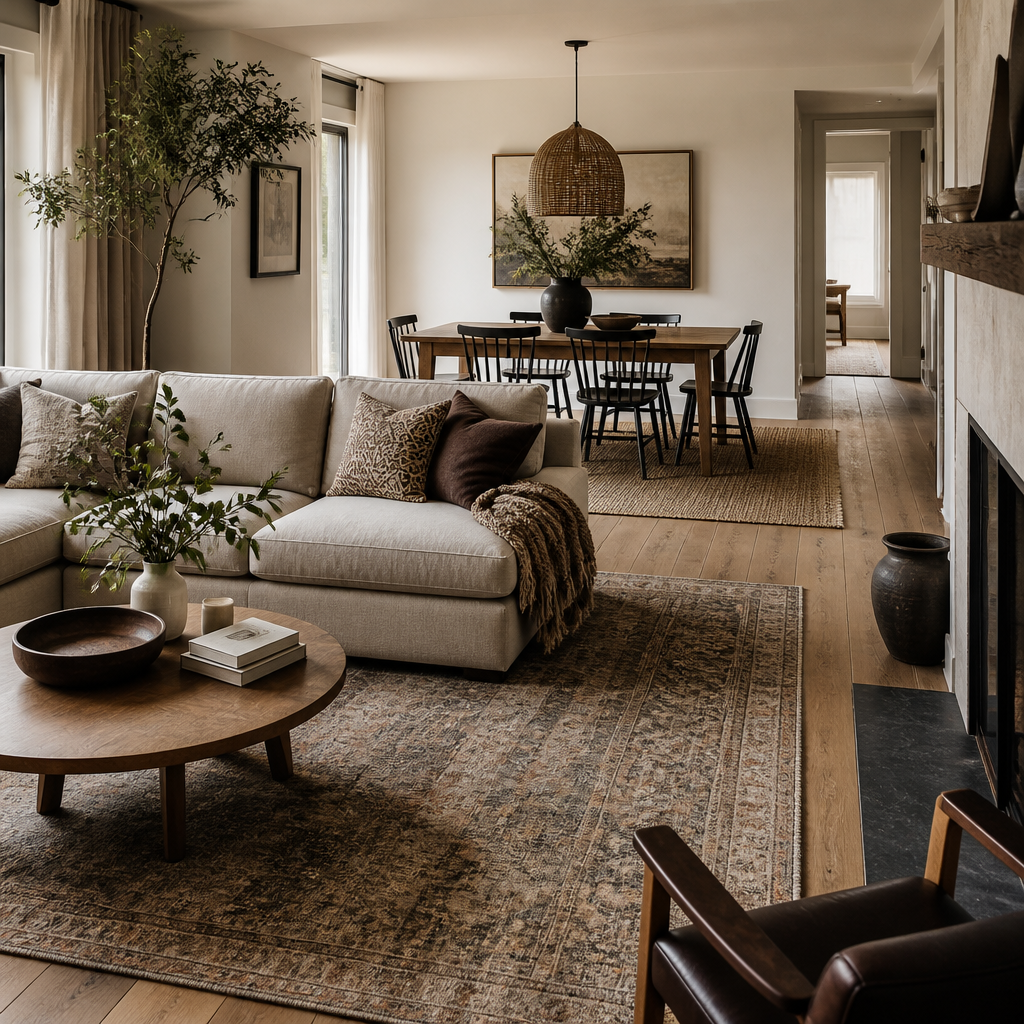
The best living room style is rarely the trendiest one. It is the one that works with the architecture, the household habits, and the level of visual calm or richness the space can realistically support. A high-traffic family room with toys, television, and daily lounging needs a different style language than a quieter room used for conversation and occasional hosting.
Modern living rooms usually suit cleaner architecture, stronger daylight, and people who prefer fewer, better pieces with clear silhouettes. Scandinavian living rooms work well where softness, pale woods, and a lighter visual load are needed, especially in smaller or darker rooms. Bohemian and eclectic approaches can be excellent in rooms that need warmth and personality, but they demand more editing if the room is already busy with open shelving or multiple doorways.
The practical question is not which style looks best online. It is which style helps this room behave better. Some styles hide clutter poorly. Some require stronger architecture to feel convincing. Some forgive mismatched pieces and daily wear more gracefully than others. Choosing well means comparing not just mood but maintenance, furniture scale, and how much visual density the room can absorb without becoming tiring.
The rules that matter
Living room style comparisons only become useful when they are grounded in room behavior. A style that looks excellent in a large, bright, low-clutter room may perform badly in a compact family room with television, toys, and constant evening use.
That is why this guide compares styles by practical factors such as visual weight, furniture scale, maintenance load, and how easily each direction supports the room's real function. The goal is not to declare one style universally best. It is to help readers see which one makes their specific room feel more resolved.
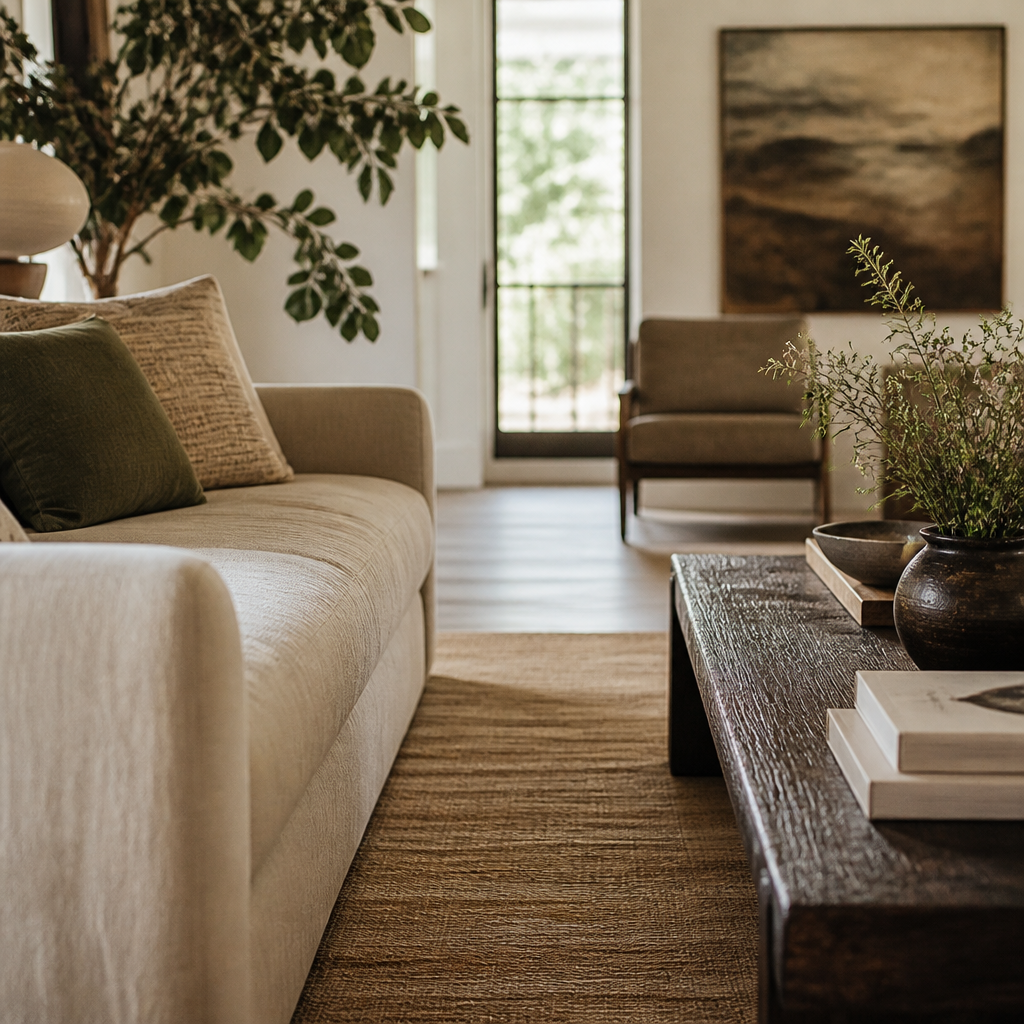
Some living rooms want clarity and lighter silhouettes. Others want softness, layering, or more material warmth. A good style choice strengthens what the room already wants and reduces friction in daily use instead of introducing a look that the room has to struggle to carry.
How to work through the decision
Start with how the room is actually used
Decide whether the room is mostly for conversation, television, family lounging, formal hosting, or a mix. Style should support that use pattern instead of fighting it.
Read the room's architecture and light
Window size, ceiling height, trim level, and how open or enclosed the room feels all influence which styles will feel natural rather than forced.
Compare styles by visual density
Modern and minimalist directions usually reduce visual noise, while bohemian, traditional, or farmhouse styles add more layering and material presence. Match that density to the room's tolerance.
Test furniture scale against each style direction
Some styles want lower, lighter pieces while others want more weight and texture. If the style only works with furniture that overwhelms the room, it is the wrong style for that space.
Judge maintenance and daily friction honestly
Open shelving, delicate materials, and heavily layered looks may suit some households and annoy others. The best style survives ordinary life gracefully.
Choose the style that improves the room in use
The winning direction should make the room feel clearer, more comfortable, and more believable for daily life, not just more dramatic in a reference image.
Where people usually get it wrong
Used that way, style becomes less about taste performance and more about room fit. The best living room style is the one that makes the room easier to use, easier to maintain, and more believable at the scale it actually has.