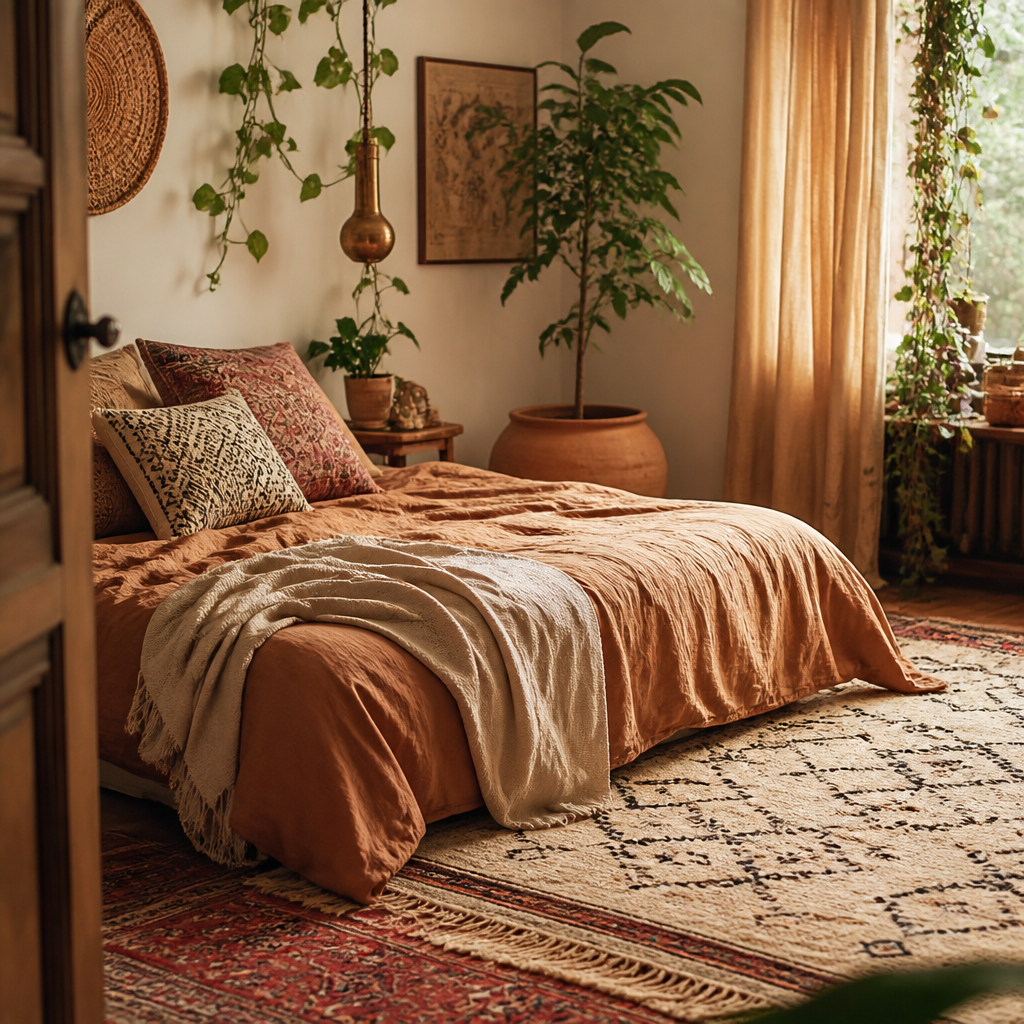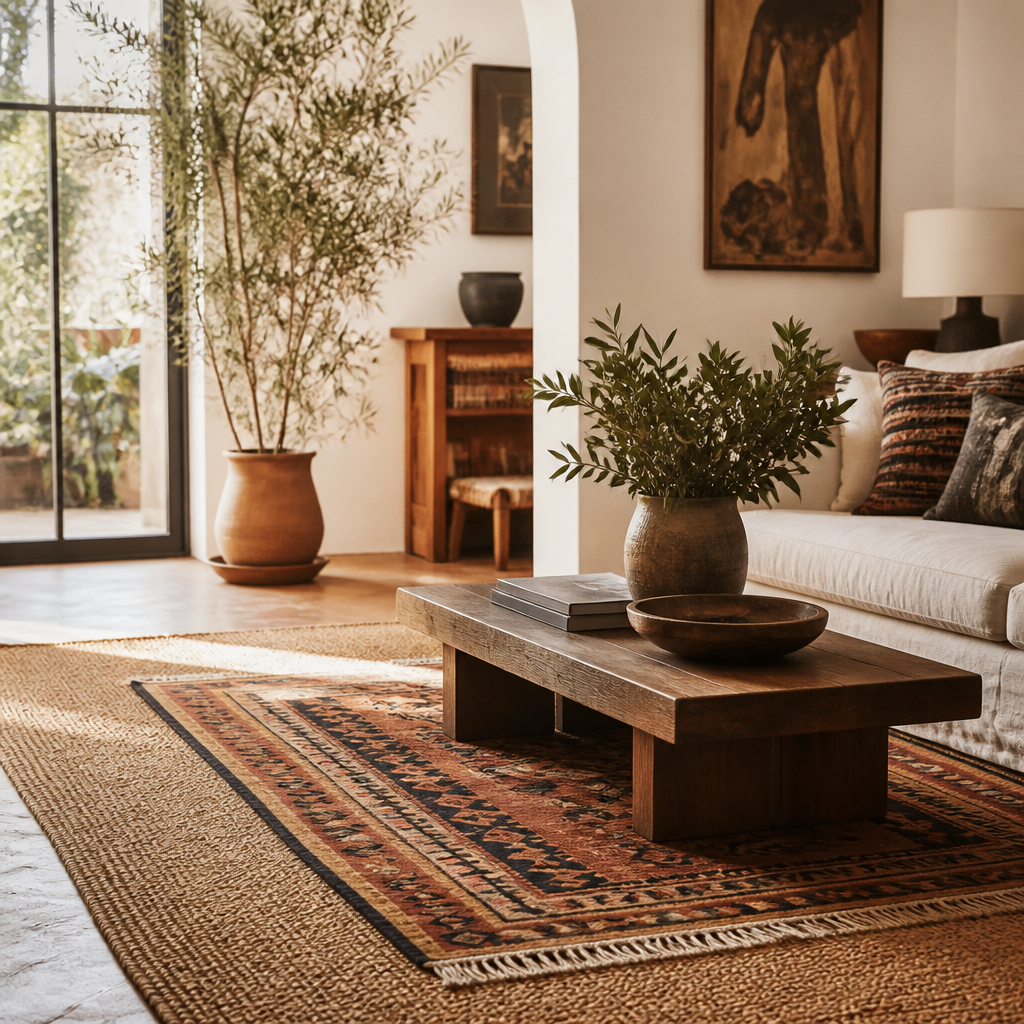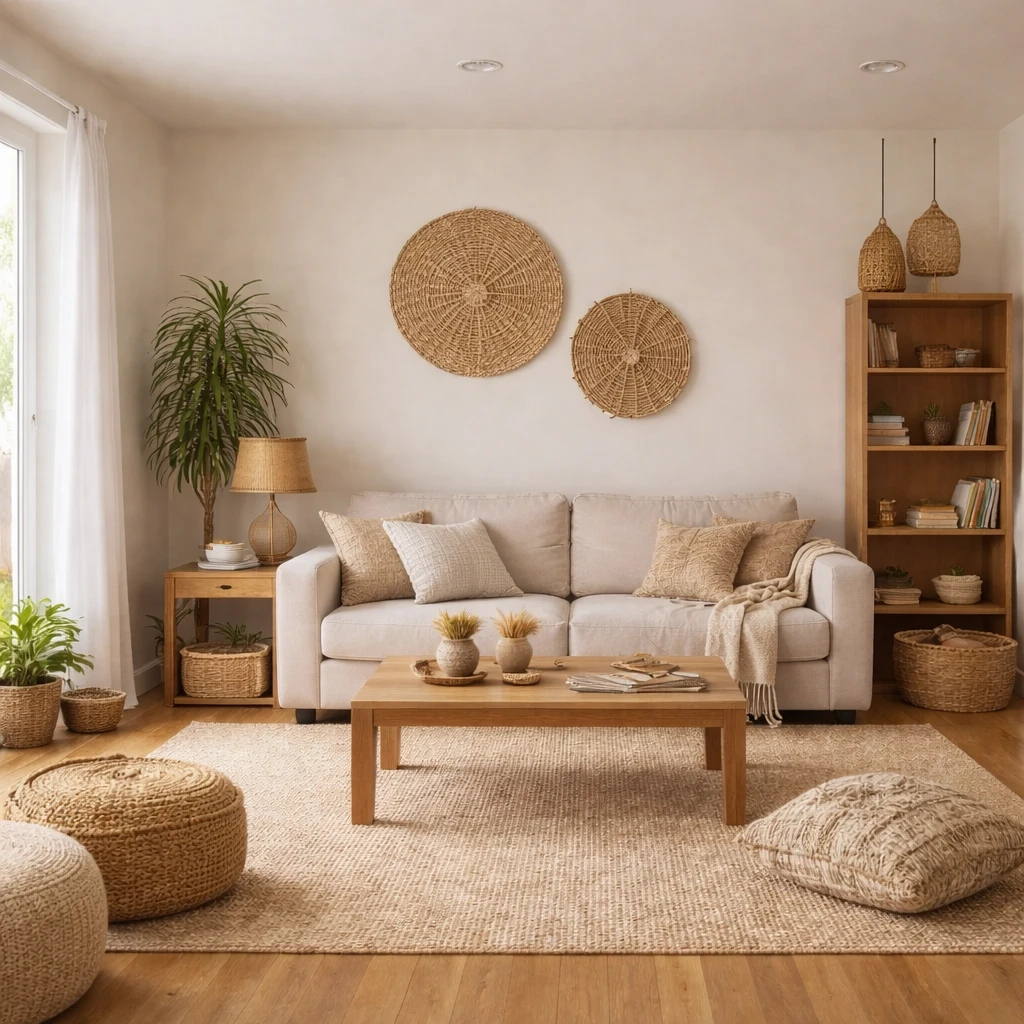
Bohemian design embraces eclecticism, layering patterns, textures, and global influences to create uniquely personal spaces. The aesthetic originated with artistic communities rejecting mainstream conventions, and that spirit of self-expression remains central. There's no single 'right' boho look—it's about curating what speaks to you.
Key characteristics include: mixed patterns (often with shared color palettes), abundant plants, collected artifacts from travels, vintage and handmade pieces, rich jewel tones, and layered textiles. The look should feel curated over time, not purchased all at once. Mixing eras and styles is encouraged—mid-century modern next to antique, industrial next to folk art.
The bohemian approach requires confidence in your own taste because there's no formula to follow. Start with a base of neutral furniture, then layer in pattern and color through textiles, art, and objects. The goal is a space that tells your story—every item should have meaning or bring joy. This is the opposite of minimalism's restraint: abundance as intentional choice.
What defines the look
Bohemian design traces its name to the French belief that Romani people came from Bohemia, and by the nineteenth century the term described artists and intellectuals who lived outside bourgeois convention. In Paris, the Left Bank of the 1910s and 1920s became the epicenter of this lifestyle, where artists gathered in cramped ateliers filled with objects collected from travels, markets, and fellow artists. These were not decorated interiors; they were autobiographical archives accumulated over a lifetime of work and relationships. The distinction between curated boho and cluttered accumulation is intentionality: a curated room contains objects that carry specific meaning, while clutter collects objects for their surface appearance.
Layering is the primary technique that distinguishes bohemian interiors from other eclectic styles. Rugs are stacked to define zones and add tactile depth: a large neutral jute base might support a smaller patterned kilim, which in turn anchors a seating arrangement. Textiles are draped rather than fitted: throws over sofas, curtains that puddle on the floor, tapestries that soften walls. Pattern mixing succeeds through color thread unification rather than stylistic similarity. A floral Indian block print, a geometric Berber rug, and a striped Turkish towel can coexist if they share a common hue, such as ochre or indigo, that runs through each piece. Without this unifying thread, mixed patterns fragment into visual noise.
Sustainability is inherent in authentic bohemian practice. Handcrafting reduces industrial energy consumption, natural dyes eliminate synthetic chemical runoff, and the longevity of handwoven textiles counters the disposable cycle of fast decor. A single handwoven kilim can last 50 to 100 years with proper care, making it one of the most sustainable floor coverings available. Rattan and cane furniture use rapidly renewable palms rather than slow-growth hardwoods. Moroccan Berber rugs use geometric motifs that record family histories and protective symbols. Indian block printing, practiced in Rajasthan for over 400 years, uses hand-carved wooden blocks dipped in natural dyes derived from indigo, madder root, and pomegranate.
How to apply it well
Start with rugs and textiles that establish a color story
Bohemian rooms often begin on the floor because rugs define both territory and tone. Use one strong patterned rug or a layered pair, then pull your palette from those textiles so the room feels collected rather than randomly colorful. If the textile base is chaotic, everything above it will struggle to recover.
Mix patterns by shared color and varied scale
Choose prints that repeat one or two common hues while changing motif scale, one larger note, one medium, one smaller. This keeps the room rich without letting every textile compete at the same volume. Matching sets flatten bohemian rooms; unrelated pattern shouting makes them messy.
Build low, relaxed seating that supports long use
Deep sofas, soft occasional chairs, cushions, and layered throws should make the room feel informal and inhabitable. The goal is comfort with personality, not ceremonial seating. If the room looks expressive but nobody wants to stay in it, the mood has not actually been built yet.
Use walls and shelves for narrative, but curate them
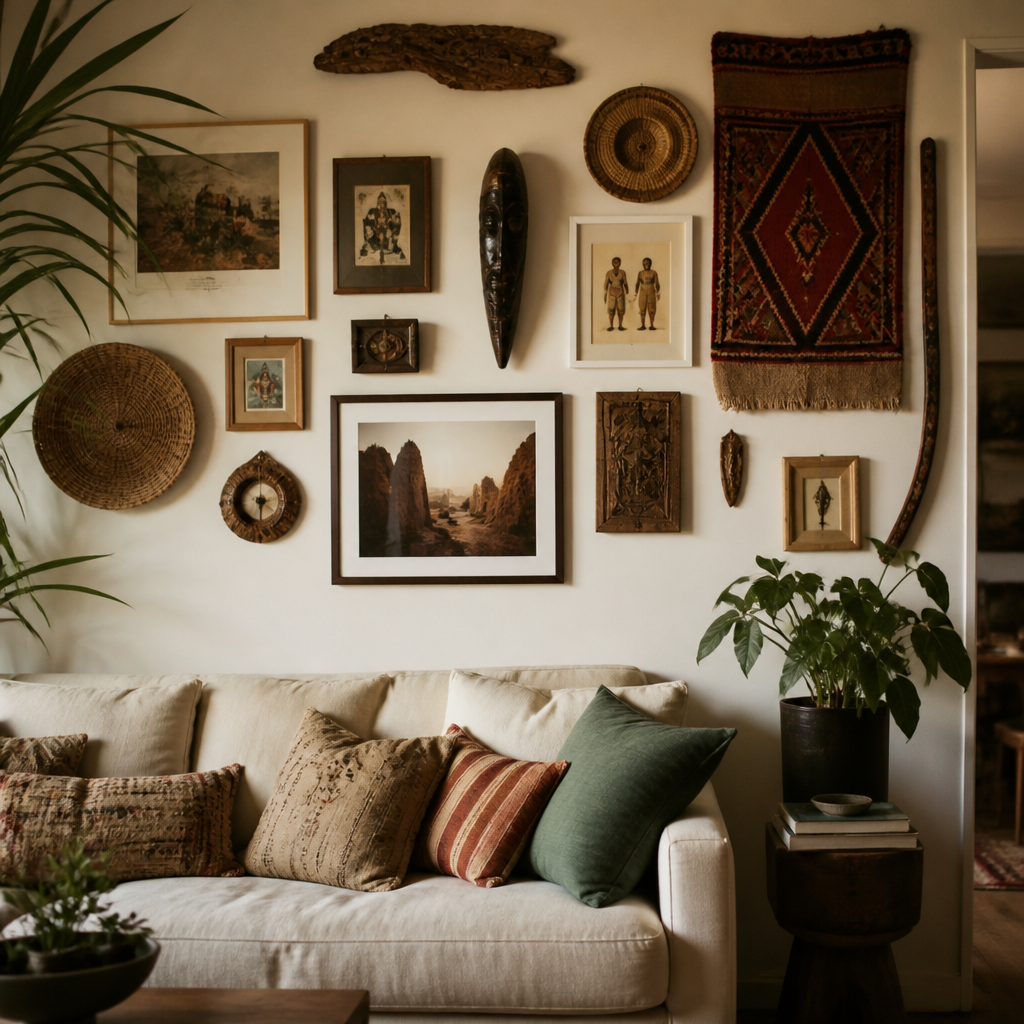
Hang art, textiles, plants, and collected objects with enough spacing that each still feels chosen. Bohemian rooms usually want a fuller vertical story than restrained styles do, but they still need editing. Collection becomes clutter the moment nothing can breathe.
Layer warm light at several heights
Use lamps, lanterns, and lower-intensity light sources to create pools of warmth rather than one flat ceiling wash. The room should glow unevenly in a good way, with corners and surfaces that feel discovered rather than uniformly exposed.
Let the room accumulate over time, then stop before it overexplains itself
Bohemian style is strongest when it grows through finds, textiles, books, and objects that genuinely belong together over time. Add slowly, and once the room has narrative and warmth, stop. The style depends on abundance with intention, not endless acquisition.
What makes it feel forced
Common mistakes include purchasing everything from a single "boho" collection, which produces a themed costume rather than an accumulated life. Another error is neglecting negative space: a truly bohemian room needs breathing room between layers, or the abundance becomes suffocating. Finally, using sacred or culturally specific objects as purely decorative accessories disrespects their origins. Authentic bohemian design respects the stories behind its objects, and the best rooms tell a narrative that could only belong to the person who lives there.