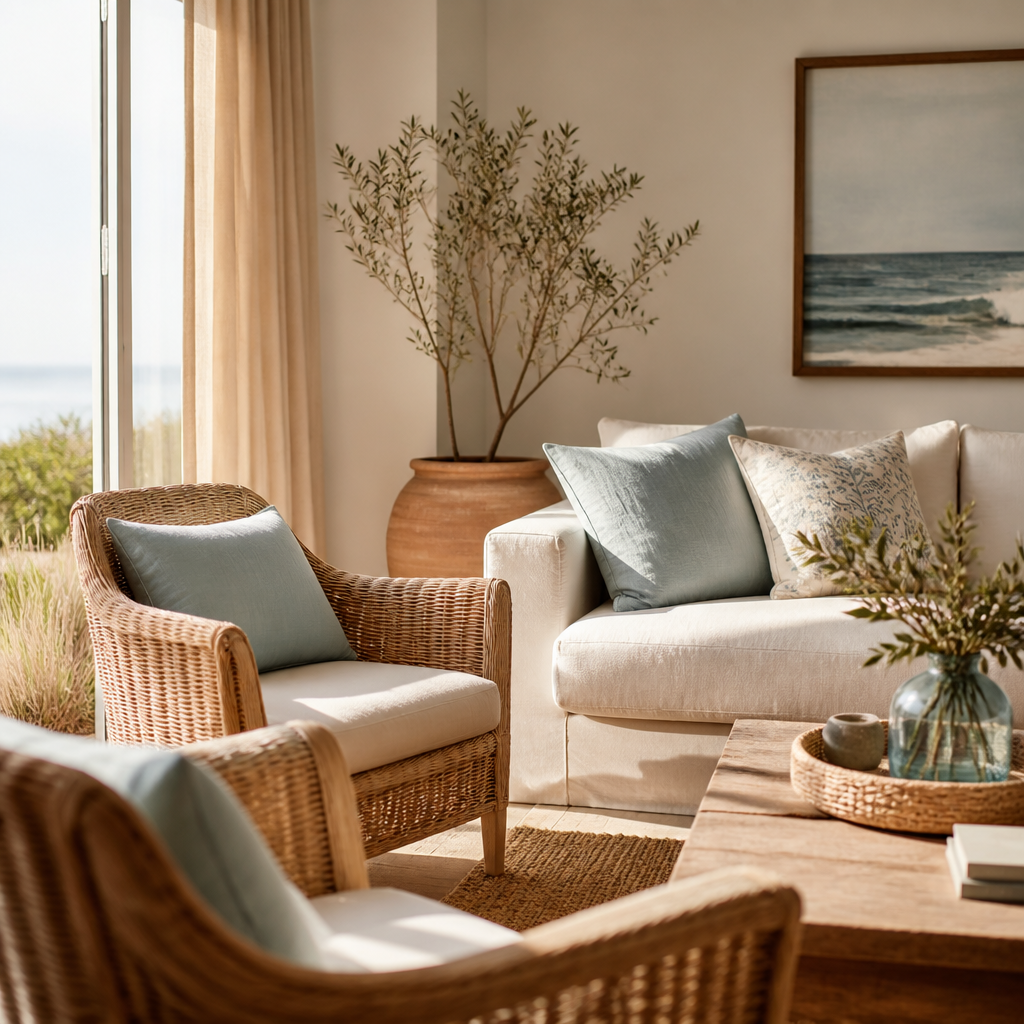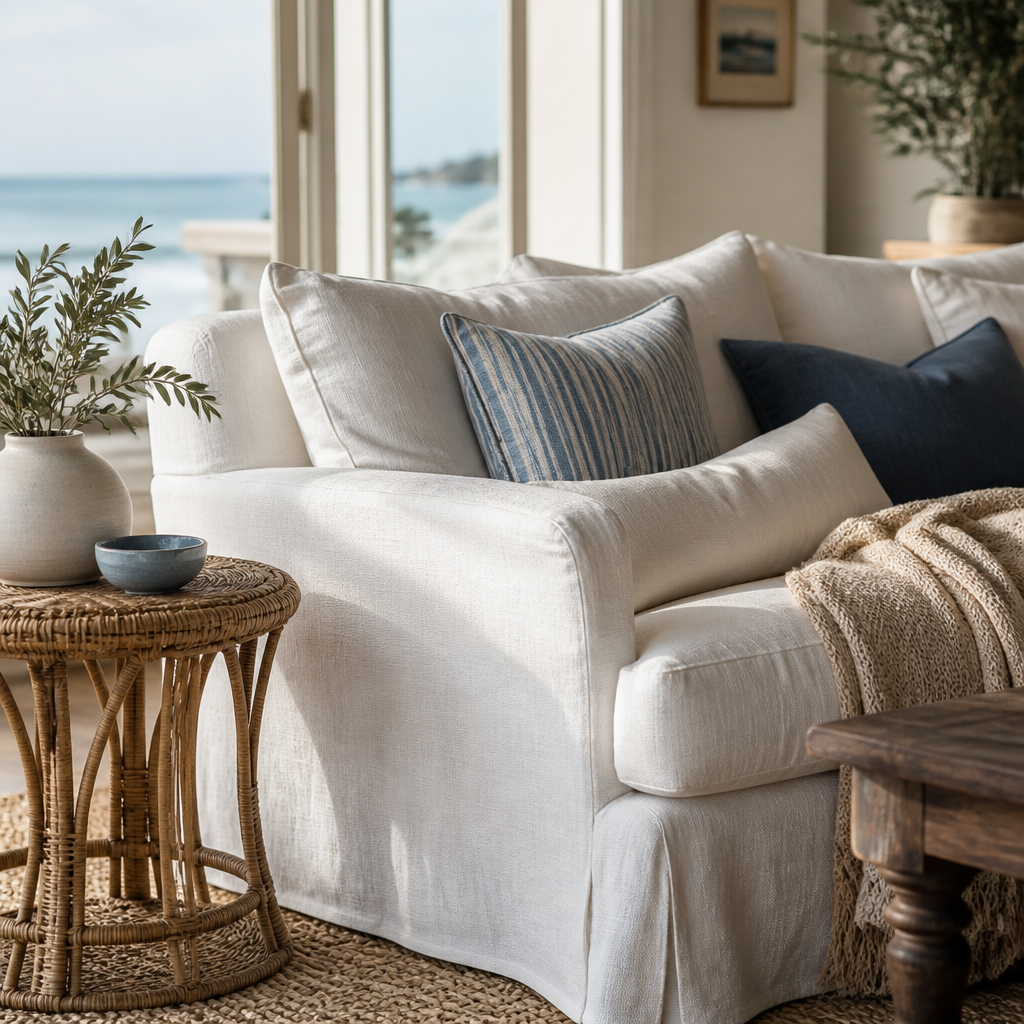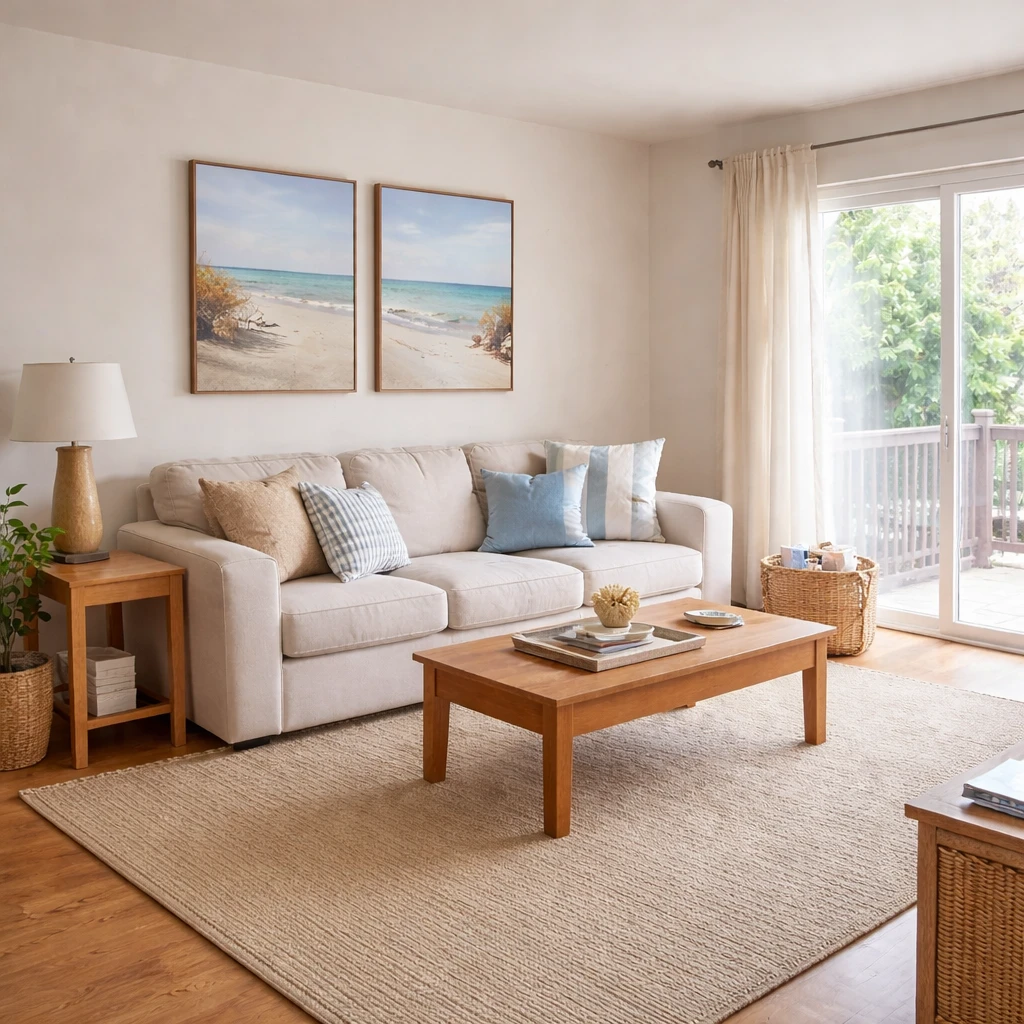
Coastal design draws inspiration from seaside living, emphasizing light, airiness, and connection to water. The aesthetic varies by region: Hamptons-style tends more formal and traditional, while California coastal is more laid-back and modern. Both share core principles of embracing light colors, natural materials, and easy, relaxed atmospheres.
Key elements include: light color palettes (whites, creams, soft blues and greens), natural materials (rattan, jute, light wood, linen), striped patterns, nautical or ocean-inspired accessories, and ample natural light. Window treatments are typically minimal—curtains that filter light without blocking views. The goal is bringing the outside in.
Balance is important to avoid the 'beach house as hospital' look. While white is foundational, adding warmth through wood tones, texture through woven materials, and personality through collected shells or driftwood prevents spaces from feeling sterile. The best coastal interiors feel like someone actually lives there, not a hotel lobby.
What defines the look
Coastal architecture developed distinct regional vocabularies based on local climate and available materials. The Hamptons style combined shingle siding with classical proportions that weathered to soft gray through exposure to salt air and ultraviolet radiation. Mediterranean coastal style uses thick masonry walls finished with lime-based whitewash that reflects up to 80 percent of solar radiation, keeping interiors cool in climates where summer temperatures regularly exceed 85 degrees Fahrenheit. Australian coastal design emphasizes indoor-outdoor flow through timber decking, expansive sliding glass panels, and furnishings that tolerate high ultraviolet exposure and humidity levels frequently exceeding 70 percent.
Coastal design differs fundamentally from nautical design, and the distinction matters. Nautical design references sailing through anchors, rope, signal flags, and navy-and-white stripes. It is a theme, and like all themes, it becomes tiresome when lived with daily. Coastal design, by contrast, references the natural environment of the coast: the color of sand, the quality of light through salt air, the texture of weathered wood, the movement of water. It is not a theme. It is an atmosphere. The overall effect should evoke Sunday morning at the beach, not dining in a seafood restaurant.
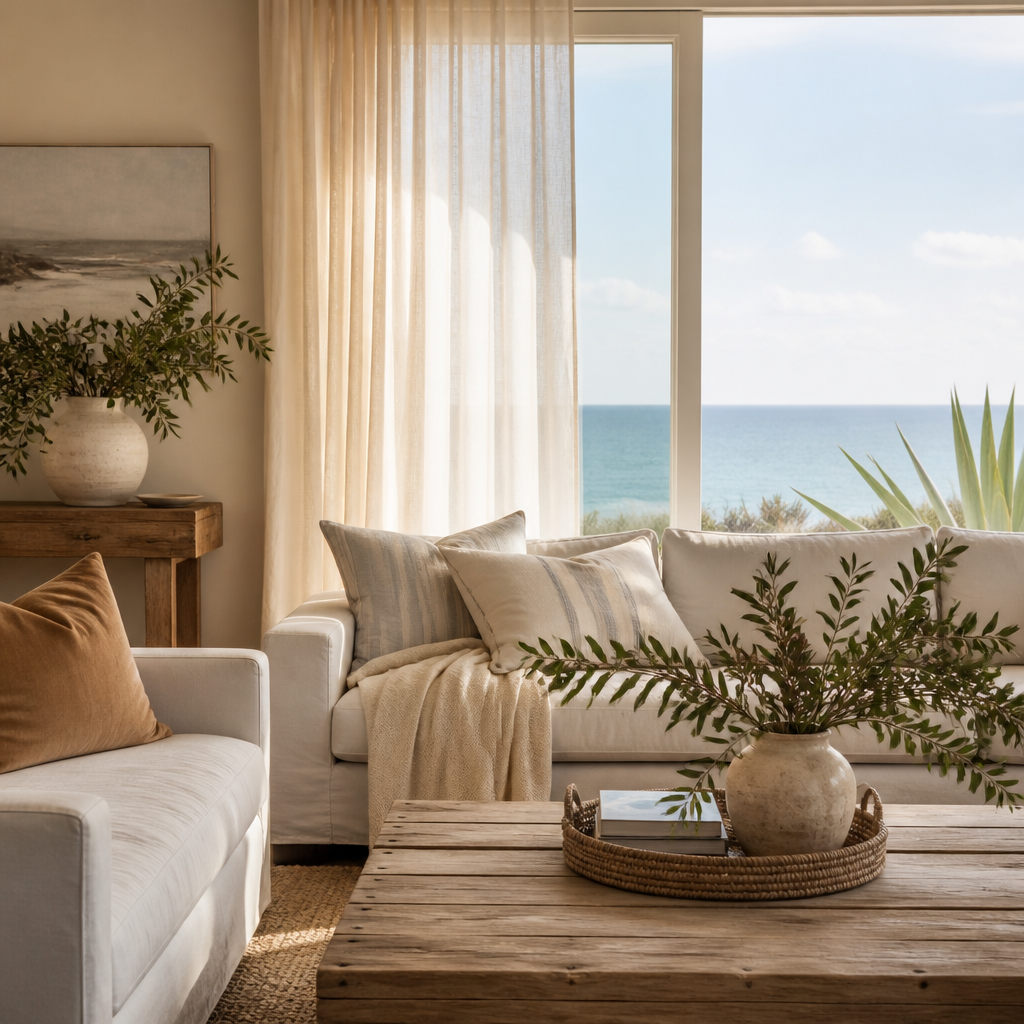
Color palettes in coastal interiors draw directly from the surrounding landscape. Sand, driftwood, sea foam, and sky provide a natural spectrum that does not require literal maritime motifs. White or pale walls with high light reflectance values bounce available light, which is particularly valuable in rooms with limited south-facing exposure. Blue accents in muted rather than saturated tones reference water without literal boat motifs. Natural fiber floor coverings such as seagrass, jute, and sisal provide textural warmth in humid conditions, though they vary in durability: seagrass is non-porous and resists staining but is susceptible to water damage, jute is softer underfoot but weaker when wet, and sisal is the most abrasion-resistant with a tensile strength comparable to wool but stains readily from liquid spills.
How to apply it well
Use light-reflective neutrals as the architectural base
Start with whites, creams, sands, and pale driftwood tones that amplify daylight and let the room feel airy before a single accent is added. Coastal style works best when the room feels open and breathable first, not when it is explained through theme objects.
Choose furniture that keeps the room visually porous
Use cane, rattan, slatted wood, or lightly scaled upholstery so air and sightlines can pass through the room. Heavy, dark furniture often defeats the style's essential lightness even if the color palette is technically coastal.
Use blue and green as references, not uniforms
Keep water and sea-glass tones soft and selective so they read as atmosphere rather than branding. One rug, two pillows, or one artwork can be enough. The more literal and saturated the palette becomes, the faster the room drifts from coastal calm into coastal costume.
Specify washable, durable materials for sandy real life
Slipcovers, indoor-outdoor textiles, resilient rugs, and easy-clean surfaces all matter because coastal rooms are associated with moisture, salt, sun, and casual wear. If the room feels too delicate to survive open windows, wet towels, or regular laundering, the material plan is out of step with the lifestyle it is implying.
Layer evening light so the room still feels like a retreat
Use warm ambient light, softer lamps, and dimmable layers so the room keeps its ease after sunset instead of becoming one brightly lit shell. Coastal rooms often depend on natural light by day, which makes the nighttime lighting plan even more important.
Preserve emptiness as part of the mood
Leave enough wall, floor, and surface space open that the room can still exhale. Coastal style relies on a sense of visual air. Once every table is styled and every wall is filled, the room may still have the right colors, but it loses the spaciousness that made the style appealing in the first place.
What makes it feel forced
Common mistakes include over-reliance on nautical symbols such as anchors, ship wheels, and signal flags, which reduce a sophisticated atmosphere to a themed costume. Another error is selecting materials that cannot withstand environmental conditions: standard steel hardware that rusts within a season, indoor-only fabrics that fade and mildew, or unfinished wood that warps in humidity. Coastal design should reference the natural coast through material and color, not recreate a maritime museum in a living room.