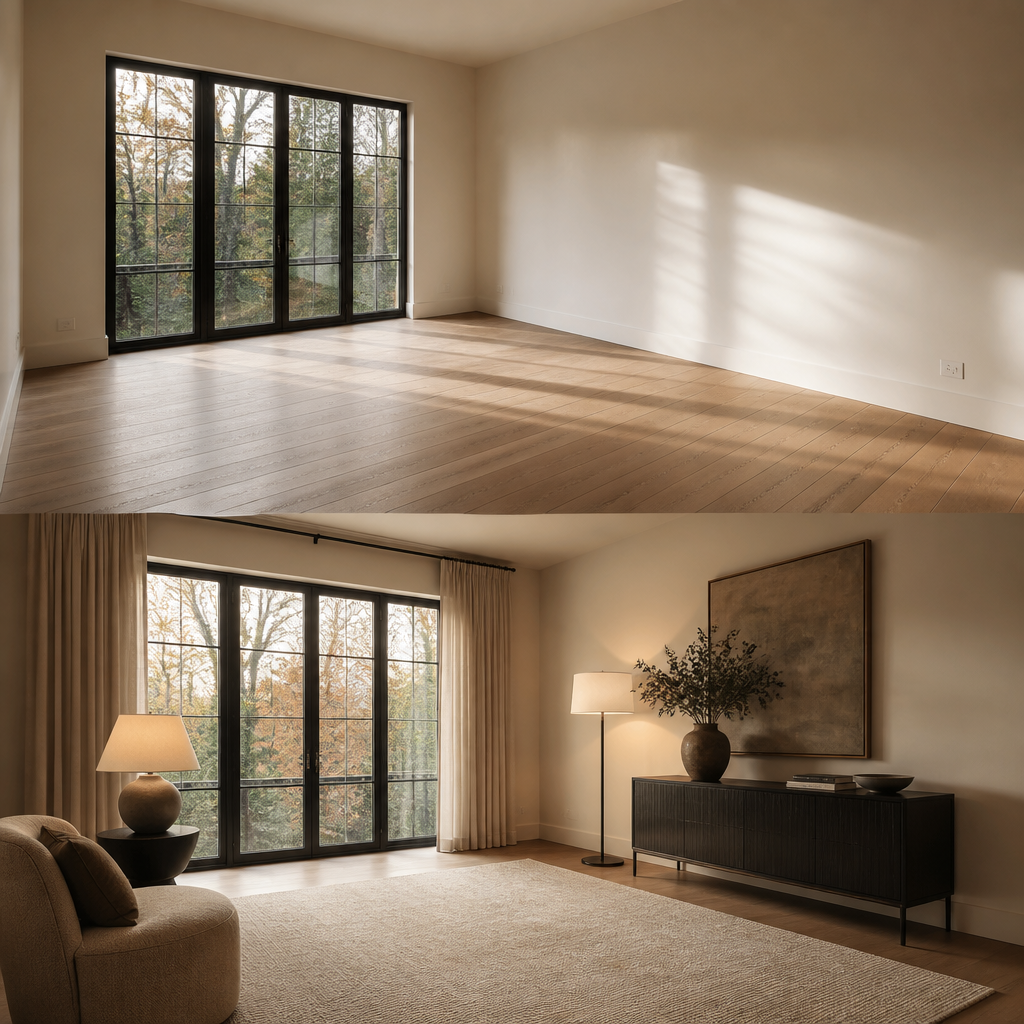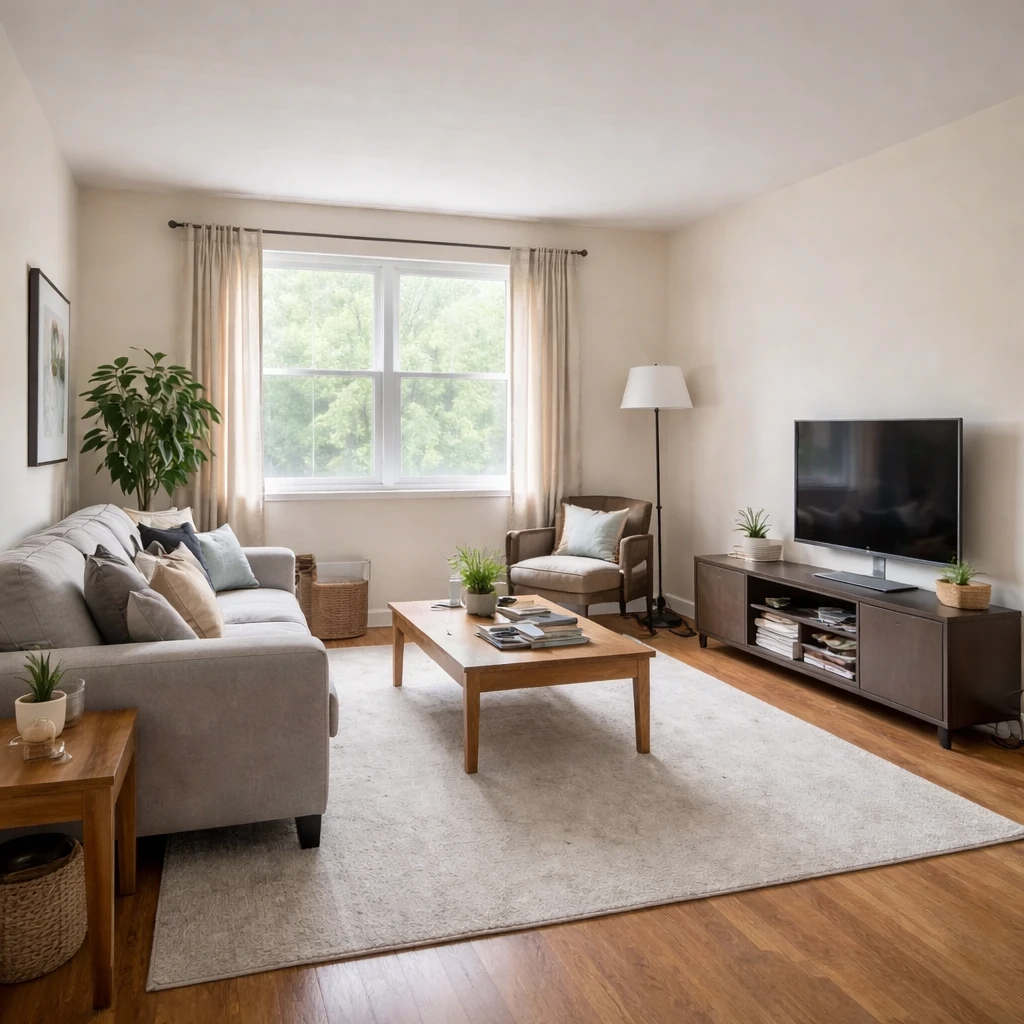
Empty rooms present both opportunity and challenge: you can arrange everything from scratch, but it's hard to visualize the end result. The key is defining room purpose first, then working backward to the furniture and arrangement that supports that purpose.
Start with functional requirements: how will the room be used? Who will use it? At what times of day? What's the traffic flow from adjacent rooms? Answering these questions guides every subsequent decision. An empty room is a blank canvas, but you need a vision before picking up a brush.
When furnishing empty rooms, start with anchor pieces: the sofa in a living room, the bed in a bedroom. Build around these foundations. Don't rush to fill every corner—empty space often feels larger and more intentional than crowded arrangements.
What is worth borrowing
Empty rooms are deceptive because they provide no reference for scale. Without furniture, even experienced homeowners tend to overestimate what the room can hold and underestimate how much emptiness is needed around the first large piece. That is why furnishing an empty room often feels strangely harder than improving a furnished one. There is no anchor yet, no relationship between objects, and therefore no immediate sense of whether the room wants a sectional, a sofa and chairs, a queen bed, or a writing desk. The first job is not shopping. It is establishing a scale framework.
That framework starts with the anchor piece. In most rooms the anchor is obvious: sofa, bed, dining table, or desk. Choose that piece according to the room's primary function and the room's actual dimensions, not according to the fantasy of what you wish could fit. The useful rule is to give the largest piece enough presence to define the room without letting it swallow the walls or choke circulation. Once that anchor lands, the room becomes far easier to read because every later decision, rug size, lamp placement, chair count, storage depth, now has something real to relate to.
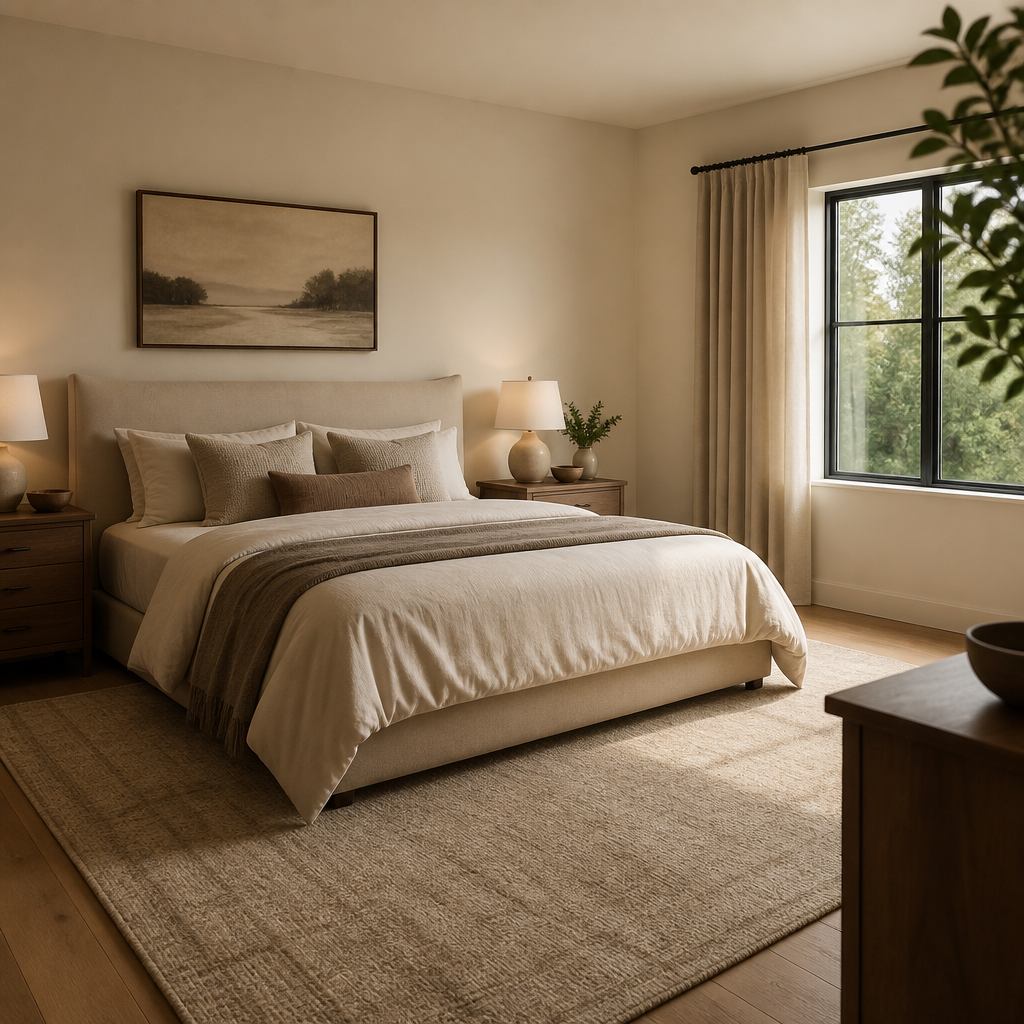
Sequence matters enormously in empty rooms. After the anchor, add the pieces that make the anchor usable: rug, lighting, and one or two support surfaces. Only then should you think about decorative layers. People often reverse this and end up with attractive objects floating in a room whose basic furniture plan has not been solved. Empty rooms also need softness earlier than most people expect. Hard floors, blank walls, and a single overhead light create echo and glare, so textiles and lamps are not just beautification. They are what begin turning the room from shell into place.
How to turn ideas into a plan
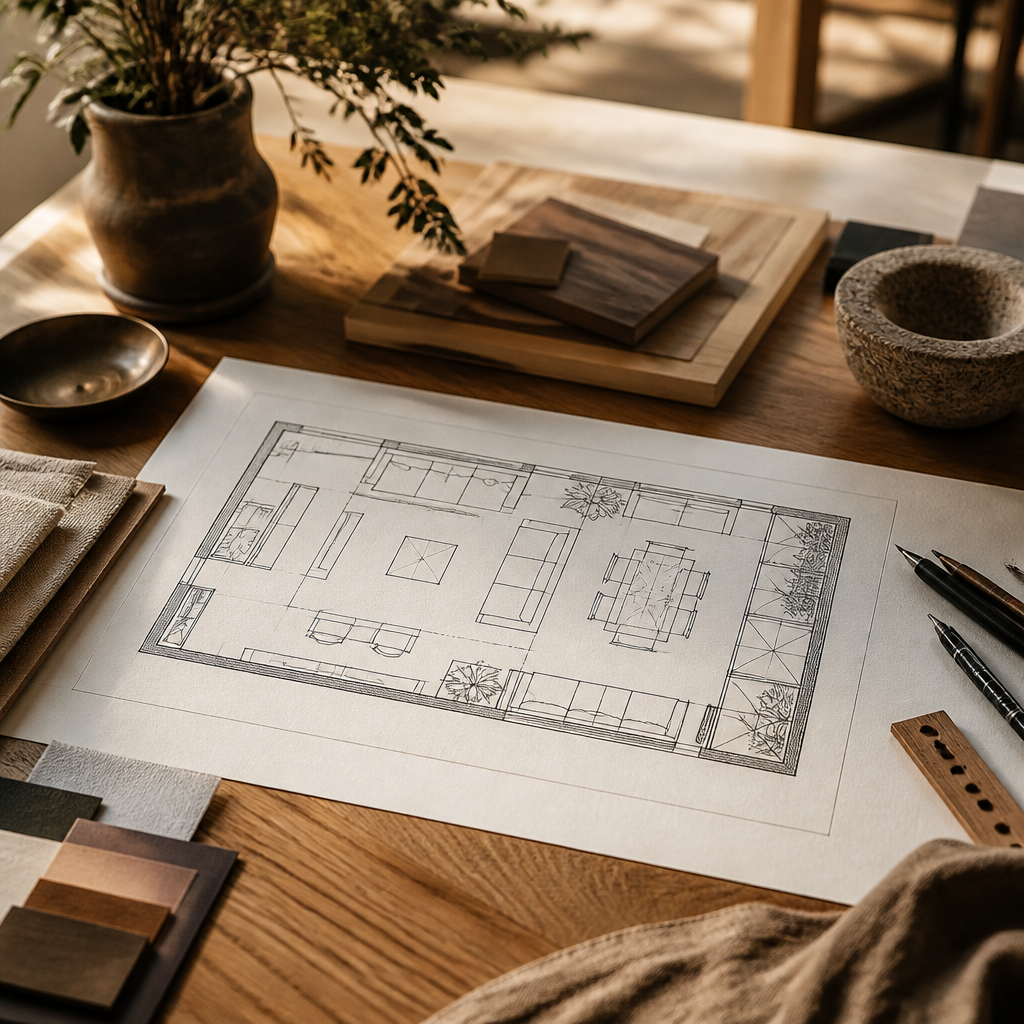
Measure and plan the layout
Record all dimensions and mark fixed elements: windows, doors, radiators, outlets. Draw a rough floor plan. Planning prevents the paralysis of an entirely open space.
Choose anchor furniture first
Select the largest piece for the room: sofa, bed, or dining table. This anchor determines scale for everything else. All subsequent choices reference its size and position.
Add secondary functional pieces
Place side tables, nightstands, chairs, and storage that support the anchor. Verify clearances and traffic paths. Every piece should make the room more functional, not more crowded.
Layer rugs and textiles
Add a rug that is appropriately sized for the furniture grouping. Hang curtains high and wide to enlarge windows. These textile layers add warmth and sound absorption.
Install proper lighting
Use a mix of ambient, task, and accent lighting. Empty rooms feel cold under a single overhead fixture. Multiple light sources at different heights create depth and atmosphere.
Accessorize with purpose
Add art, plants, books, and objects that reflect your taste. But stop before the room feels full. Empty space is not a problem to solve. It is a design choice that lets important pieces breathe.
What to filter out
Measurement is what prevents early mistakes from becoming expensive anchors of their own. A tape measure, a rough scaled sketch, and even cardboard stand-ins will teach more than optimism ever will. The largest piece should be checked not just against wall length but against door swings, walkway width, and the room's visual balance. Storage should be introduced only after the room's primary furniture has proven what is still missing; otherwise people often overfurnish with shelving and underfurnish with comfort. The room needs to reveal its needs in order.
The best way to furnish an empty room is slowly enough to learn from the first decisions and quickly enough to keep the project coherent. Once the anchor, light, and primary support pieces are right, the room starts telling you what it still wants. That is when art, color, and secondary furniture become much easier to choose. Empty rooms are intimidating only until they have one correct reference point. After that, they become design problems instead of blank psychological voids.