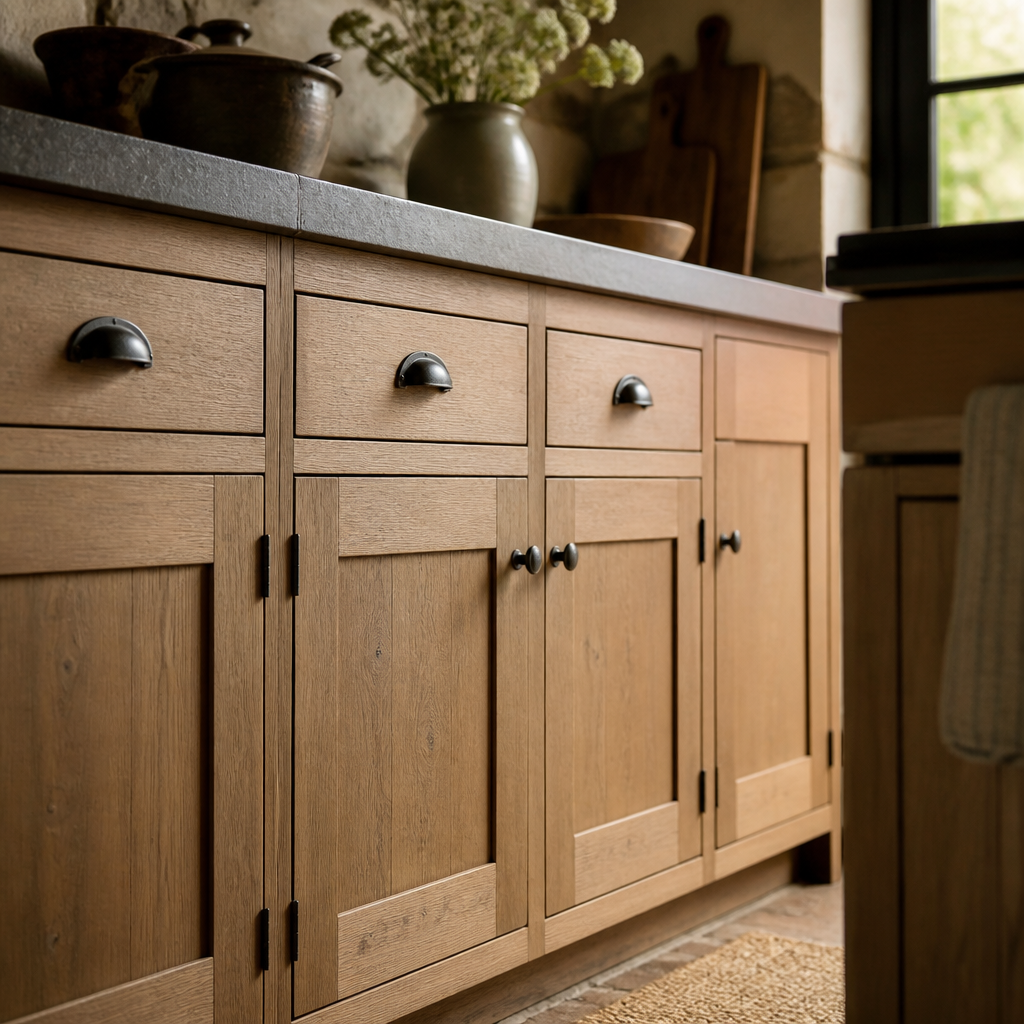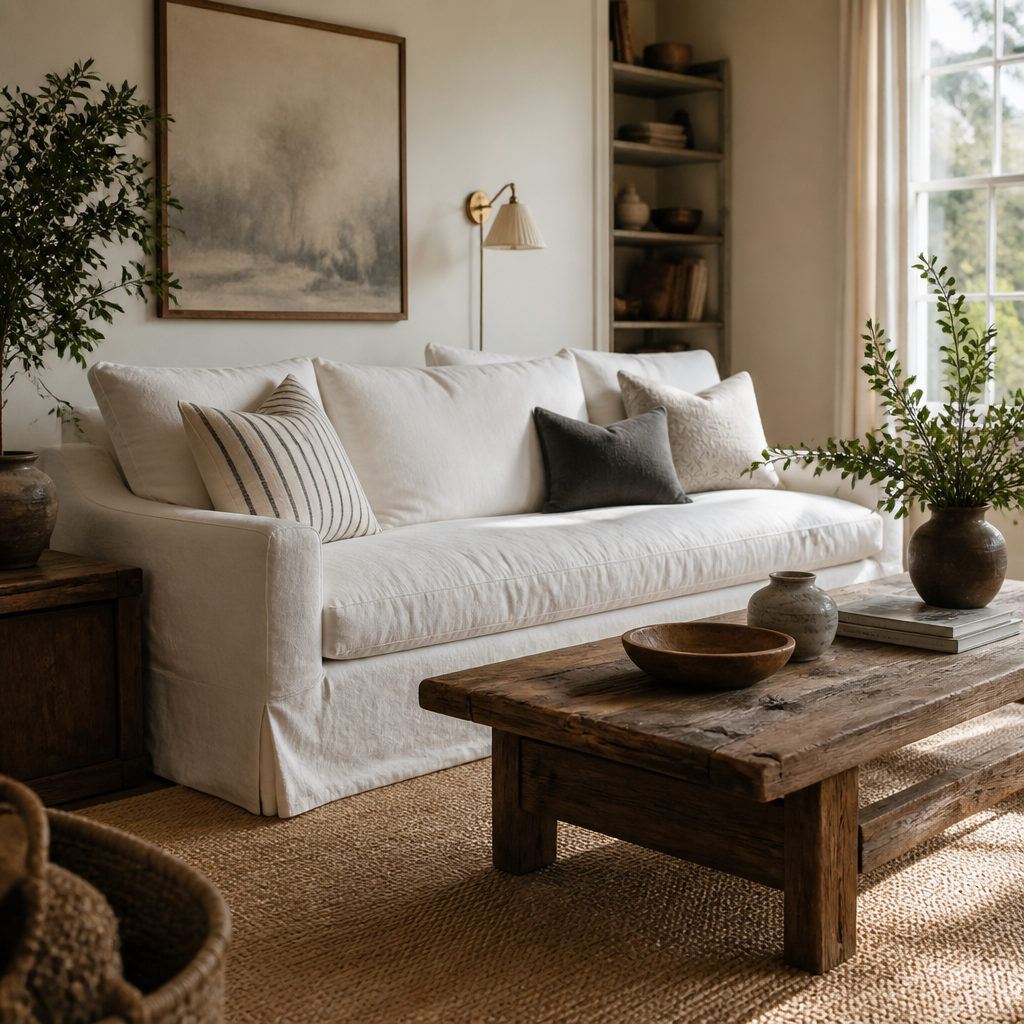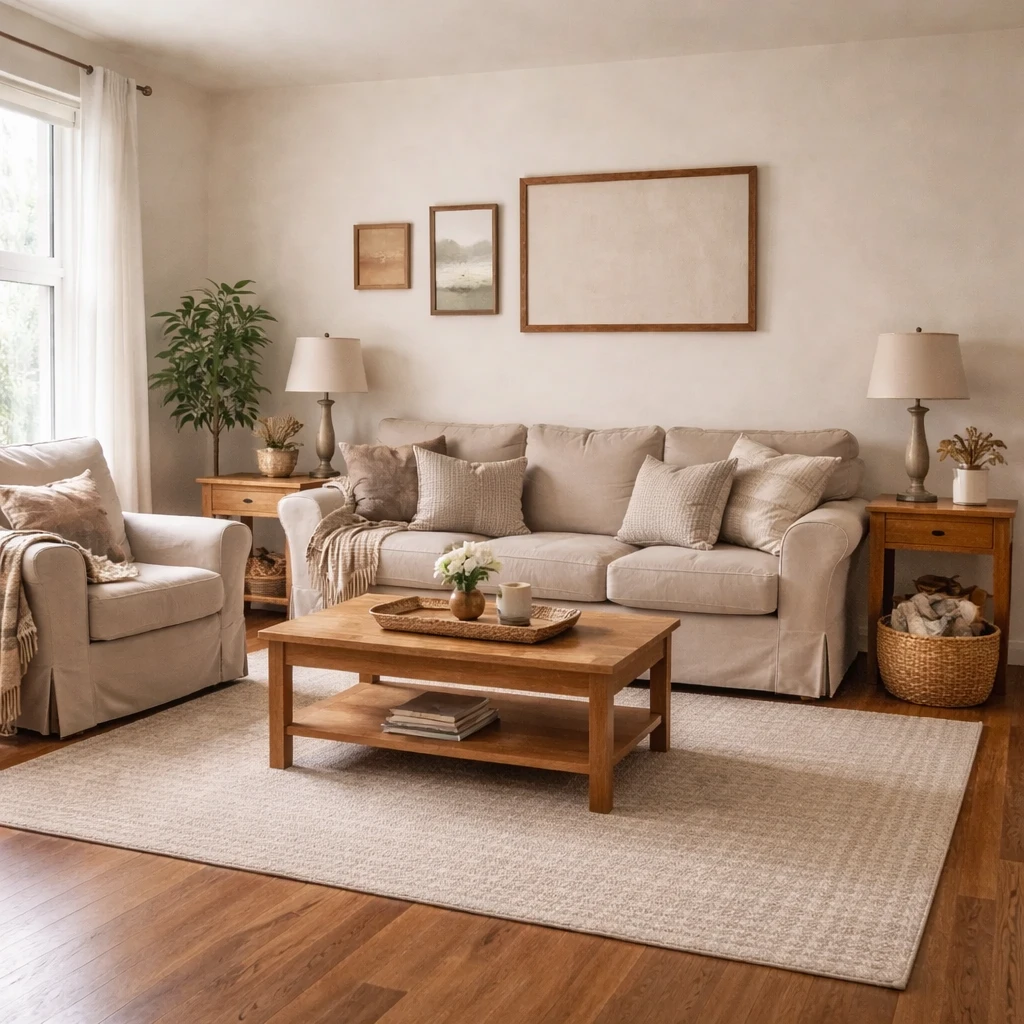
Farmhouse design evokes the practical, warm aesthetic of rural American homes while incorporating modern conveniences. The style emphasizes comfort, craftsmanship, and connection to agricultural heritage—think beadboard walls, reclaimed wood, vintage finds, and practical furniture that can handle daily life. It's about creating a home that feels lived-in and welcoming.
Key elements include: shiplap or beadboard walls, farmhouse sinks, open shelving, reclaimed wood beams and furniture, vintage accessories (enamelware, old signs, grain sacks), and a neutral palette with warm wood tones. Modern farmhouse updates often include cleaner lines and more minimal ornamentation than traditional farmhouse.
The farmhouse aesthetic values authenticity: real wood grain, honest materials, and pieces that show wear as character rather than flaws. This doesn't mean you need to buy expensive antiques—many big-box retailers offer farmhouse-style pieces at accessible prices. The key is avoiding anything that feels overly polished or precious—the look should feel approachable and relaxed.
What defines the look
American farmhouse architecture evolved through three centuries of vernacular adaptation to climate and agriculture. In the 1700s, English and German immigrants built post-and-beam structures with steeply pitched roofs to shed snow and central chimneys for heat distribution. The Shaker communities contributed a design philosophy of extreme utility and honest construction: mortise-and-tenon joinery, tapered legs that reduced material waste, and finishes that highlighted wood grain rather than concealing it. This philosophy of "hands to work, hearts to God" produced objects that were beautiful because they were functional, not despite it.
Specific farmhouse elements carry functional lineages that predate their decorative revival. The apron-front sink originated in eighteenth-century English butler's pantries where the deep basin and forward-facing apron protected cabinetry from water damage. Barn door hardware evolved from exterior agricultural hardware that allowed large doors to slide parallel to walls, saving the swing space required in barn interiors; modern interior adaptations use flat-track systems with rollers rated for 150 to 400 pounds. Wide plank flooring, traditionally milled at 8 to 20 inches in width from old-growth timber, required less labor than narrow strip flooring because fewer boards covered the same area. Farmhouse table construction diverged into trestle bases that resist racking and pedestal bases that maximize leg clearance for bench seating.
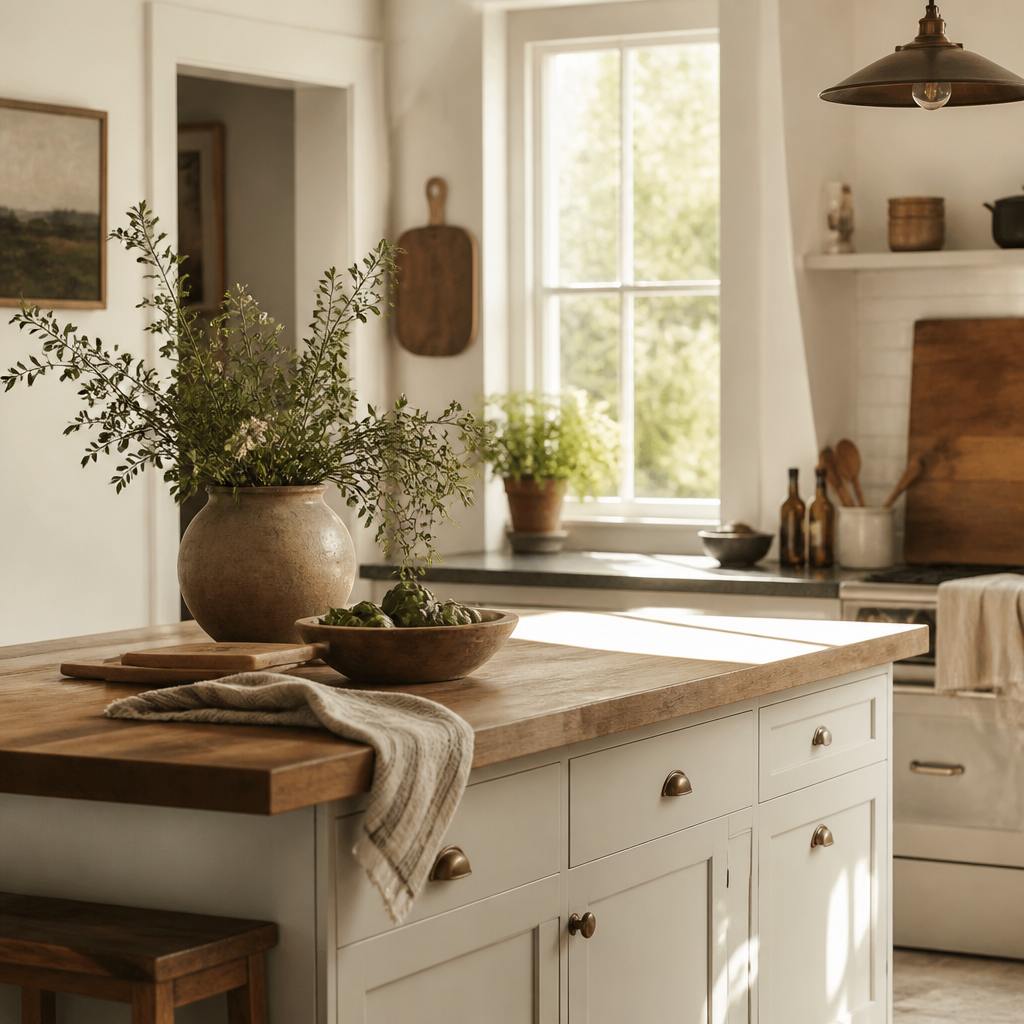
Modern farmhouse differs from traditional farmhouse in its restraint. Where traditional farmhouse embraces visible utilitarian elements, modern farmhouse simplifies lines and reduces ornament. A modern farmhouse kitchen might use shaker cabinets with minimal hardware, black-framed windows, and a restrained palette of white, wood, and black. The reference to rural aesthetics is present but edited, creating a space that feels contemporary without losing its agricultural roots. Traditional farmhouse layout follows functional patterns — kitchens opening to dining areas, mudrooms near side entrances, porches providing transitional zones — that remain relevant because they solve practical problems.
How to apply it well
Build the style from practical texture, not decorative signaling
Start with real architectural warmth, paneling, beams, simple trim, wide planks, or another honest surface move, rather than trying to announce farmhouse through accessories. The room should feel rooted in utility and age, not labeled into submission.
Choose furniture that looks durable enough to work hard
Farmhouse pieces should feel sturdy, useful, and forgiving. Tables, storage, and upholstered pieces need grounded silhouettes and practical materials that can survive meals, pets, mud, and regular cleaning. If a piece feels too delicate for everyday family use, it is probably the wrong style match.
Use painted surfaces and wood as the main visual equation
Keep walls and larger background surfaces light, often white or soft cream, then pair them with warm timber tones so the room gains contrast through material instead of through excessive decoration. This balance is what makes farmhouse feel warm rather than merely pale.
Layer natural textiles without making the room fussy
Use linen, cotton, wool, and jute to soften the room, but keep the patterns and colors modest enough that the materials stay believable. Farmhouse warmth comes from texture and use, not from overloading the room with nostalgic fabric gestures.
Specify surfaces for wear, stains, and cleaning
Choose washable slipcovers, durable upholstery, sealed wood, or similarly forgiving surfaces because farmhouse rooms are expected to work hard. If the room can be spoiled by ordinary family life, the finish package is too precious for the style's premise.
Remove the clichés once the room starts working
As soon as the room has its material warmth, edit out signs, props, and empty symbolic gestures that overstate the theme. Farmhouse gets stronger as the room starts to look less like an interpretation and more like a naturally useful place to live.
What makes it feel forced
Common mistakes in farmhouse design include relying on decorative clichés rather than functional authenticity. Signs that say "Gather," fake distressing applied in factories, and shiplap installed as wallpaper pattern rather than horizontal boards that shed water all miss the point. Another error is confusing farmhouse with rustic: farmhouse requires material warmth and practical layout, but it does not require rough-hewn surfaces or visible knots in every board. The goal is a room that feels like it grew from agricultural necessity, not like it was ordered from a catalog.