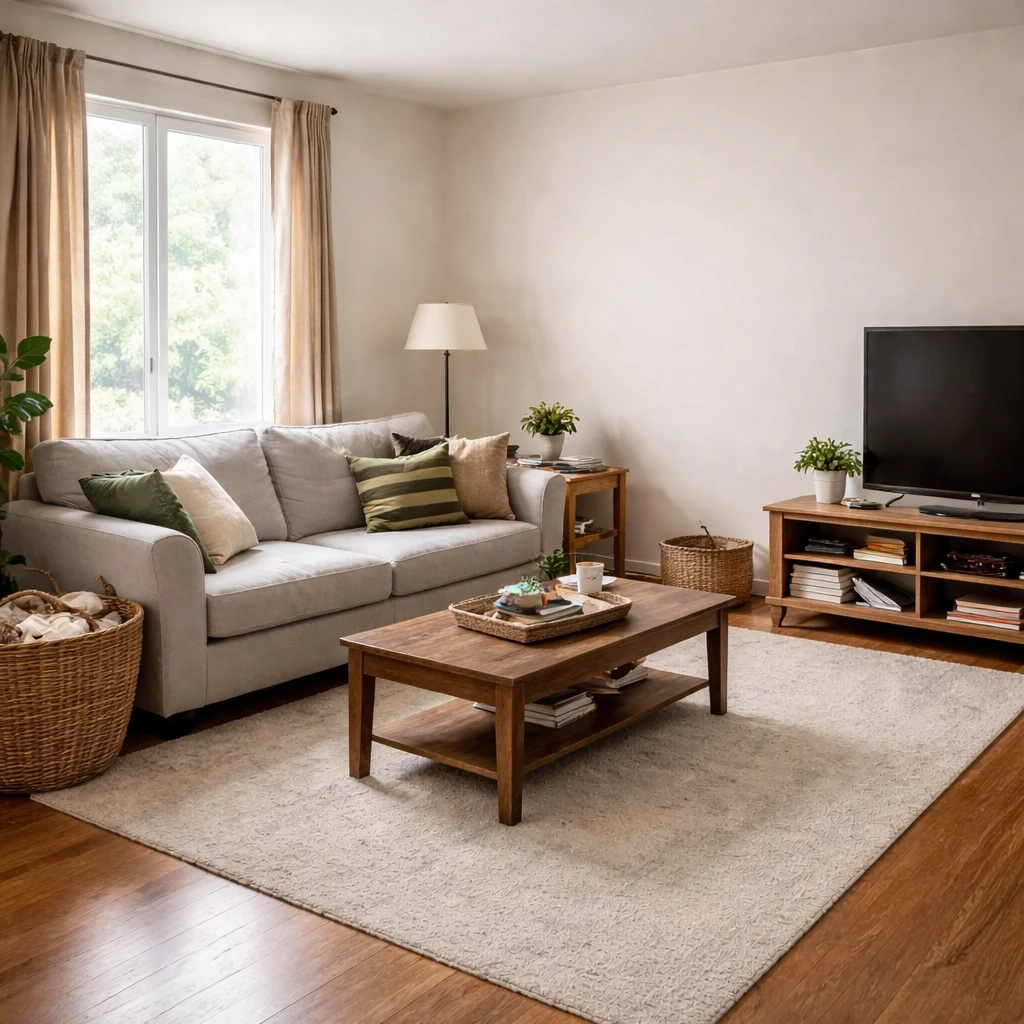
Home decor ideas add personality to your space after functional furniture is in place. This is where your style becomes visible: art, textiles, accessories, plants, and the details that make a space feel like yours. Decor is where most rooms become homes.
Start with what you have: do you have meaningful objects worth displaying? Family photos, travel souvenirs, inherited pieces, collections? These personal items create stories that can't be purchased. Build your decor around meaningful objects, then fill gaps with purchases.
Quality over quantity matters in decor: a few great pieces beat many mediocre ones. textiles offer high-impact, lower-cost updates: pillows, throws, curtains, and rugs change feel dramatically. Plants add life and improve air quality. Don't forget lighting: lamps transform spaces more than most decor.
What is worth borrowing
Decorating a room well begins with editing what is already there. Walk in from the doorway and identify the first three things your eye lands on; if two of them are clutter or visual noise, the room is not ready for new accessories yet. Good decorating almost always starts with subtraction, clearing undersized objects, lonely accents, and anything that is thematically louder than the architecture can support. The room should first be understandable, then layered. This sounds severe, but it is usually cheaper and more effective than trying to buy your way out of confusion.
Color should be distributed intentionally rather than evenly. The 60-30-10 rule remains useful because it forces hierarchy: roughly 60 percent dominant field, 30 percent support, 10 percent emphasis. In practice that means walls, major upholstery, and rugs usually establish the room's atmosphere, while pillows, art, and objects should sharpen rather than rewrite it. If the room already has strong fixed finishes, oak floors, brick, stone, busy counters, your decorating palette should often narrow rather than expand. Rooms feel sophisticated when the accent color appears deliberate, not when every surface tries to audition for attention.
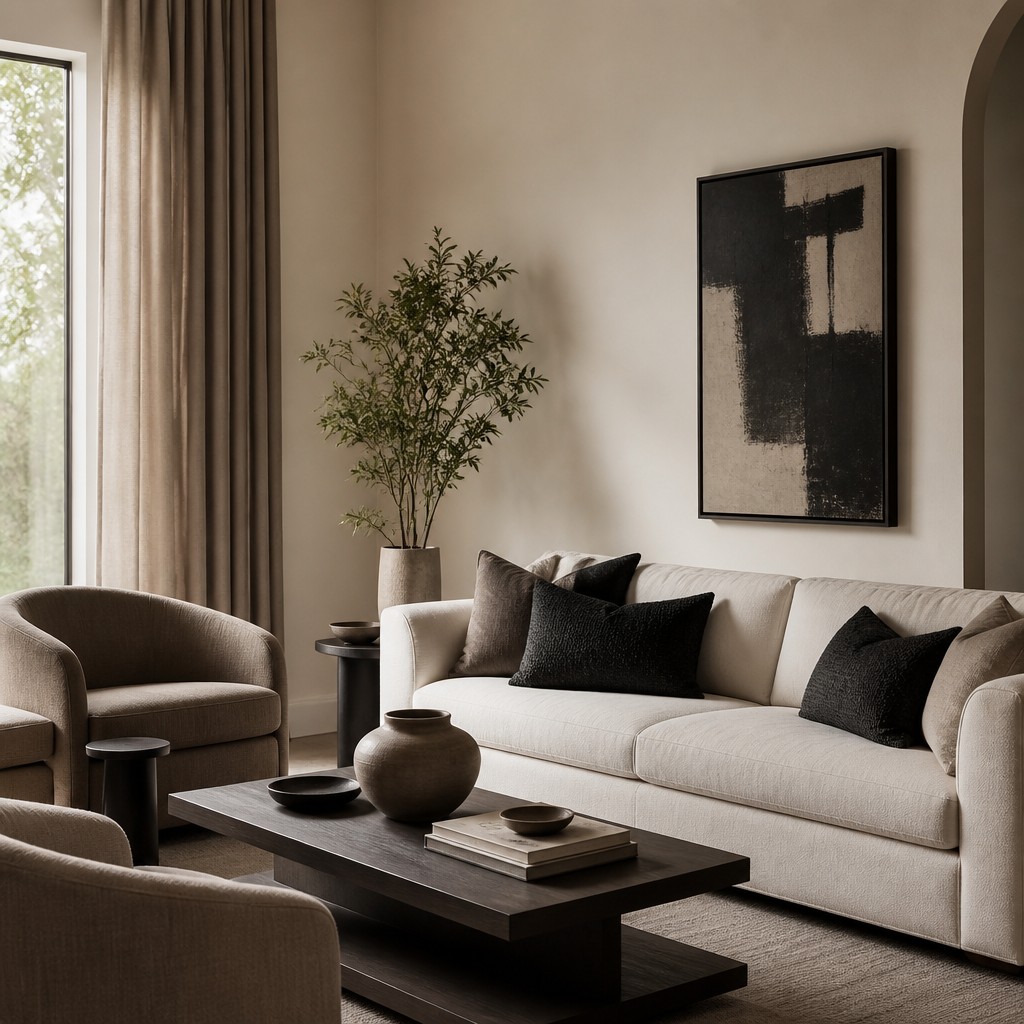
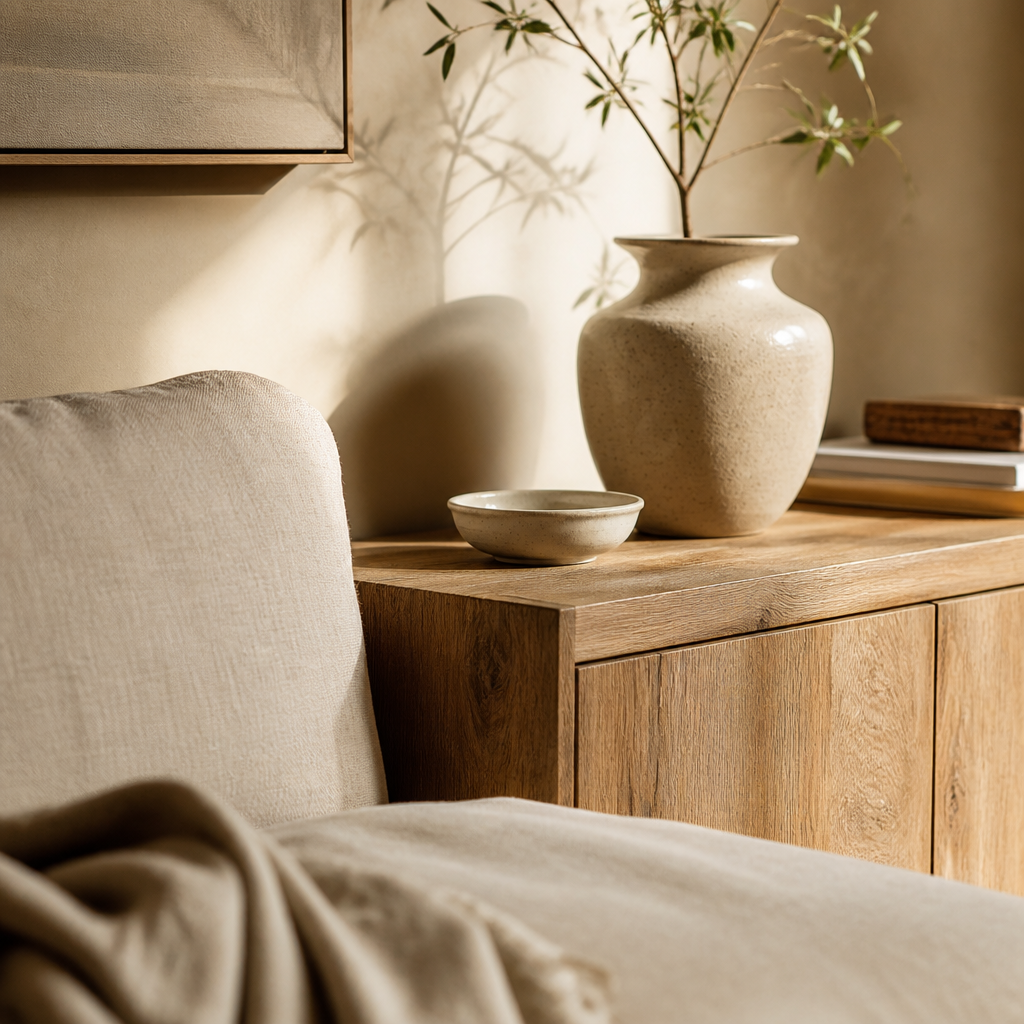
Texture is where modest decorating budgets often outperform expensive but flat rooms. Linen, wool, rattan, aged brass, ceramic, and natural wood create depth without needing a loud palette. A room with only smooth surfaces, lacquer, chrome, polished stone, and glass, tends to feel cold regardless of color. As a rule, aim for at least three tactile categories in a room: something soft, something matte or organic, and something with a little crispness or sheen. The eye reads these differences faster than it reads most subtle hue changes, which is why texture correction often makes a room feel finished before any major color correction does.
How to turn ideas into a plan
Audit what the room is already saying
Walk the room and identify the real problem: too cold, too flat, too cluttered, too beige, too shiny, or too fragmented. Name what works as well as what fails. Decorating gets smarter the moment the room is treated like an editing problem instead of a shopping emergency.
Set a restrained color and material direction
Choose a palette that solves the room's weakness rather than one that simply feels new. If the room is visually flat, add texture before adding more hue. If the room already has strong fixed finishes, narrow the decorative palette so the eye reads hierarchy instead of noise.
Test scale with art, rugs, and textiles first
Before buying objects, confirm whether the rug is large enough, whether the art is properly scaled to the furniture below it, and whether curtains should rise higher or widen further. These large visual moves correct more than small accessories ever will, and they reveal quickly whether the room needs fewer things rather than more.
Use lighting to finish the decor, not just illuminate it
Layer lamps and accent light at different heights so the room still feels intentional after dark. Warm bulbs in living zones and well-placed shades can make existing furniture and paint look dramatically better, which is why lighting should be part of decorating rather than a separate technical chore.
Add objects only where they complete the composition
Place books, ceramics, trays, pillows, and smaller accents only after the room's large-scale problems are corrected. Each piece should either add height, contrast, texture, or function. If it is merely filling a gap, it is probably clutter with good PR.
Edit the room one last time before declaring it finished
Remove anything that duplicates function, interrupts a sightline, or makes the room feel busier than it needs to. The last step in decorating is almost never buying one more thing. It is deciding what the room can now live without.
What to filter out
Art and decorative objects should follow proportion rules, not sentiment alone. Most wall art reads best with its center around 57 to 60 inches above the floor, and pieces over sofas or credenzas usually want a total width around two-thirds of the furniture below. Shelf styling works best when heights vary and negative space is preserved; one tall note, one medium mass, one lower object, then enough emptiness to keep the arrangement breathable. If every surface is covered, the room starts reading as storage. Decorating is not about proving how much you own. It is about deciding what deserves visibility.
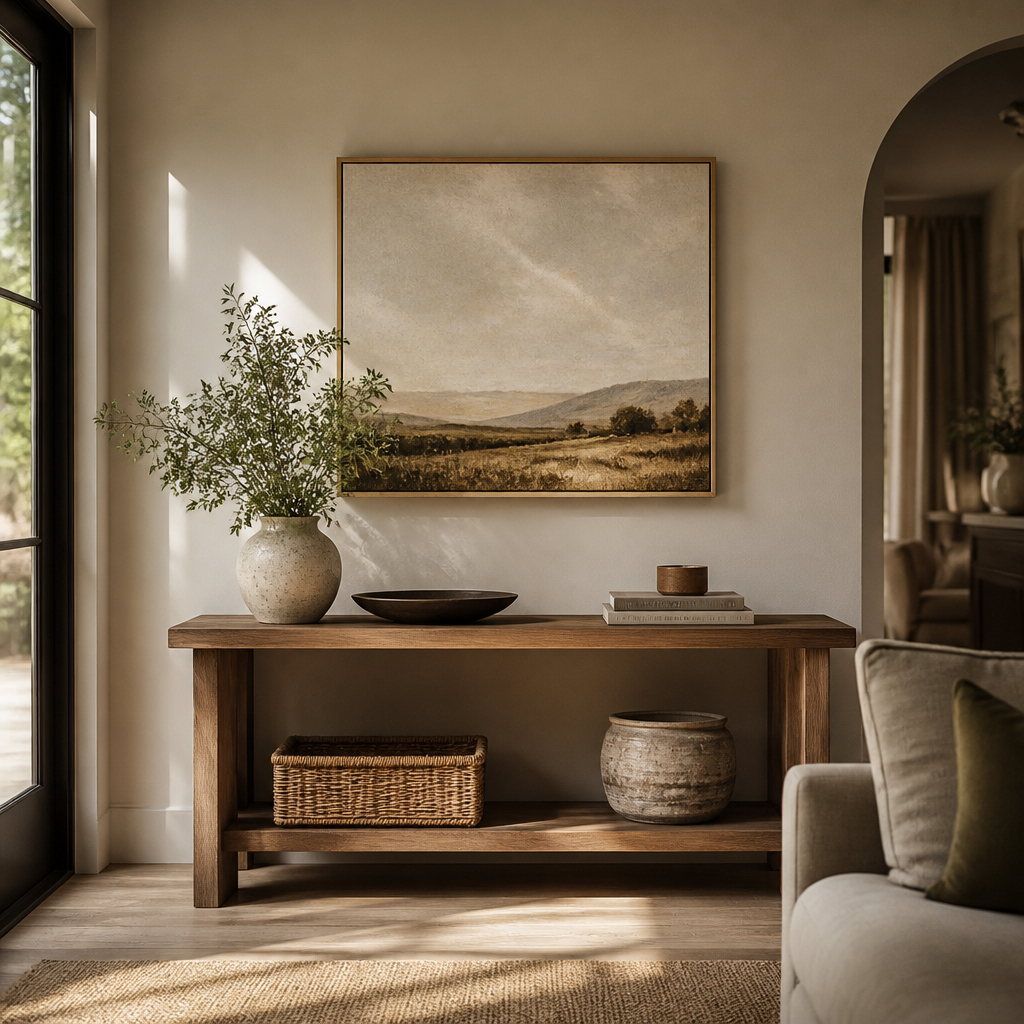
Lighting finishes the decoration whether people acknowledge it or not. Rooms layered only with overhead light flatten at night, while lamps at multiple heights let texture, art, and furniture look intentional after sunset. Living spaces generally feel best around 2,700K, and even a simple table lamp can soften a room more effectively than a new decorative object. The strongest decorating plans are phased: edit first, correct light second, refine textiles third, then add art and accessories only where the room still feels underresolved. That order keeps decorating from becoming accumulation and turns it back into composition.