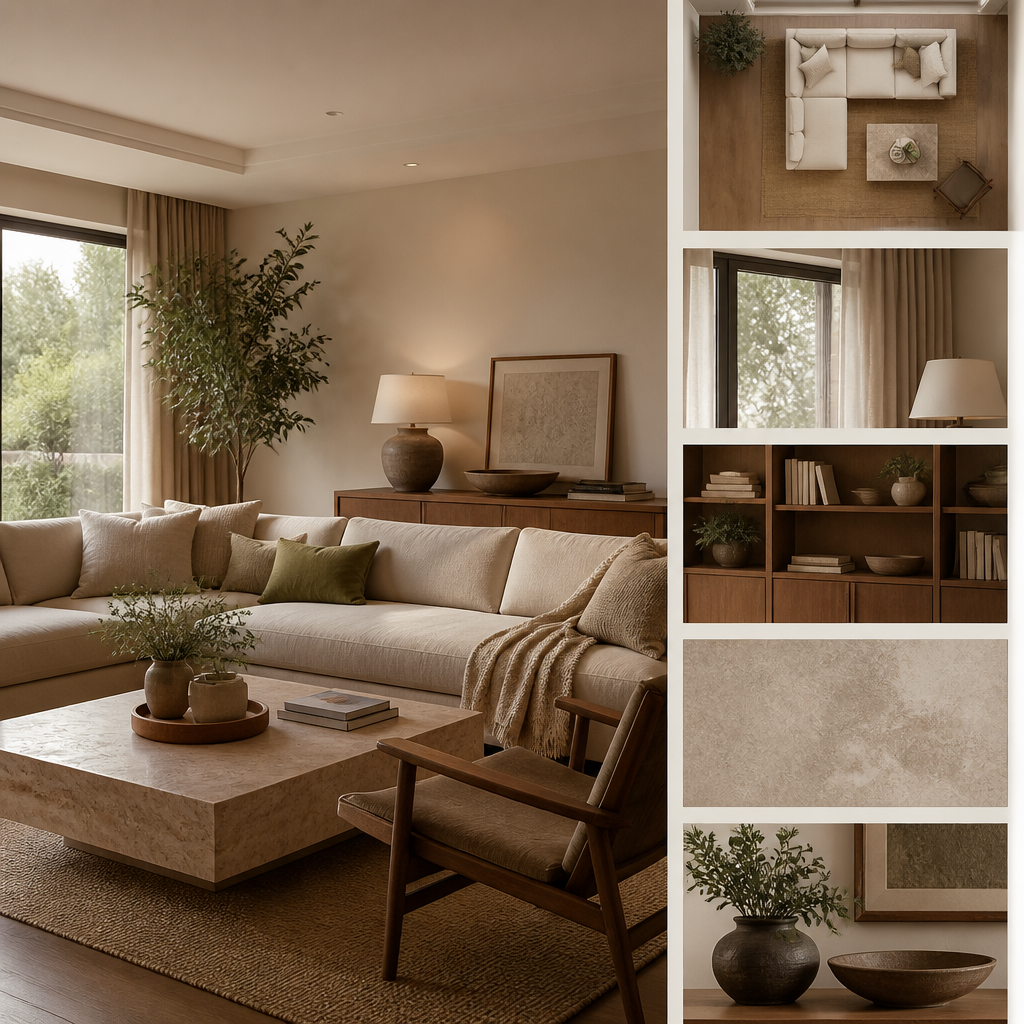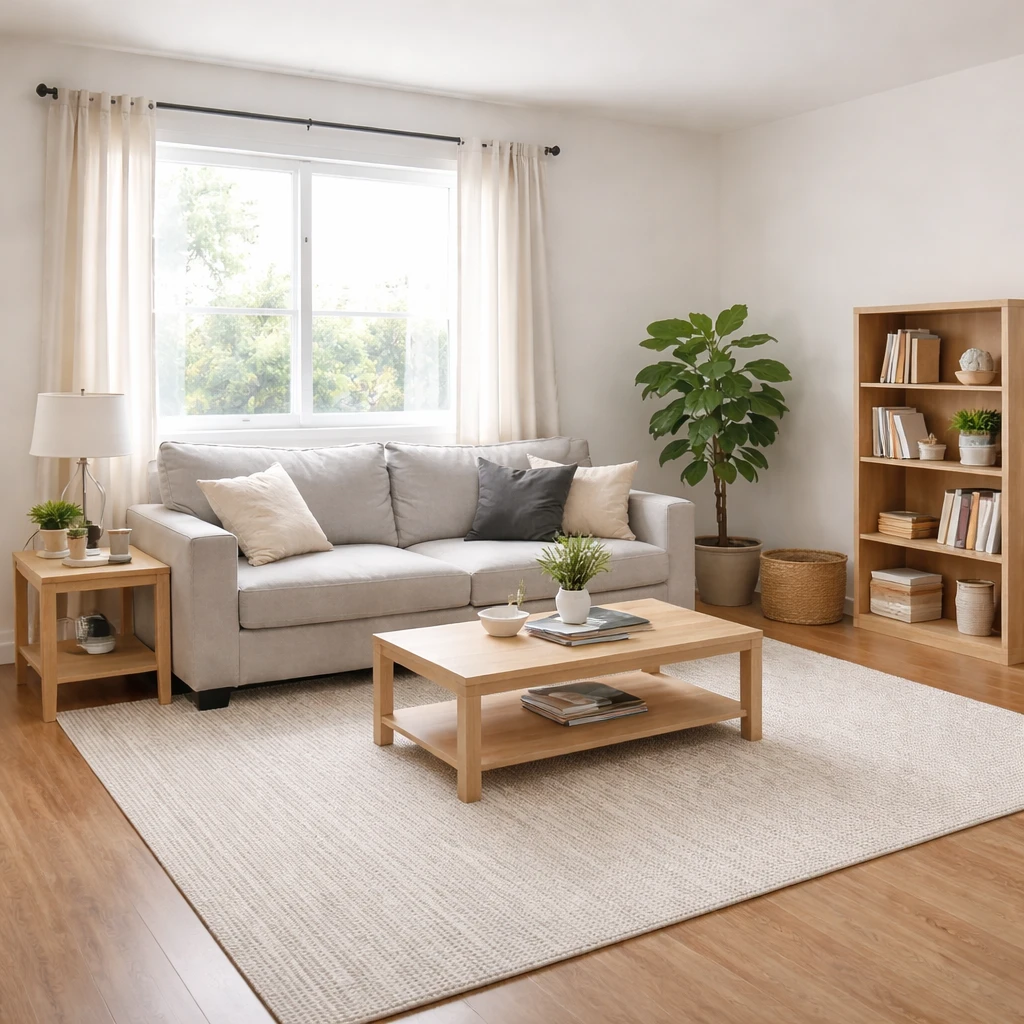
Room design tools range from simple smartphone apps to sophisticated professional software. The best tool depends on your needs: quick inspiration requires different capabilities than detailed renovation planning. Understanding tool categories helps match tool to task.
Types of tools include: 2D floor planners (good for layout testing), 3D room visualizers (better for spatial understanding), augmented reality apps (see furniture in your space), and AI-powered design generators (explore styles quickly). Each has strengths and limitations.
The best approach often uses multiple tools: inspiration gathering with AI tools, layout testing with 2D planners, furniture selection with AR visualizers, and detailed planning with more sophisticated software. Tools serve different purposes—choose based on what you're trying to accomplish.
What matters most
A room redesign goes wrong when people confuse ideas with plans. Inspiration images can suggest tone, but they do not solve a bad door swing, an undersized rug, a glare problem, or a room that has no believable place for storage. The useful continuation of any redesign guide is the planning stage: measure, compare, annotate, and test before anything heavy or expensive enters the room. That is where uncertainty drops and the project starts behaving like design instead of wishful shopping.
The first job in a redesign process is documentation. Record wall lengths, ceiling height, window placement, radiator depth, outlet locations, and any furniture you expect to keep. Then define the problem in plain language: too dark, too crowded, too echoey, no focal point, no desk zone, poor guest seating, and so on. Broad complaints such as "it feels off" are not actionable until they are translated into layout, lighting, or storage failures. Most redesigns become simpler once the real problem is named with enough specificity that it can be measured.
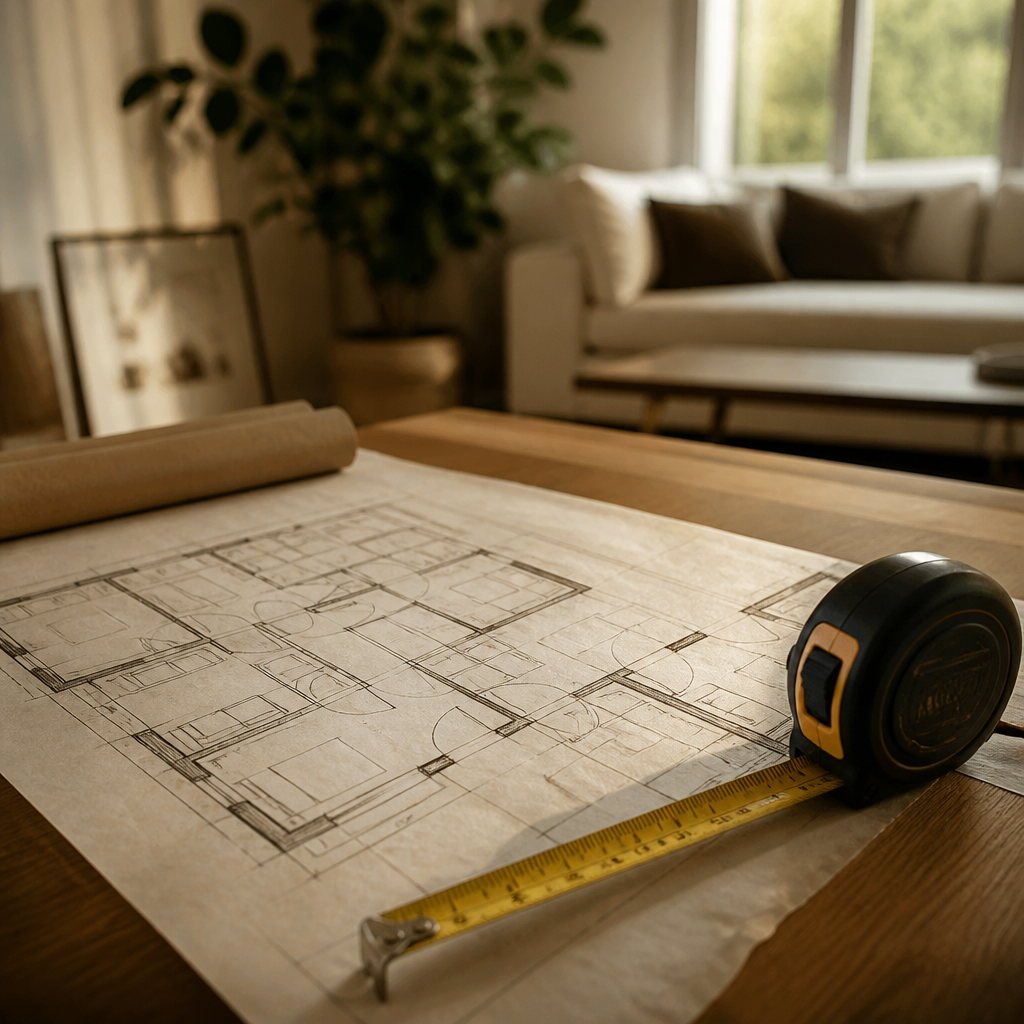
Comparison is where the planning gets smart. Test at least two or three viable directions against the same room conditions: one that prioritizes openness, one that prioritizes storage, one that prioritizes a stronger focal point or better work zone. Evaluate each option by circulation, furniture scale, daylight use, and cost implication. This is the stage where a 96-inch sofa may reveal itself as too dominant, or where moving a bed 18 inches off one wall suddenly frees the path to a closet. The strongest redesign direction is rarely the one with the most personality first. It is the one that solves the room cleanly enough to support personality later.
How to approach it
Document the room before trying to solve it
Stand in the doorway, note wall lengths, window placement, ceiling height, daylight direction, and what existing pieces must stay. Most redesigns improve the moment the room is described accurately instead of emotionally. You cannot compare good options until the room's fixed conditions are visible.
Define the room's actual problem in plain language
Decide whether the room needs better layout, corrected scale, stronger lighting, more storage, or a clearer style direction. Most rooms fail on one or two specific fronts, not on every front at once. Naming those failures sharply prevents decorative solutions from being asked to fix structural ones.
Develop at least two viable directions against the same constraints
Sketch one option that prioritizes openness, another that prioritizes storage or function, and compare both using the same room dimensions. The useful comparison is not just style against style. It is one set of tradeoffs against another set of tradeoffs inside the same shell.
Judge each direction by measurable standards
Check walkway width, anchor scale, light behavior, seating distance, and where daily clutter would actually live. A room direction that looks attractive but compromises circulation or leaves no believable storage is not yet viable, no matter how strong the mood is.
Annotate the changes needed to make the winning option real
Mark what moves, what leaves, what must be sampled, and what needs contractor or paint coordination. This is where the room stops being an idea and becomes an actionable plan. Good design is not just selecting a favorite concept; it is identifying what that concept asks the room to change.
Purchase only after the room has earned the decision
Once the best option survives comparison, measurements, and refinement, buy in sequence: anchor pieces first, support pieces second, decorative layers last. The room should prove the plan before the budget is asked to trust it.
What to pressure-test
Annotations matter because real rooms almost always include partial keep conditions. Mark what stays, what moves, what gets removed, and what needs to be sampled before purchase. Use tape on the floor to test footprints, cardboard to test depth, and finish samples on more than one wall to catch light shifts. If contractors are involved, the plan also needs enough clarity to communicate outlet moves, sconce heights, shelving depths, and any trim or paint boundaries. Redesign becomes much less stressful when the room has been translated into instructions rather than opinions.
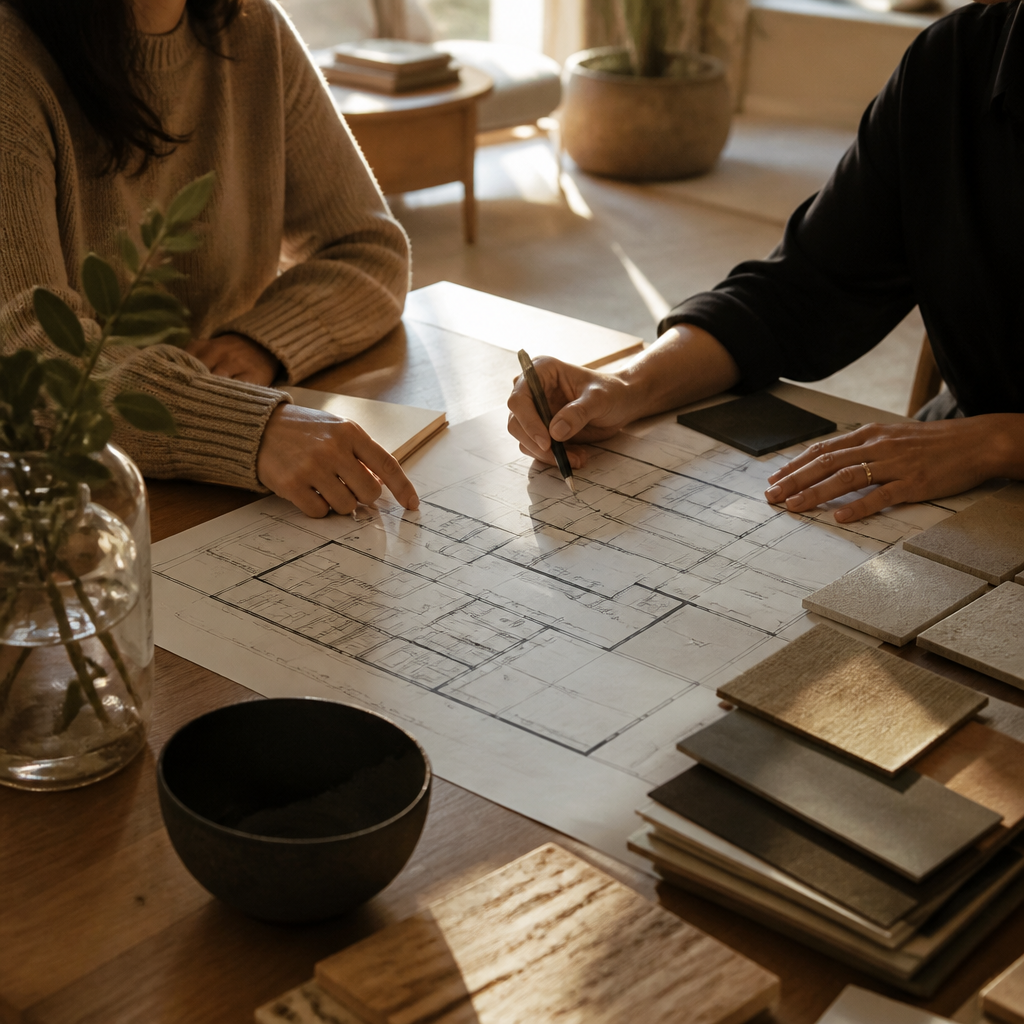
The real value of a room-planning process is confidence, not novelty. It reduces the chance of buying the wrong-size furniture, painting the wrong wall color, or building storage that blocks daily movement. More important, it helps different people, partners, family members, contractors, arrive at the same understanding of what the room is trying to become. Good room redesign is not one dramatic reveal. It is a sequence of measured decisions that gradually remove doubt until the room feels obvious.