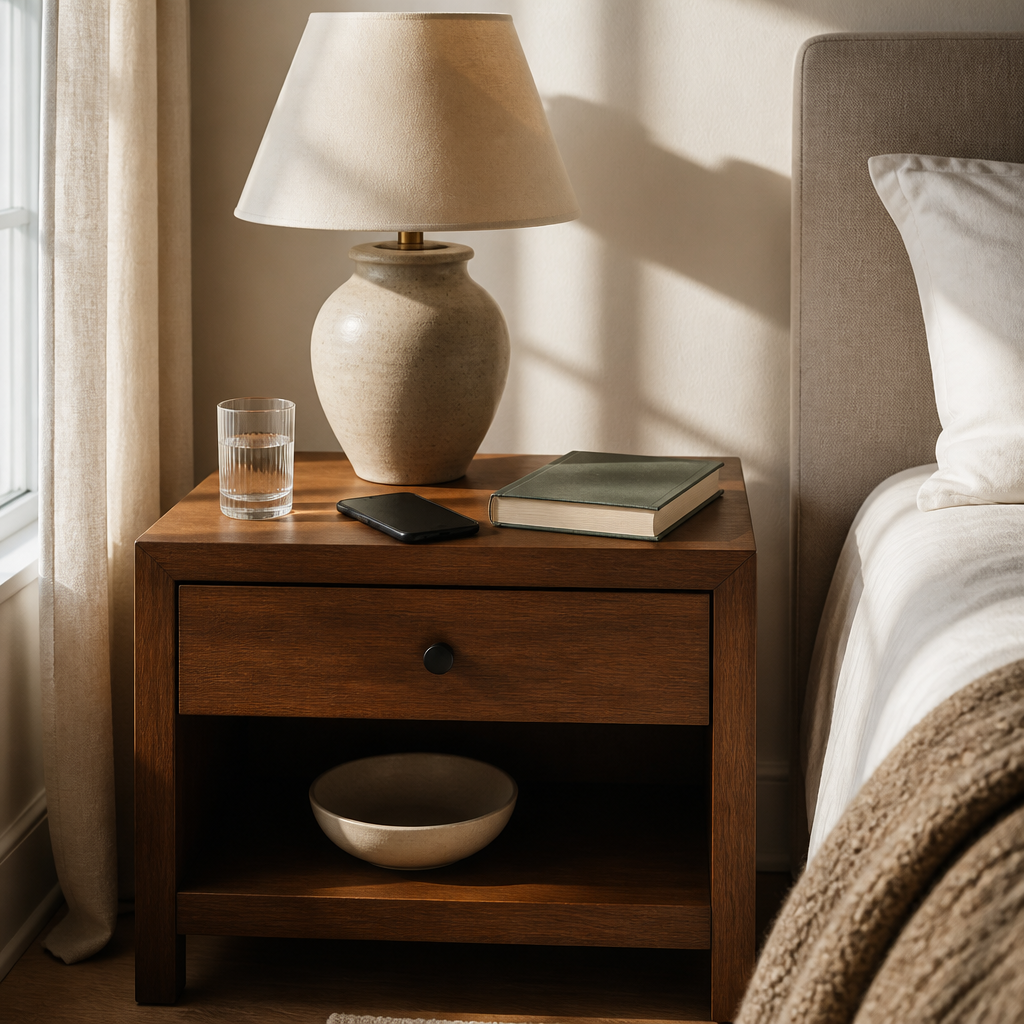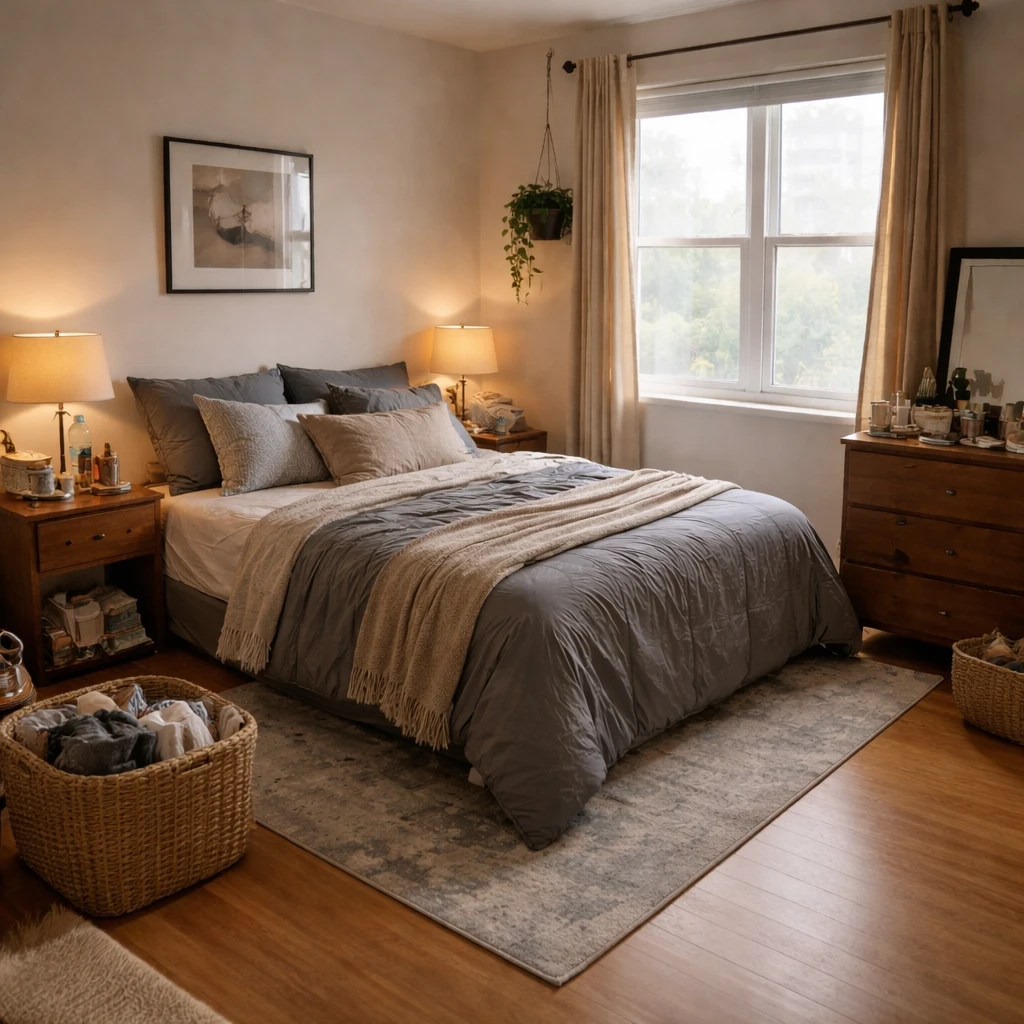
Coziness in a bedroom is created through atmosphere more than accumulation. A room with lower, warmer light, softer textures, and a calmer visual field usually feels more inviting than one with many decorative objects and a single bright ceiling fixture. Coziness is not about adding more. It is about changing how the room feels at night.
Start with light. Most bedrooms benefit from removing dependence on one overhead fixture and adding bedside lamps with warm bulbs around 2700K. Dimmers give the room flexibility. The goal is a room that feels soft and protective in the evening, not harshly lit. Bedside lighting should be reachable from bed. This single change often does more for the room's comfort than any other adjustment.
Texture comes next. Bedding with visible softness, a rug generous enough to soften the step out of bed, curtains with some weight, and at least one upholstered or wood element make the room feel more grounded. Cozy rooms usually succeed through several tactile notes rather than one big decorative statement. If the room feels cold, hard floors, bare walls, and synthetic surfaces, add softness before buying more things.
Scale also matters. Oversized furniture, too many accessories, or a bed wall crowded with mismatched pieces can make the room feel busy instead of warm. Coziness usually improves when the room is simplified to a few larger, softer moves rather than many tiny visual interruptions. The best cozy bedrooms feel quieter, dimmer, and more grounded than they did before. The room should invite staying in it, not just looking at it.
Start with the room itself
Coziness in a bedroom is created through atmosphere more than accumulation. The room needs lower light, softer textures, and a calmer visual field before decorative extras can feel convincing.
This guide stays close to those practical levers: layered lamp light, bedding and textile weight, quieter color relationships, and enough editing that the room feels protected rather than busy. Cozy rooms almost always feel simpler than people expect.

The room also has to remain usable. Storage still needs to work, surfaces still need to be practical, and furniture still needs to preserve circulation. Warmth that turns into clutter or inconvenience stops feeling cozy quickly.
How to plan it cleanly
Lower the lighting temperature and intensity first
Cozy rooms usually begin with warmer bulbs, shaded lamps, and less dependence on a single bright overhead fixture.
Add softness at the biggest touch points
Focus on bedding, bedside rugs, curtains, and one or two upholstered or wood elements that change how the room feels physically.
Tighten the palette before adding more decor
Too many competing colors or small accessories can make the room feel busy instead of warm. Coziness thrives on visual agreement.
Use scale to make the room feel protective
The bed should feel anchored, surfaces should not be crowded, and the room should avoid too many thin or scattered pieces that make it feel exposed.
Reduce sound and visual clutter
A cozy room often needs editing as much as layering. Softer materials and fewer distractions make the mood feel believable.
Finish with a few warm details, then stop
Candles, books, art, or a throw can help, but the room is cozy when the structure is right, not when it is overfilled.
What makes the room fail in practice
The goal is a room that invites staying in it. If the design makes the space feel quieter, softer, and more grounded by evening, it is doing the right work.