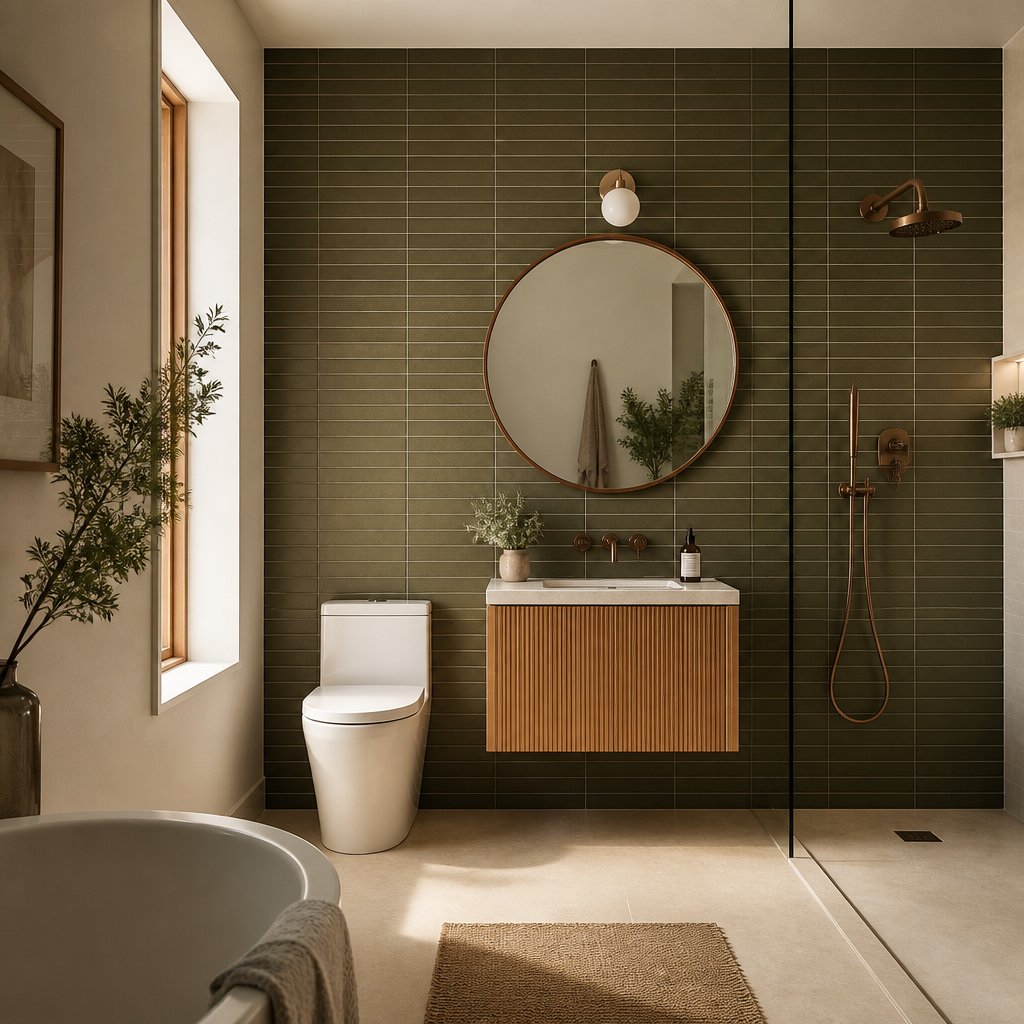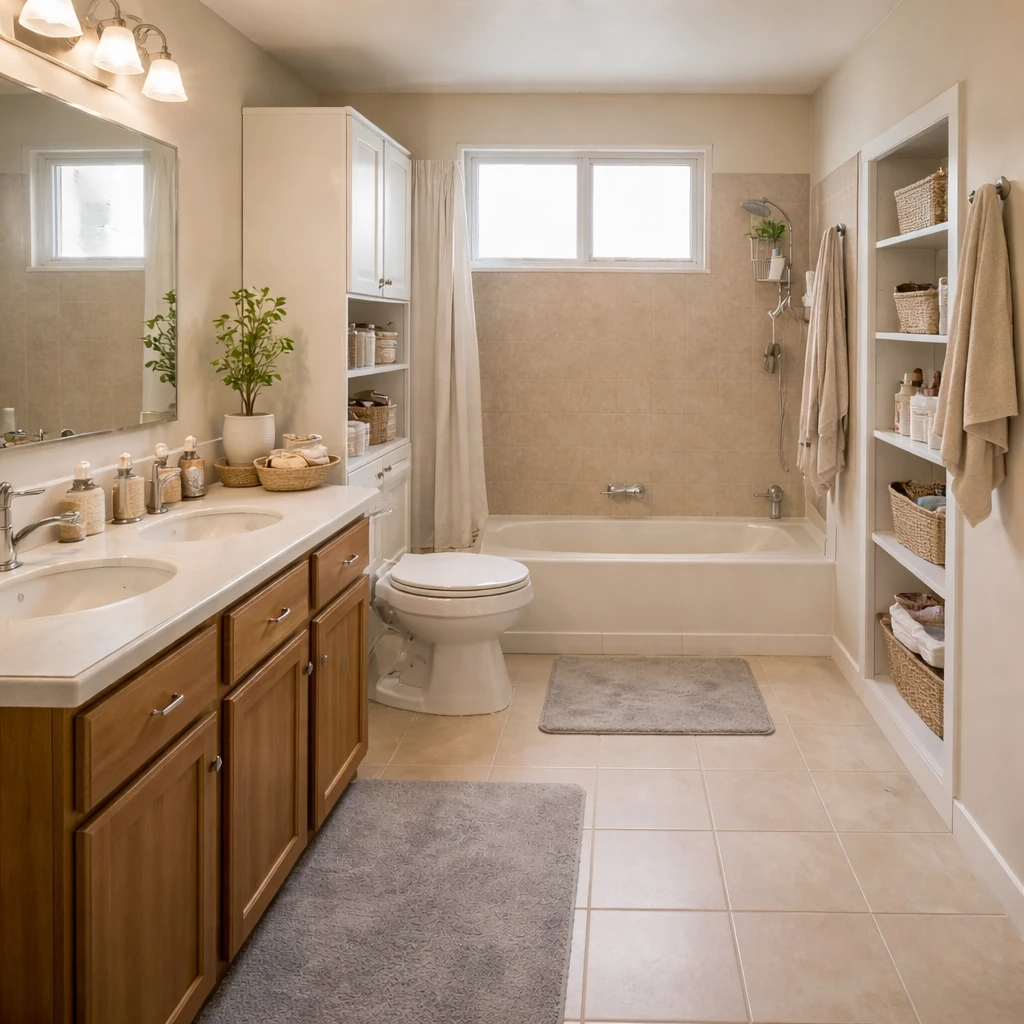
Bathroom layout gets better when the room is planned around movement and moisture, not around tile choice. The useful questions are simple: whether the vanity is deep enough, whether the toilet is placed where knees are comfortable, whether the shower door swings without conflict, and whether storage has somewhere realistic to live. That is why layout decisions come before finish decisions. A beautiful bathroom still feels wrong if fixtures collide, clearances are too tight, or wet-zone materials fail within a few years.
Plumbing locations are the most powerful constraint. Keeping the toilet drain, shower drain, and main supply lines in place usually preserves thousands of dollars. Moving them may be worth it, but only when the improved layout solves a real daily problem such as impossible vanity access or an unusable shower. Before planning any cosmetic work, understand what is fixed and what can realistically move. Once the rough-ins are settled, cabinet dimensions, counter surfaces, and lighting become much easier to judge.
Storage is typically the biggest challenge in bathrooms. Use vertical space with medicine cabinets and over-toilet shelving. Choose vanity storage over pedestals unless the floor plan absolutely requires a minimal footprint. Counter clutter, towel storage, backup supplies, and shower products all need believable homes or the room starts looking messy regardless of how attractive the finishes are. Good bathrooms feel clear and calm because their practical questions were answered first.
Start with the room itself
Bathroom planning is much less forgiving than many other room projects because the invisible decisions are the ones that cost the most to change later. Once drain lines, rough-ins, waterproofing planes, and door swings are established, the room has very little flexibility left. That is why a planning-oriented bathroom guide has to start with dimensions, clearances, and water management rather than with tile desire. The room may be small, but the cost per square foot is usually high enough that every misjudged inch feels expensive.
Exact measurements matter because bathrooms magnify error. Vanity depth, toilet placement, shower width, and the clear space in front of each fixture determine whether the room feels usable or constantly too tight. A beautiful vanity that projects too far can choke the path to the shower. A shower door that conflicts with a toilet clearance can turn daily use into choreography. Planning well means drawing these relationships before buying finishes, because fixtures that fit in elevation often fail in plan. Bathrooms are where the floor plan always gets the final word.
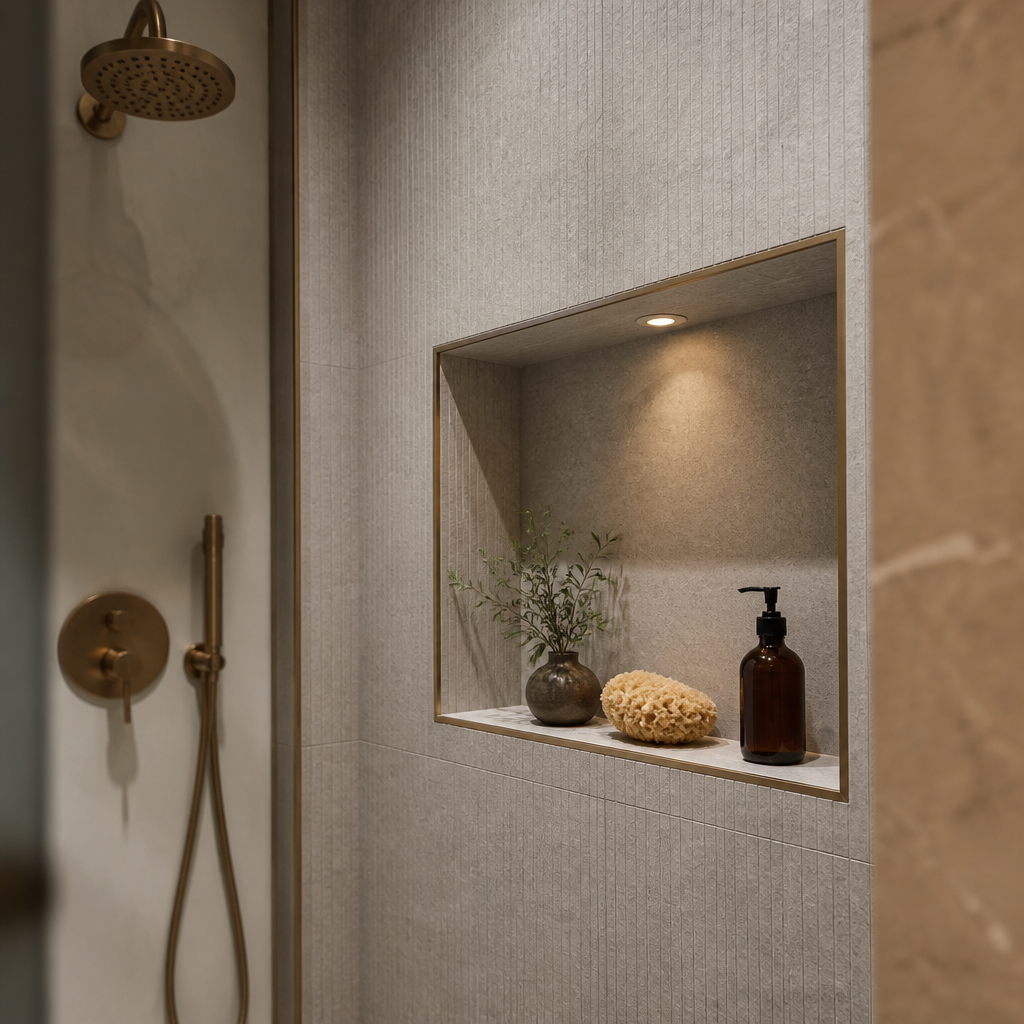
Waterproofing and ventilation deserve more attention than surface materials get. Moisture is relentless, and bathrooms reward hidden discipline more than visual drama. A planning guide should help readers think about exhaust sizing, damp zones, shower build-up, grout maintenance, and how long-term material behavior will feel after years of steam and cleaning. It is far better to choose a slightly less romantic finish that tolerates hard water, soap, and humidity than to choose something visually perfect that will begin looking exhausted in six months. Bathrooms expose fantasy very quickly.
How to plan it cleanly
Measure every fixture relationship, not just the room
Document wall lengths, door swings, vanity depth, toilet centerline, and tub or shower dimensions, then verify the clear floor in front of each fixture. Bathrooms are too small for casual guessing; even a vanity that projects 2 inches too far can compromise circulation or door function immediately.
Check code-adjacent clearances and wet zones early
Confirm front clearances, side spacing, shower dimensions, and where splash, steam, and direct-water exposure actually occur before choosing materials. This is also when to note whether a curbless concept, larger shower, or double vanity is physically realistic or just visually tempting on paper.
Decide whether rough-ins stay or move
Keeping the toilet, shower drain, and main supply locations in place usually preserves thousands of dollars. Moving them may be worth it, but only when the improved layout solves a real daily problem such as impossible vanity access or inadequate shower size. Treat plumbing relocation as a scope change, not a styling choice.
Assign storage by routine, not by wishful minimalism
Plan where towels, toiletries, backup products, paper goods, and cleaning supplies will live so counters do not become permanent storage. A bathroom for one person needs different drawer and cabinet logic than a family bath used by several people at once, and the plan should reflect that before decorative mirrors and accessories enter the conversation.
Light the face first, then the room
Place vanity lighting so the face is lit from both sides or from a broad frontal source rather than from a single overhead can that drops shadows under the eyes. Mirror area lighting should support grooming accuracy, while wet-rated shower lighting and softer ambient room lighting can be resolved as secondary layers once the vanity task is correct.
Separate refresh work from waterproofing work
Mirrors, paint, hardware, and some lighting can often be changed in a fast cosmetic phase. Tile replacement, shower rebuilding, membrane work, and layout changes belong to a slower and more invasive renovation track. Keeping those scopes distinct prevents people from pretending a waterproofing problem can be solved with prettier finishes.
What makes the room fail in practice
Lighting is another area where pretty can still mean bad. Mirror lighting should flatter the face and reduce shadows rather than turning grooming into guesswork. Storage should keep counters from becoming permanent staging zones for daily products. Medicine cabinets, vanity drawers, recessed niches, and towel locations all affect how clean the room can stay between deep cleans. A bathroom that photographs beautifully but has nowhere for ordinary objects to live is simply outsourcing clutter to the countertop.
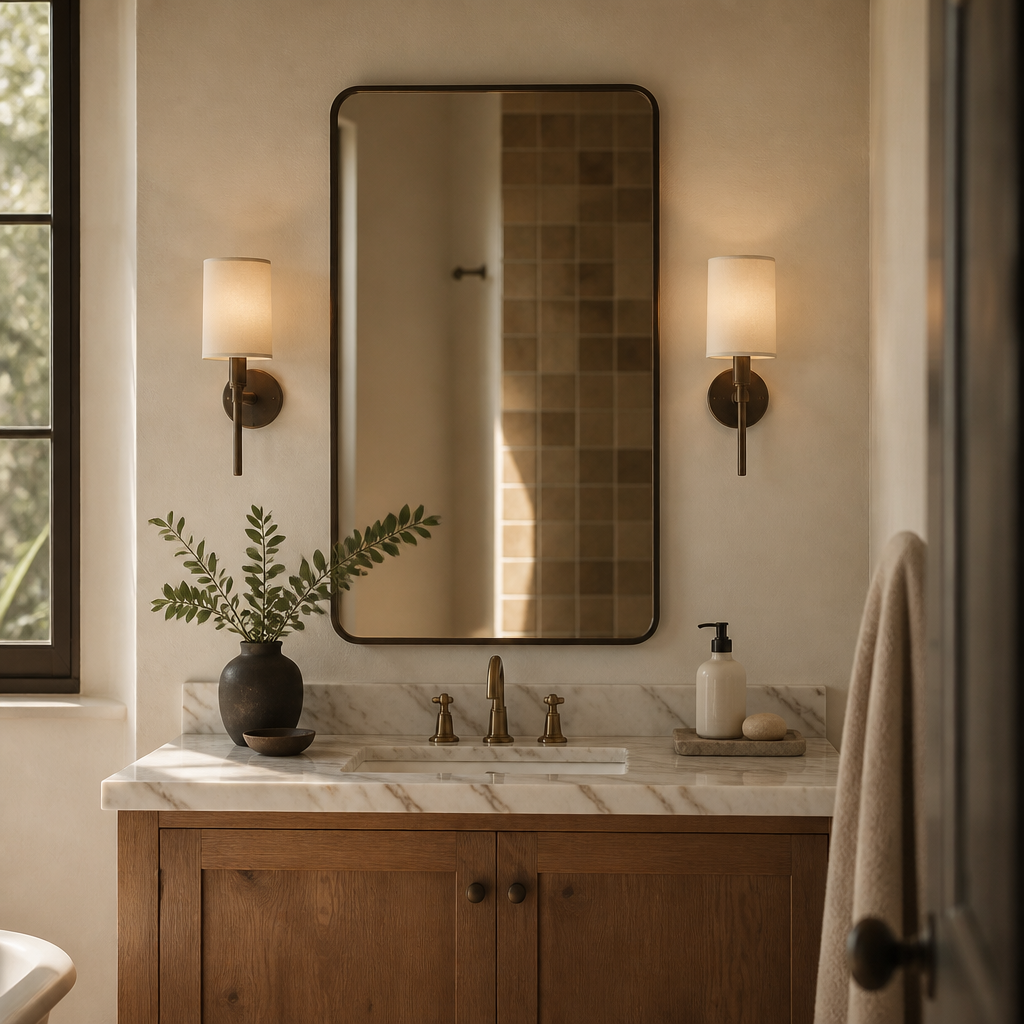
A good bathroom guide should help people decide what level of change the room truly needs: a refresh with paint, hardware, lighting, and mirrors; a fixture cycle update with vanity or shower components; or a deeper renovation where layout and waterproofing are reconsidered. In bathrooms, clarity protects budget. The more precisely the practical problems are defined at the start, the more likely the finished room is to feel calm, durable, and genuinely easier to use every day.