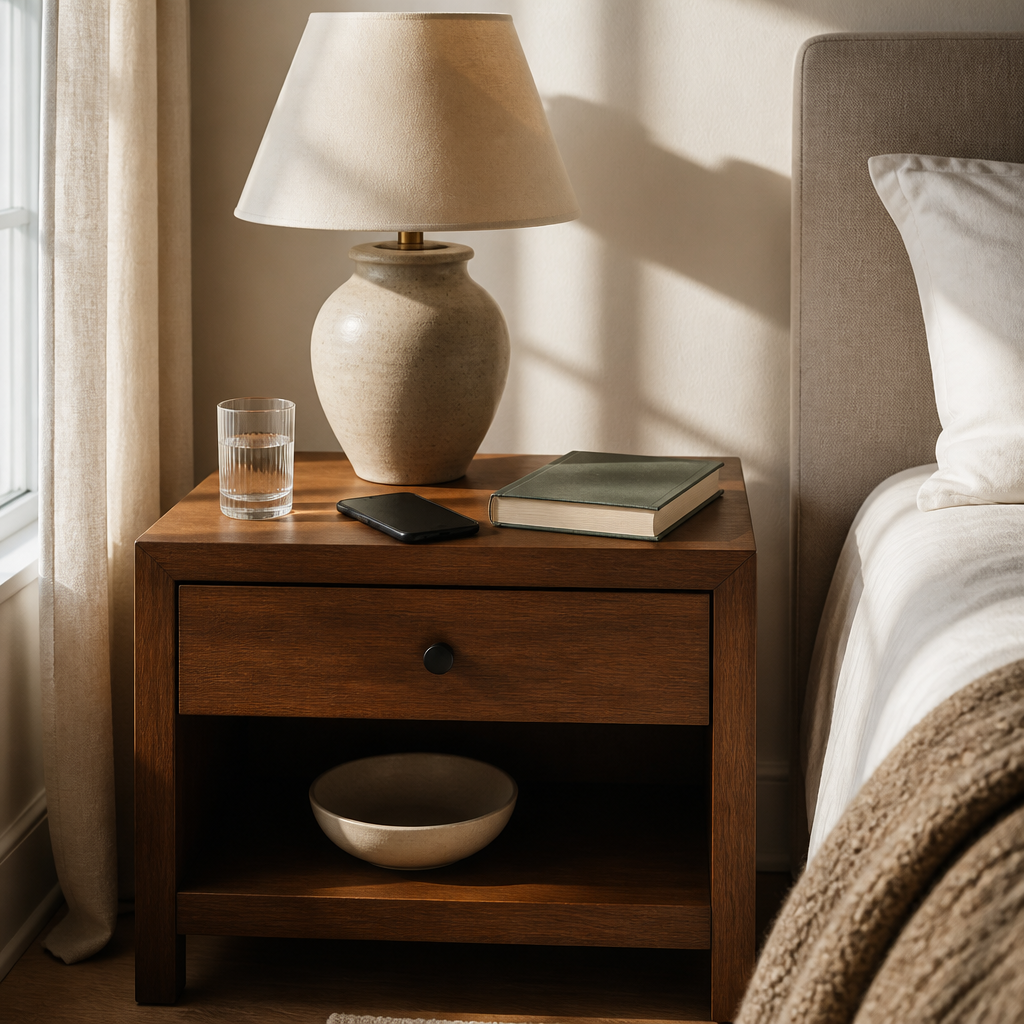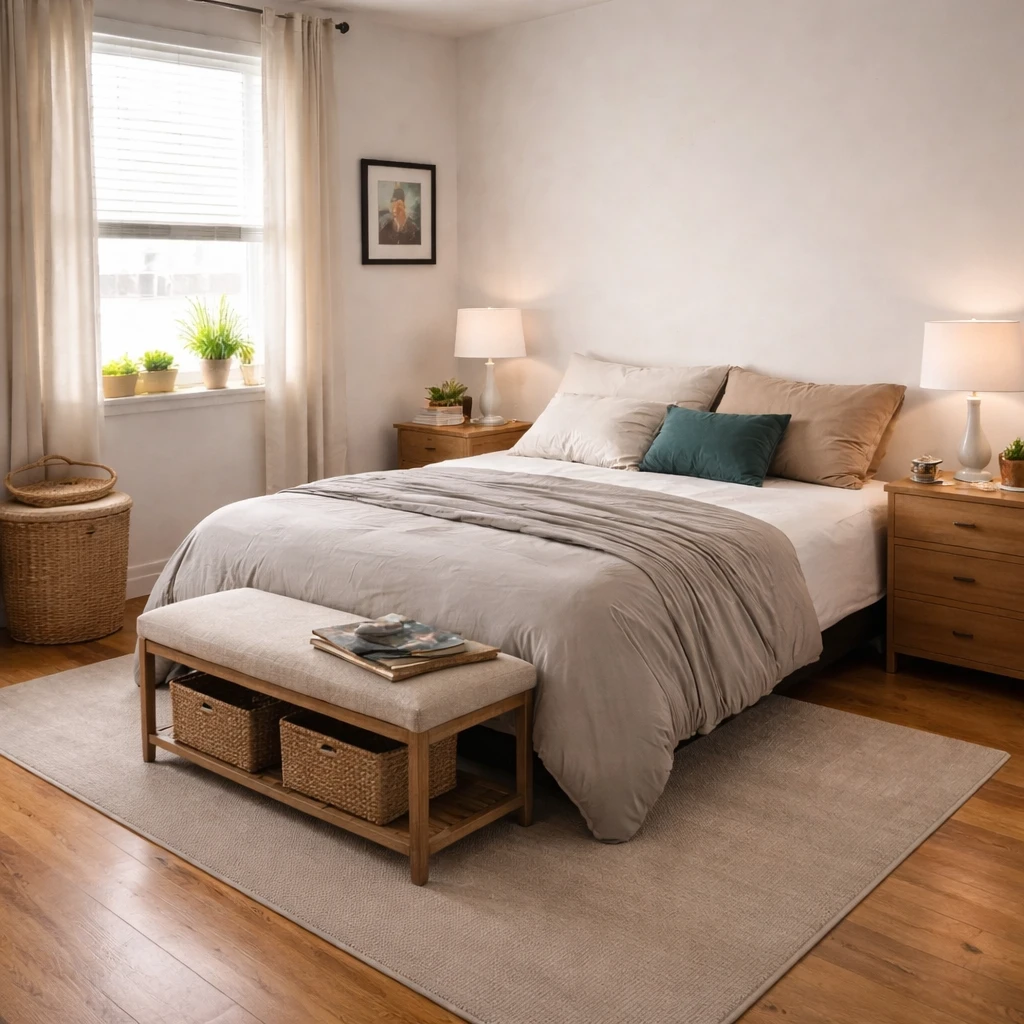
Bedroom design gets easier once the room is judged by what it needs to do at night, not by what looks best on a mood board. The big decisions are usually practical: where the bed should go, how much walking space is left around it, how dark the room becomes, and whether the storage plan keeps visual clutter under control.
Bed placement sets the whole room. Once that wall is right, nightstands, rugs, lamps, and storage pieces usually fall into place more naturally. If the bed is forced into the wrong spot, the room spends the rest of the plan compensating for that mistake through awkward pathways, undersized tables, or furniture that feels too tight to the walls.
The rest of the room should support sleep rather than compete with it. Good blackout control, softer evening light, enough surface space beside the bed, and storage that keeps the visible field calm matter more than trend-driven details. A strong bedroom feels quieter, simpler, and easier to settle into by the end of the day.
Start with the room itself
A planning-oriented bedroom guide has to care more about recovery than about style novelty. The real question is whether the room helps the body downshift into sleep and stay there, not whether it looks good in daylight. That puts layout, light behavior, temperature, sound, and visual order ahead of decorative personality. Bedrooms are often overdecorated and underplanned; they contain attractive things but still fail at darkness, circulation, or thermal comfort. A beautiful room that does not support sleep is still a weak bedroom.
Bed placement remains the anchor decision because it quietly controls everything else. Once the bed wall is chosen, circulation, nightstand scale, rug placement, and the emotional read of the room all become easier to judge. A bedroom usually feels most stable when the bed is not directly in the line of the door, has a readable view of the entry, and preserves enough access on each side for real use rather than symbolic symmetry. This is one of those choices that seems aesthetic at first and reveals itself as ergonomic once you live with it every day.
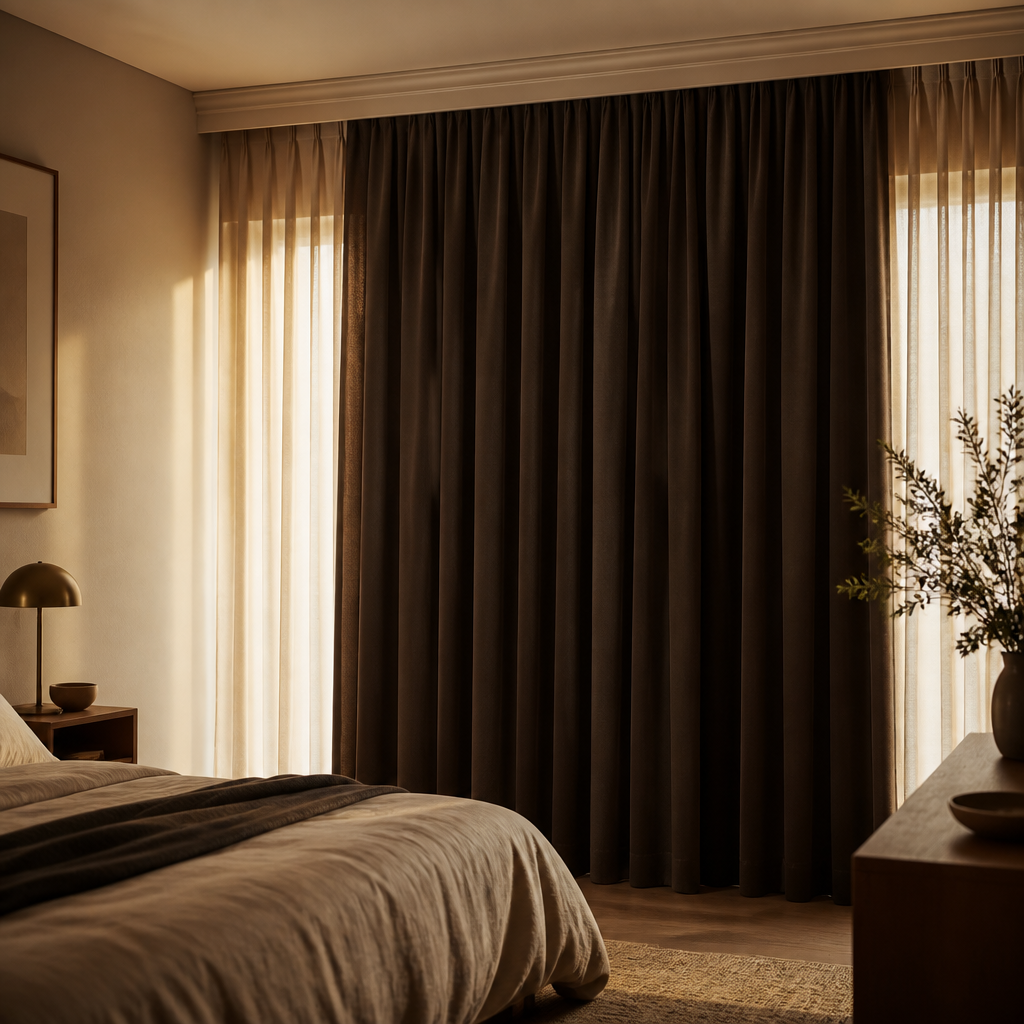
Supporting furniture should reinforce calm rather than compete with it. Nightstands should relate sensibly to mattress height, wardrobes and dressers should not visually crush the bed wall, and the room should not be so full that the body feels as though it has to negotiate obstacles before sleep. Under-bed storage can be useful, but if every surface is also overloaded, the room still reads as active rather than restorative. Bedrooms usually improve when visible object count drops and storage logic rises. That is not minimalism for its own sake. It is nervous-system courtesy.
How to plan it cleanly
Measure the room around the bed, not just to the walls
Note wall lengths, closet openings, door swings, and window placement, then test what bed sizes still leave usable circulation, ideally at least about 24 inches beside the bed and at the foot in most rooms. Bedroom comfort depends as much on movement and access as on decoration.
Place the bed where the room feels psychologically stable
Start with the strongest uninterrupted wall that gives a clear view of the door without putting the bed directly in the doorway line. This usually creates the best balance of restfulness, circulation, and nightstand access. Once the bed wall is right, the rest of the room gets dramatically easier to solve.
Solve sleep conditions before style layers
Confirm blackout performance, noise control, temperature comfort, and visual quiet before buying decorative extras. If the room is too bright at dawn, too hot at night, or too cluttered to calm down in, new bedding and a different headboard are solving the wrong problem.
Scale the secondary pieces to the mattress and the clearances
Nightstands should sit close enough to mattress height for comfortable reach, dressers should not choke the bed path, and benches only belong where they preserve circulation after they are added. In compact bedrooms, one correctly scaled storage piece will outperform three cute ones that make the room feel pinched.
Build separate light for reading, dressing, and winding down
Bedrooms usually need one brighter general layer for dressing and cleaning, then softer bedside or perimeter light below about 3000K for evening use. Reading lights should illuminate the page without glaring into the eyes, and switches should be reachable from the bed wherever possible.
Edit the visible field until the room feels restful
Limit what stays out on dressers and nightstands, keep textiles coordinated rather than noisy, and remove furniture that exists only because the room once had space for it. Bedrooms recover their calm faster through subtraction than through another round of decorative addition.
What makes the room fail in practice
Light control is where many bedrooms reveal their real quality. Blackout performance, lamp placement, and color temperature matter more than trend-driven accessories ever will. Warm lighting below 3,000K, controllable from the bed where possible, supports wind-down much better than bright overheads and cool bedside bulbs. The room should also be judged at night, not just at noon. A bedroom that feels lovely in natural light and terrible after dark is only solving half its job. Sound and air belong in the same category: if the room is too dry, too hot, too bright, or too noisy, the design is still incomplete.

A strong bedroom guide should help readers think in sequence: anchor the bed, protect circulation, control darkness, solve storage, then layer in textiles and atmosphere. That planning-first approach is what separates broader bedroom inspiration from a room that actually supports sleep quality. The best bedrooms do not just look calm. They behave calmly, and that is almost always the result of practical decisions made early and decorative restraint applied later.