Kids rooms need to serve evolving needs: what works for a toddler will not work for a tween, and the smartest planning treats the room as a flexible system rather than a fixed themed project. Choose adaptable furniture and storage that can grow with the child rather than buying age-specific pieces you will replace every few years. A bed with a trundle that converts to guest seating, dressers with removable drawer organizers, and shelving that adjusts to changing heights all extend the life of your investment.
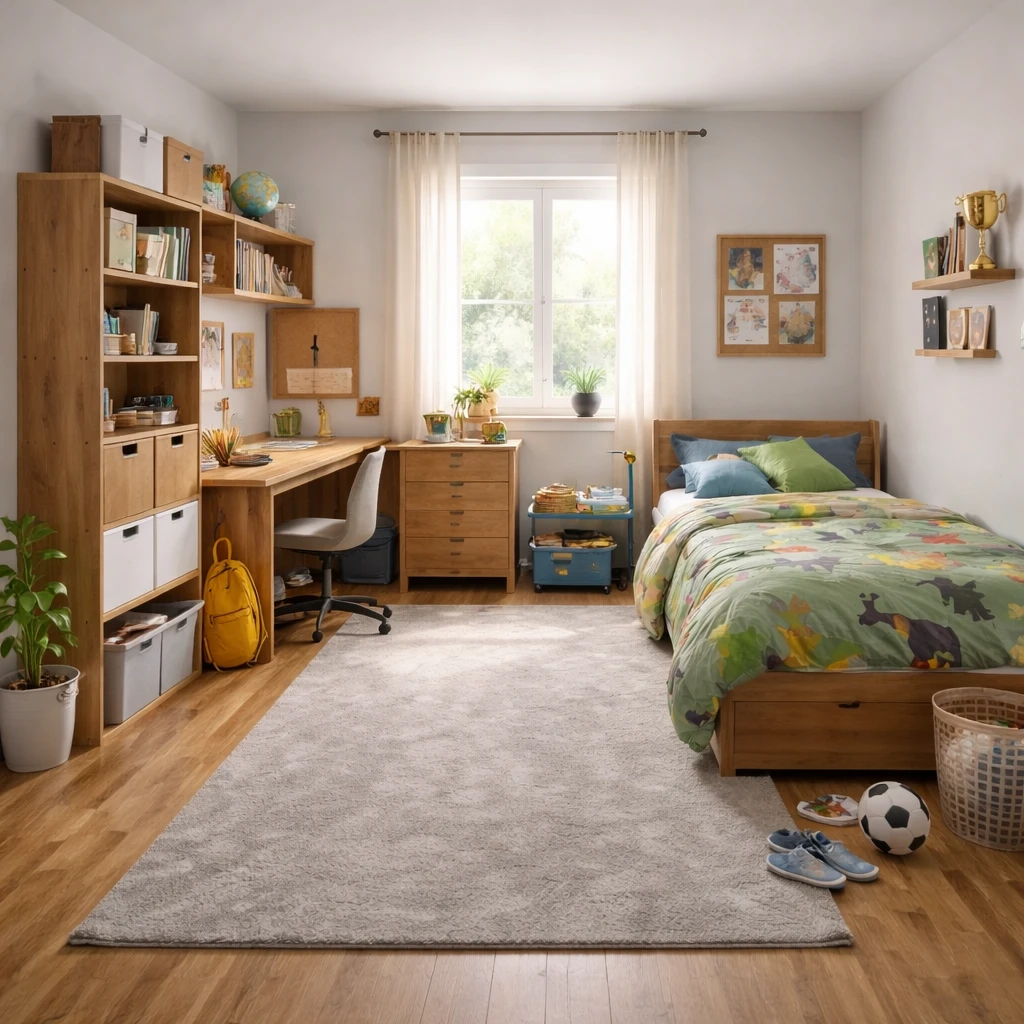
Zoning matters more than decoration. Even in a small room, it helps to distinguish where sleep happens, where toys or books live, and where open floor or desk space should remain. Children use rooms dynamically, so preserving at least one clear area that does not get swallowed by furniture matters more than people expect. Leave at least 24 inches beside the bed and 30 to 36 inches along the main path from door to bed or play zone.
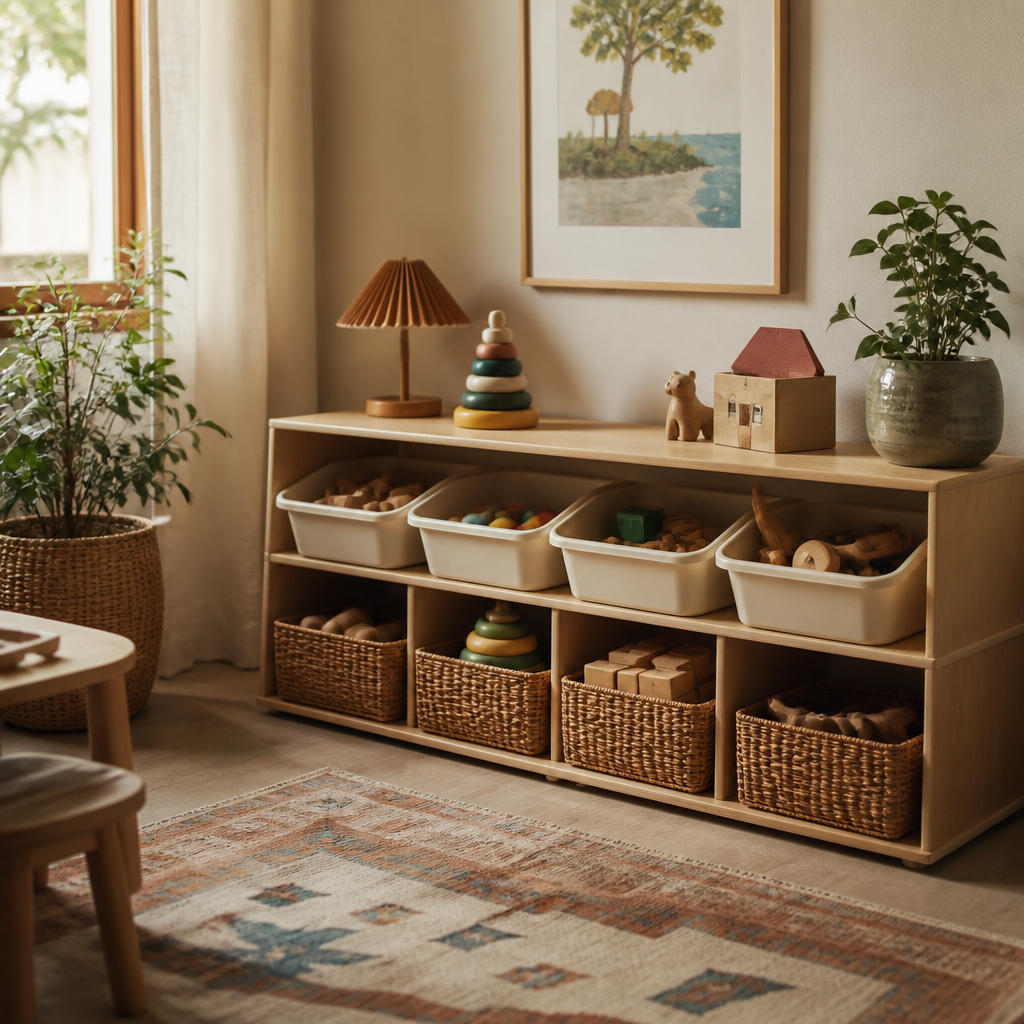
Storage should match the child's reach, not the adult's ideal. Frequently used items need to be low enough that cleanup is possible without adult intervention. Open bins are excellent for toy rotation in younger years, but closed drawers and cabinets matter just as much because visual quiet supports better sleep and faster room resets. Dressers above 30 inches should be anchored to the wall for safety. A room that teaches independence usually stays more organized than one that requires constant supervision to remain usable.
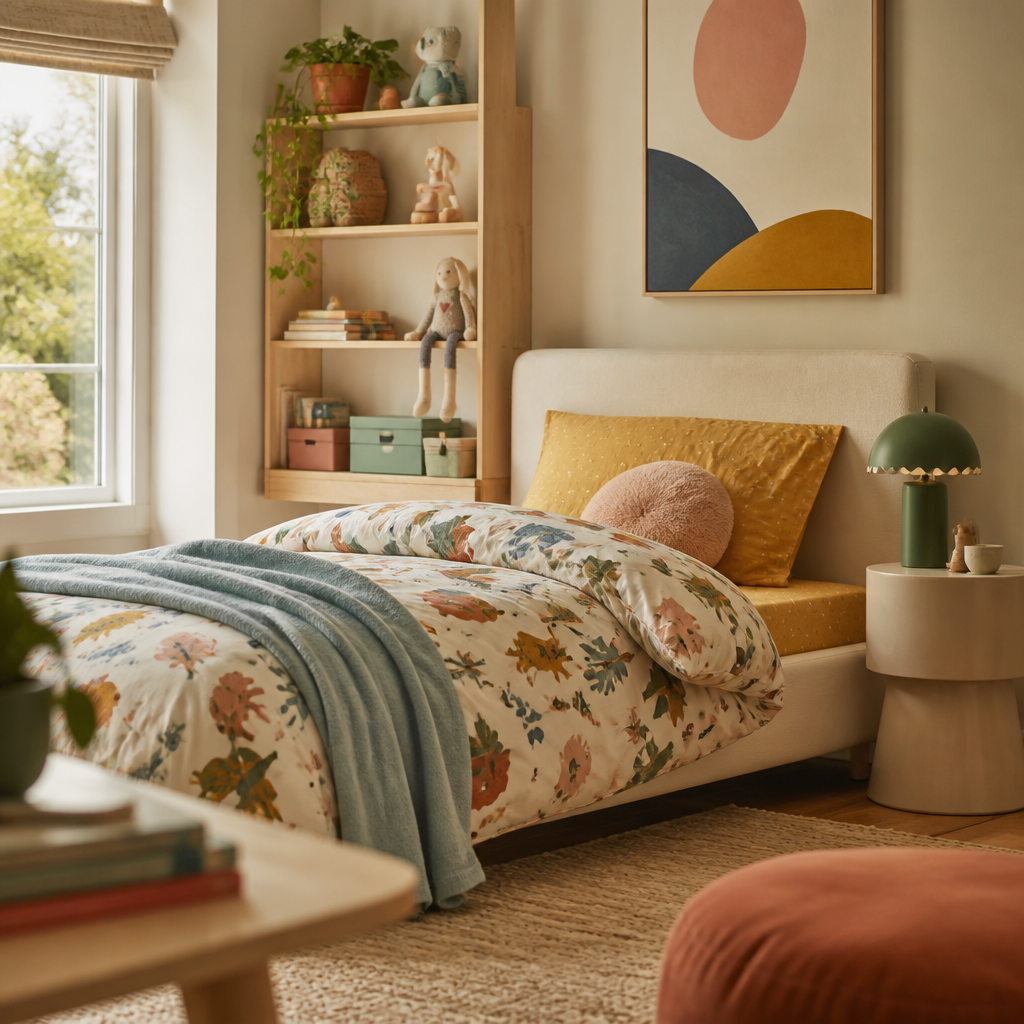
Personality should come through layers that are easy and cheap to change. Bedding, wall art, lamps, and removable details should do most of the age-specific work, while the bed, dresser, desk, and storage shell remain neutral enough to survive the next stage. The best kids rooms feel supportive, not overdesigned. They make sleep, focus, and cleanup easier while still leaving enough character that the child feels ownership of the space.
Start with the room itself
Kids bedrooms need to be designed for change. The room has to support the child's current sleep, play, and study routines while still making sense once those routines shift, often faster than adults expect.
This guide therefore emphasizes zoning, reach, adaptable furniture, and storage logic instead of treating the room as a themed visual project. The core question is how the room helps the child function more independently over time.
How to plan it cleanly
Measure the room and identify the growth constraints
Record bed wall options, storage walls, windows, and the open floor the child will need now and later.
Separate sleep, play, and study zones
Even in a small room, each of those jobs should have a recognizable place so the room does not become one undifferentiated pile of furniture and toys.
Choose furniture that can survive the next stage
Prioritize the bed, dresser, desk, and storage shell that will still make sense as routines and taste change.
Place storage by reach and cleanup habits
Low everyday storage encourages independence, while higher storage can handle occasional or parent-managed items.
Add task and bedtime light separately
Kids rooms need different light for reading, homework, and winding down. One overhead fixture rarely serves all three well.
Use personality in layers that are easy to change
Bedding, art, color accents, and removable details should do most of the age-specific work so the room can evolve without a full reset.
What makes the room fail in practice
Safety and durability matter here too, but the room should not feel overcontrolled. Good kids rooms support growth by making cleanup easier, preserving floor space, and using furniture that can survive the next phase without forcing a total redesign.
When the planning is right, the room feels both more personal and more resilient. It can absorb changing tastes and routines without dissolving into clutter or constant replacement.