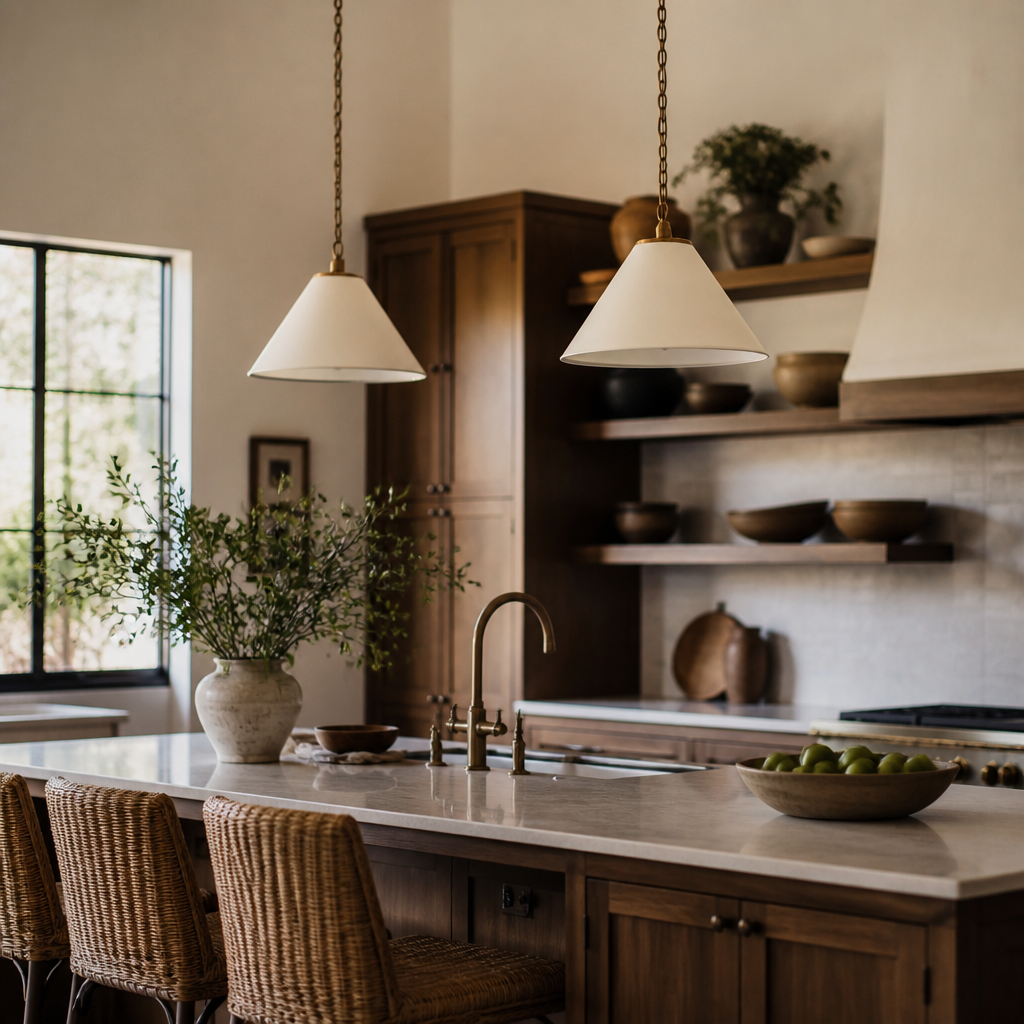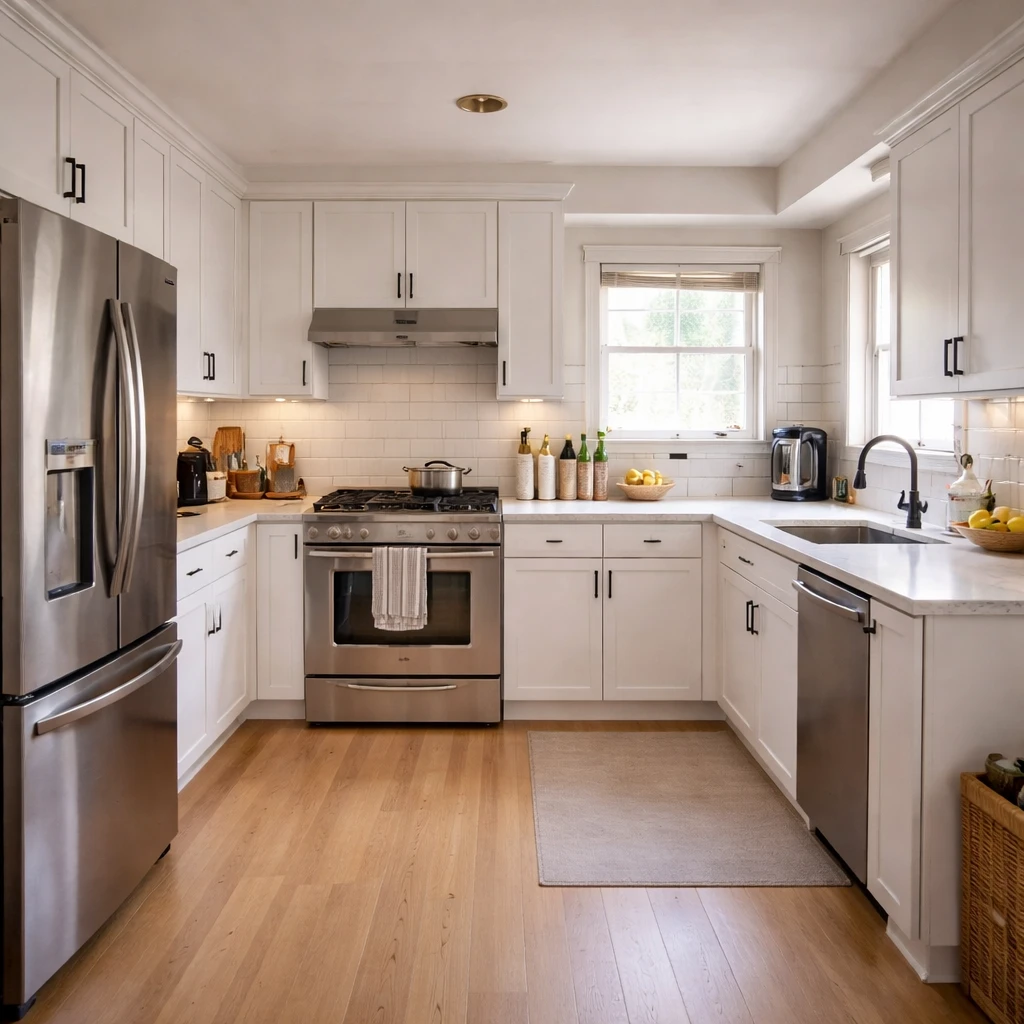
Kitchen layout gets better when the room is planned around movement and prep, not around cabinet style. The useful questions are simple: where groceries land when they come in, where prep happens, whether the cooktop and sink are placed logically, and whether people can move through the room without interrupting whoever is cooking.
That is why layout decisions come before finish decisions. A beautiful kitchen still feels wrong if appliances collide, aisles are too tight, or there is nowhere to set anything down near the refrigerator, sink, or range. The room should cook well before it tries to impress.
Once the workflow is right, cabinets, materials, and lighting become much easier to judge. Readers usually need help understanding which problems are cosmetic, which are structural, and which changes are worth real renovation money. That is the line this guide is meant to make clearer.
Start with the room itself
A planning-oriented kitchen guide has to begin with workflow because that is where most kitchens either earn their keep or fail daily. The room may be beautiful, but if the sink, cooktop, refrigerator, and prep area force extra steps or repeated collisions, the design is still weak. That is why the work triangle remains useful, but only as a starting framework. Modern kitchens also need landing zones, drawer and door conflict checks, realistic ventilation planning, and storage tuned to how the household actually cooks rather than how a showroom vignette imagines they cook.
The fixed conditions do most of the talking here. Plumbing locations, gas or electric supply, vent routes, window heights, and structural walls determine whether a change is cosmetic, moderate, or expensive very quickly. A planning guide should help people distinguish between replacing surfaces and altering the room's operating logic. Keeping the sink or range in place may preserve thousands in rough-in cost, while relocating them can be justified only if the new layout actually improves workflow enough to repay the disruption. Kitchens punish vague ambition because every mechanical change ripples into countertop runs, cabinet dimensions, and appliance coordination.
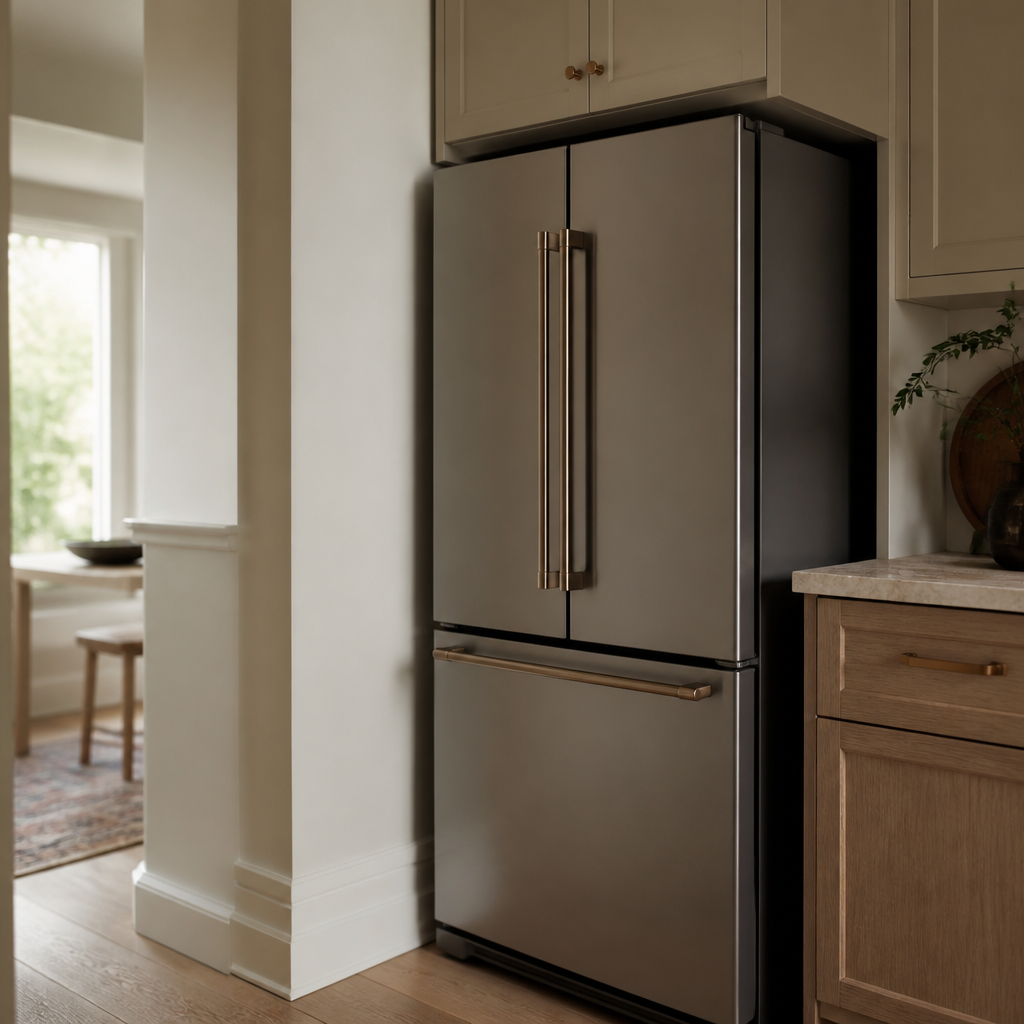
Dimensions are where good intentions become real kitchens. Aisles, stool clearances, appliance swings, and prep zones all need enough space to work under pressure, not just in a still rendering. Counter height, stool height, and pendant drop are the obvious examples, but landing space beside the refrigerator, range, and sink is just as important. These are the spots where people set down groceries, hot pans, and dishes in motion. A kitchen can have excellent finishes and still feel maddening if it lacks these little moments of allowance.
How to plan it cleanly
Measure the shell, appliances, and rough-ins first
Record every cabinet run, appliance width, aisle width, window height, and plumbing or gas location before discussing finishes. Note whether the existing work aisles are below the NKBA's 42-inch single-cook recommendation or 48-inch two-cook target, because those numbers will determine whether the plan needs true reconfiguration or just better storage and lighting.
Check the work triangle and the landing zones together
Review the sink, refrigerator, and cooktop as a triangle with total travel in the 12-to-26-foot range, but also confirm practical landing space: about 18 inches beside the refrigerator latch side, 12 to 18 inches beside the cooktop, and real uninterrupted prep space near the sink. A triangle can be technically correct and still cook badly if there is nowhere to set anything down.
Rank the real priorities before finishes seduce you
Decide whether the kitchen's biggest problem is storage, prep sequence, poor light, awkward seating, or obsolete appliances. If the room is short on drawer storage or task light, a new slab will not fix it. This step prevents cosmetic money from being spent on a room whose workflow is still irritating every morning and every evening.
Separate cosmetic updates from utility-moving decisions
Replacing fronts, hardware, paint, backsplash, and lighting is one project category. Moving the range, sink, or refrigerator often triggers new electrical, gas, venting, and countertop consequences that shift the budget entirely. Treat those as different scopes so you can judge whether the functional gain actually deserves the construction cost.
Resolve the dimensional details before ordering
Confirm stool heights against counter or bar height, pendant bottoms about 30 to 36 inches above islands, appliance door swings, faucet reach into the sink bowl, and clearance for dishwasher and trash pullout operation at the same time. These are the details that make a kitchen feel polished in use rather than just handsome in elevation.
Lock the sequence: plan, utilities, cabinets, surfaces, then finish
Once the layout is set, confirm appliances and rough-ins before ordering cabinetry. Countertops follow cabinet dimensions, and lighting and hardware should respond to those fixed choices rather than compete with them. Kitchens become expensive when stone is chosen before appliance specs, or when lighting is finalized before the island dimensions are actually known.
What makes the room fail in practice
Storage should also be planned by use frequency rather than by cabinet count alone. Drawers often outperform deep lower cabinets because they bring contents forward instead of forcing blind reaches. Everyday cookware should live close to the cooktop, prep tools near the primary prep zone, and cleaning supplies where they are accessible but safely separated. This sounds basic, but much of kitchen frustration comes from poor adjacency, not from insufficient square footage. Better organization at the planning stage often solves what homeowners initially misdiagnose as a need for a larger room.
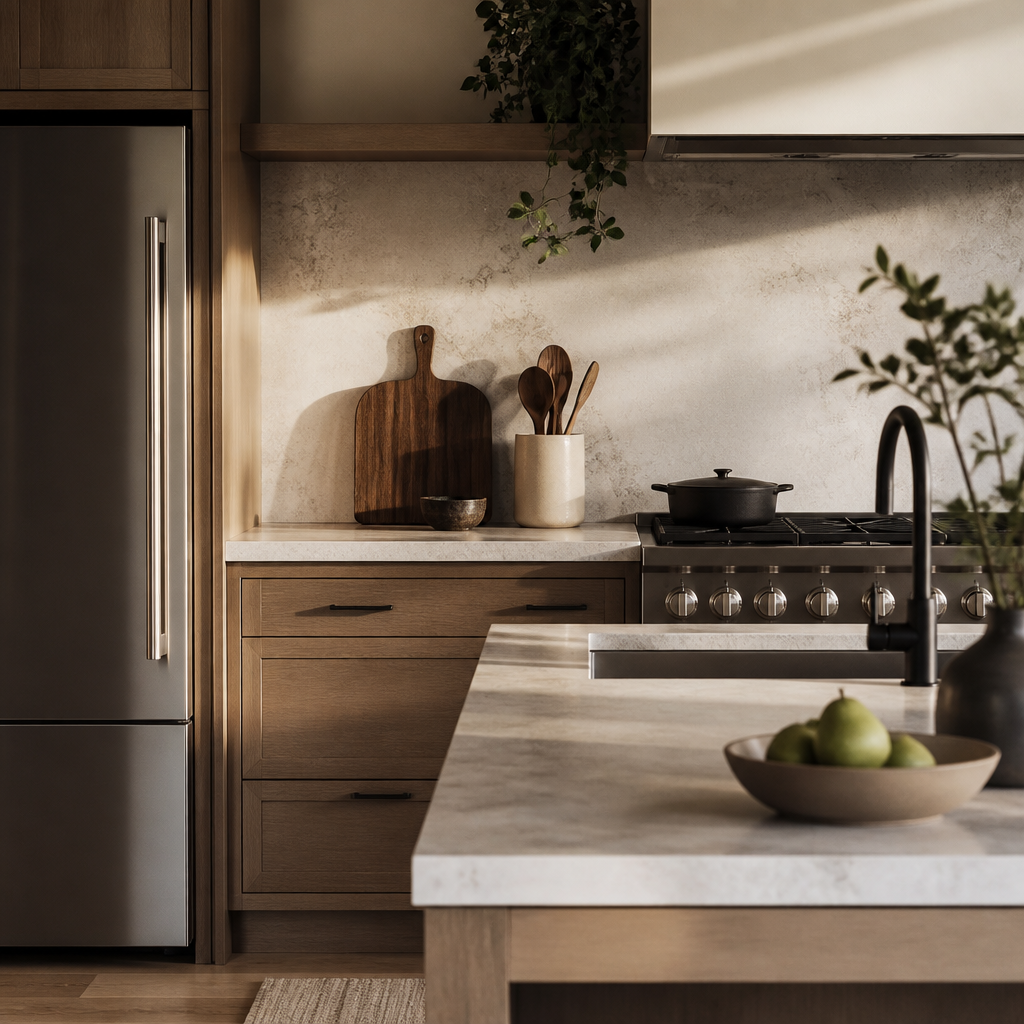
The reason kitchen planning deserves this level of discipline is simple: the room is used hard, repeatedly, and often by more than one person at once. Every bad decision gets rehearsed several times a day. A good guide therefore has to separate trend from function, clarify which moves are worth construction cost, and teach readers to sequence decisions properly: layout first, utilities second, cabinets and appliances third, then finishes. When the order is right, the kitchen starts to feel calm because the work inside it no longer fights the person doing it.