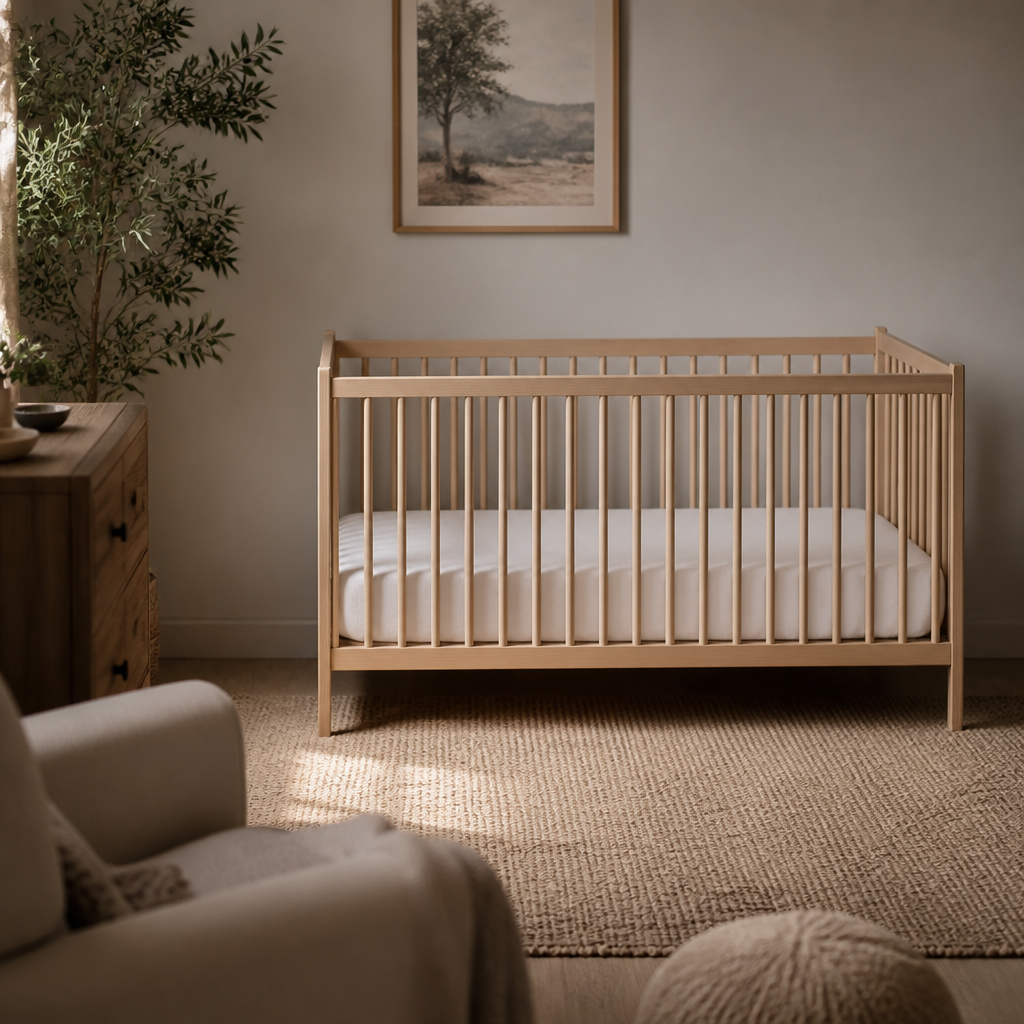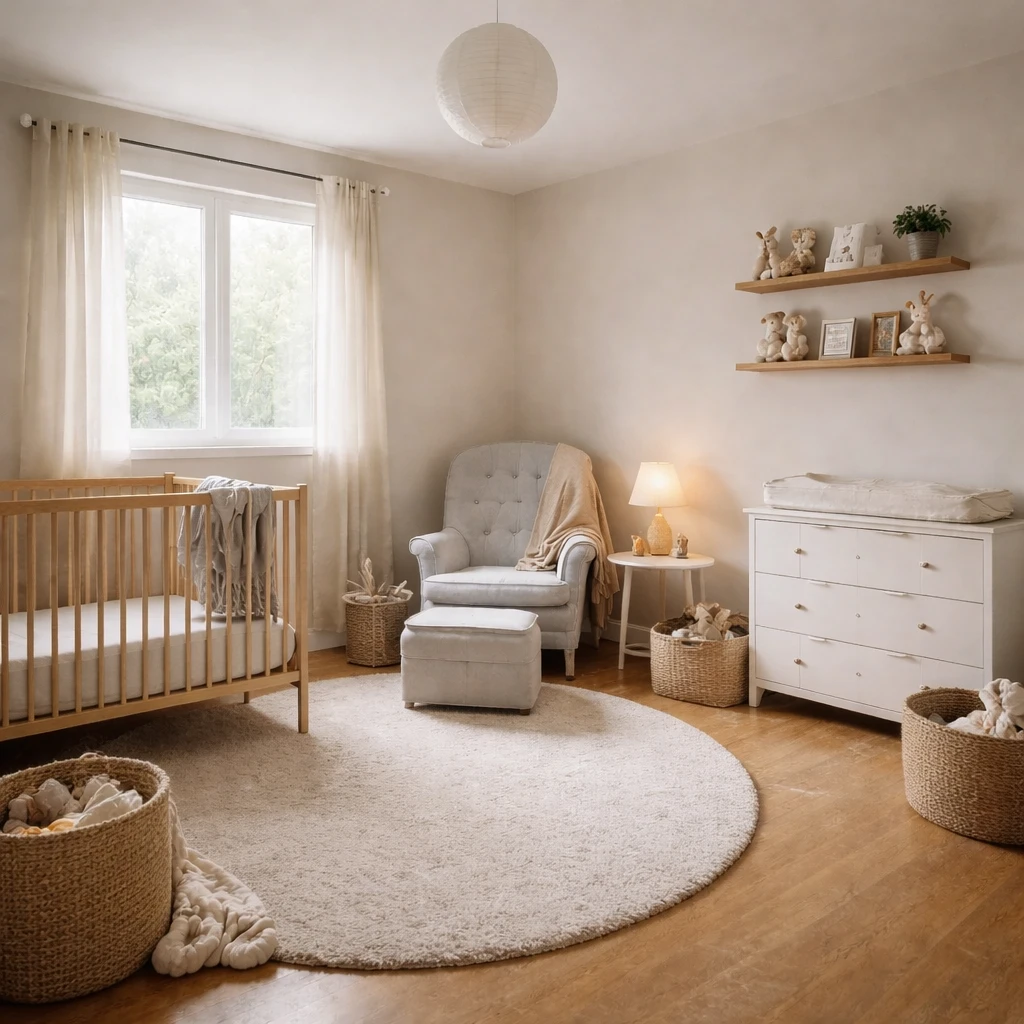
Nursery design balances three considerations: safety for the baby, functionality for caregivers, and an aesthetic that can grow with the child. The most important safety standard is safe sleep: a firm, flat crib mattress with nothing in the crib except a fitted sheet. Following the American Academy of Pediatrics safe sleep guidelines is not optional. Crib slats should be spaced no more than about 2-3/8 inches apart, and the crib should not be placed near windows with corded blinds, near baseboard heaters, or in the path of door swings.
Functionality for caregivers means thinking through nighttime routines before decorating. Place the changing surface within arm's reach of storage so diapers and wipes can be grabbed one-handed at 3 AM. A comfortable nursing or feeding chair with good back support matters more than the wall color. Use dimmable, warm lighting that illuminates the parent's path without shining directly at the infant's face. A red-spectrum nightlight preserves melatonin for the baby and adult night vision simultaneously.
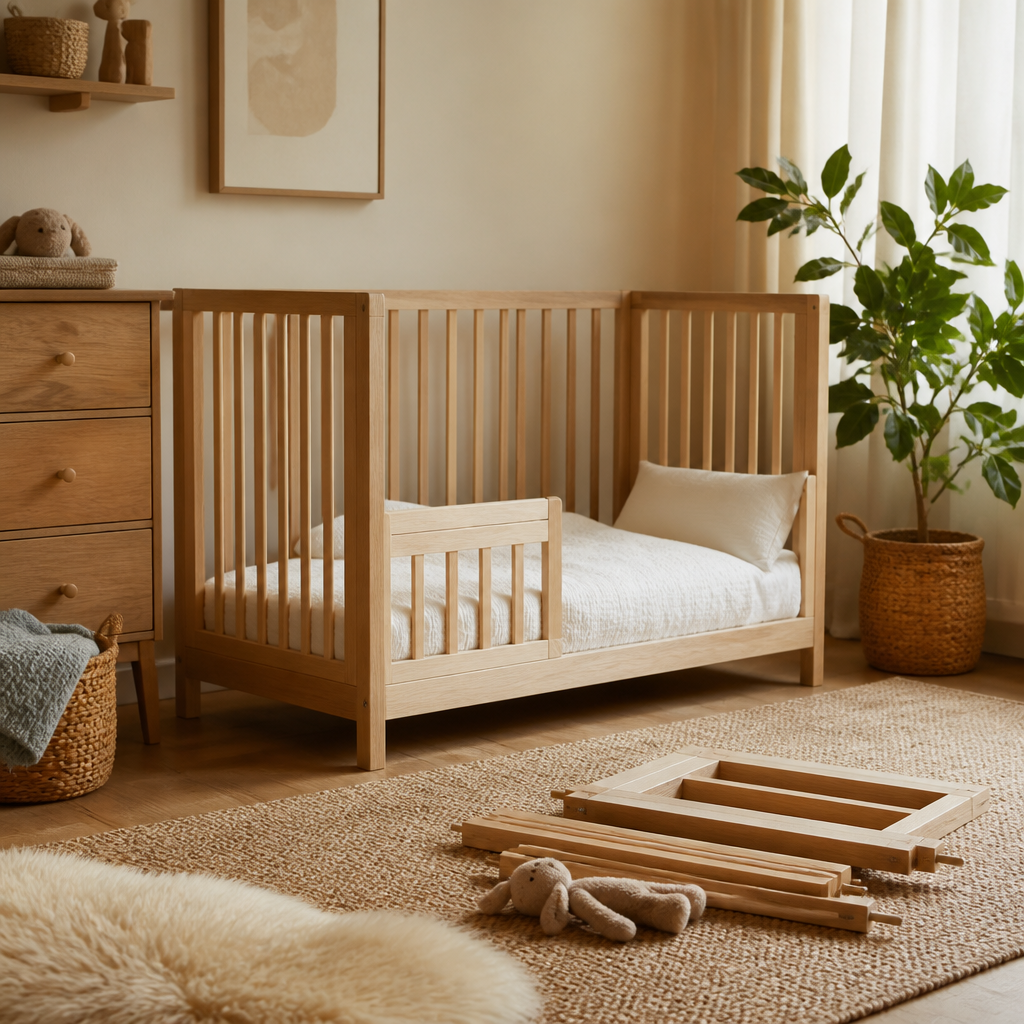
Furniture should be evaluated by safety certification and long-term usefulness before aesthetics. A crib that converts to a toddler bed extends usefulness by two to three years. A dresser topped with a removable changing tray often outperforms a dedicated changing table because it remains useful after diapers end. The best nursery styles grow with the child rather than locking the room into a six-month visual identity. Choose a theme or color palette that can adapt rather than one that is strictly baby-specific.
The room will evolve rapidly. Nurseries quickly become toddler rooms, then preschool rooms. Flexible storage, neutral foundational pieces, and layers that are easy to change, bedding, art, color accents, will make future transitions smoother and far less expensive.
Start with the room itself
Nursery planning works best when it is organized around care routines rather than around decorative pressure. The room needs to support sleep, feeding, changing, low-light movement, and storage changes that happen quickly in the first years.
This guide focuses on those practical decisions because they are what make the room feel calm in use. When the crib, chair, changing surface, blackout control, and storage are arranged well, the room usually becomes more peaceful visually without needing much extra styling.
How to plan it cleanly
Place the crib and main walking path first
Treat the sleep zone as the anchor, then make sure nighttime access to it stays clear and easy.
Build a feeding and changing zone around real routines
Keep the chair, lamp, side surface, diapers, and backup clothing close enough that the room works when you are tired and carrying the baby.
Choose storage that reduces visible chaos
Use drawers, bins, and shelves to keep daily supplies accessible without making the room feel visually noisy all the time.
Solve blackout and low-light comfort early
A nursery usually works better with darker nap conditions, softer evening light, and one or two lamps that let adults move without flooding the whole room.
Pick materials you can wash and live with
Rugs, upholstery, and paint should be easy to clean and forgiving under repeated use so the room stays calm instead of high maintenance.
Leave enough flexibility for the next stage
The strongest nursery plans do not overcommit to one age. They leave space for changing storage needs and later furniture shifts.
What makes the room fail in practice
The room also needs a little foresight. Flexible furniture and quieter materials tend to age better than highly themed choices that only make sense for one short phase.
A strong nursery feels gentle because it reduces friction for the adults and protects comfort for the baby at the same time. That is the standard the guide is trying to support.