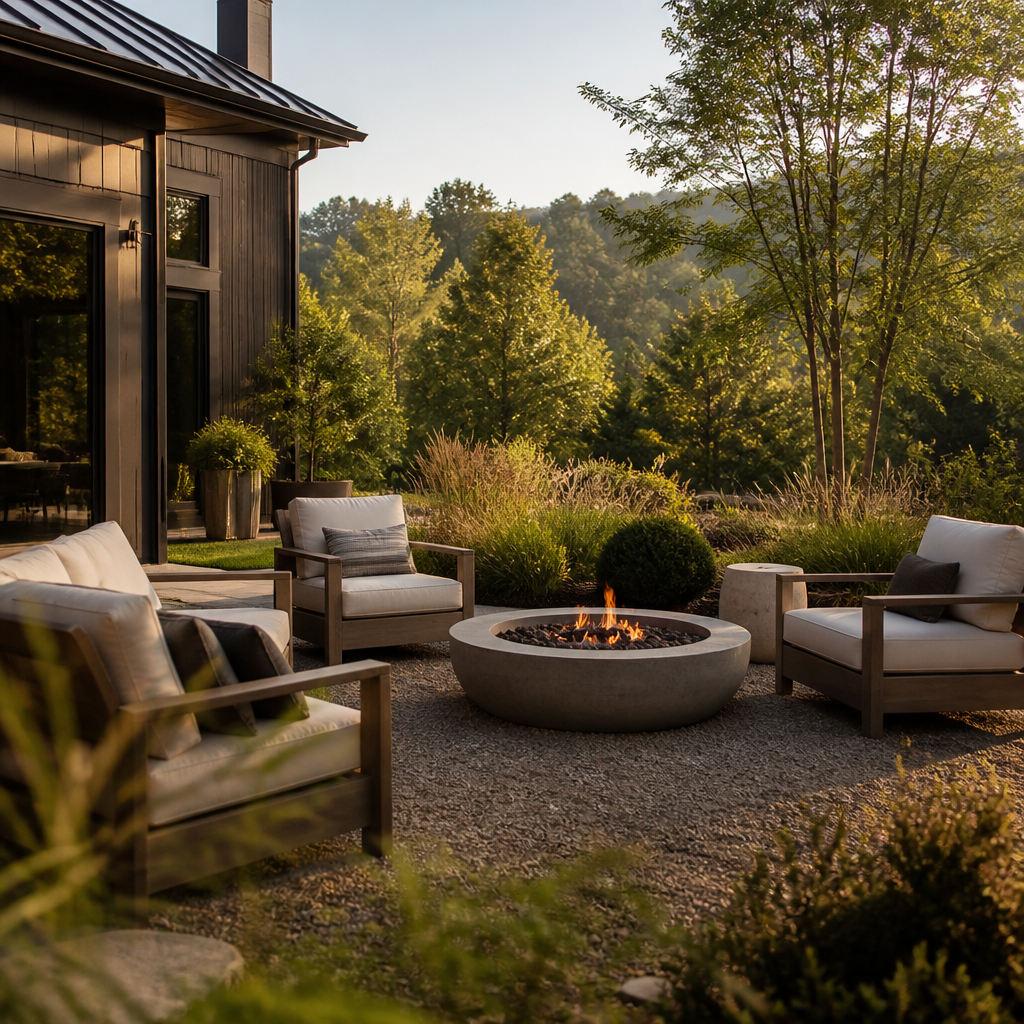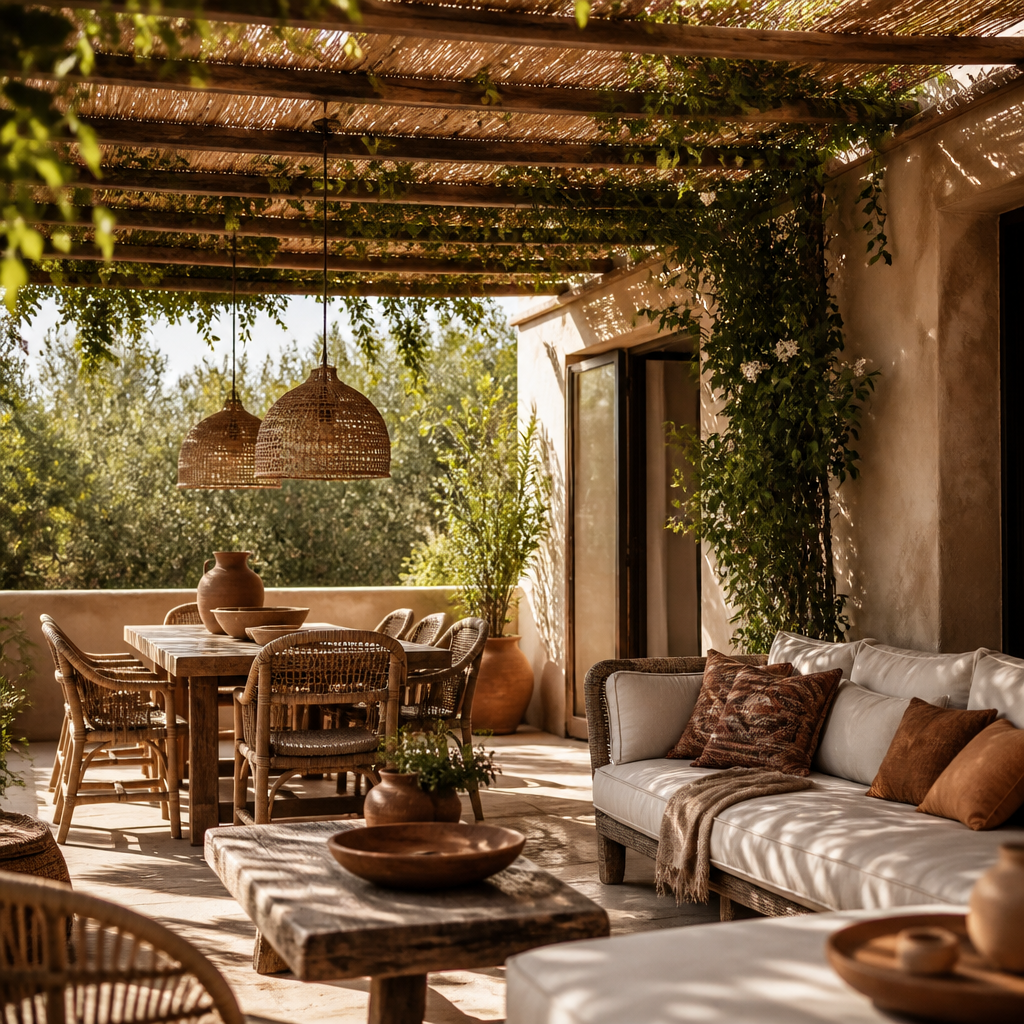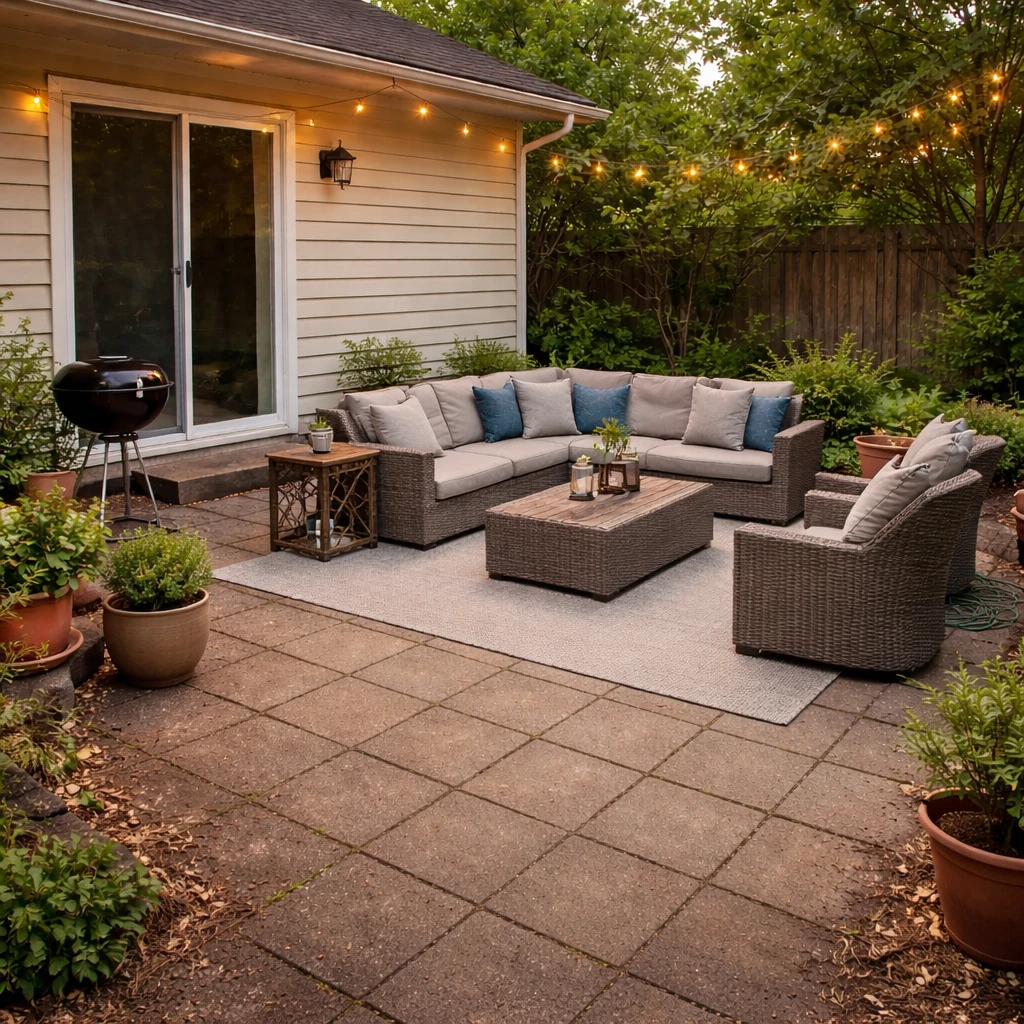
Outdoor spaces require different thinking than interior rooms because weather and climate are design constraints, not just considerations. Sun patterns, prevailing winds, drainage requirements, and seasonal changes all shape whether the patio gets used at all. A dining setup in the hottest corner or a lounge zone with no evening light will look complete and still fail in practice. The first job is mapping where sun, shade, and privacy land across the day, then placing the main furniture group where those conditions best support how you actually use the outdoor area.
Define the patio's main purpose before adding furniture. Decide whether dining, lounging, or mixed use is the priority. One clear purpose usually produces a stronger layout than trying to support every outdoor activity at full scale. After the main furniture group lands, confirm there is enough room for chairs to pull back, paths to stay clear, and the entry and exit points to remain open. If the furniture blocks movement or the room feels packed before anyone even arrives, remove pieces before adding accessories.
Materials should match your actual maintenance tolerance. Powder-coated aluminum, teak, weather-rated wicker, and solution-dyed acrylic fabrics all perform differently depending on climate. Cushions that dry quickly and tables that tolerate heat and rain generally outperform more decorative pieces that need constant storage. Natural wood requires annual sealing. Uncovered surfaces accumulate dirt and leaves. Be honest about how much maintenance you are willing to perform and choose accordingly. The right outdoor materials make the space easier to reset, not more precious to own.
Shade and evening lighting determine whether the patio earns its footprint beyond one perfect summer week. Umbrellas, pergolas, or portable shade structures matter most over seating and dining zones. Evening light should support meals, conversation, and safe walking without turning the space into a glare zone. A successful patio feels obvious in use: there is a place to sit, a place to set a drink, enough light, and enough shade that the space still earns its square footage in less-than-perfect conditions.
Start with the room itself
Patio design is most useful when it stays tied to comfort in real weather. The room has to work in sun, shade, wind, and evening use, which is why the guide focuses on layout, furniture scale, materials, and lighting instead of treating the patio as purely decorative outdoor styling.
A good patio usually depends on just a few correct moves: one clear furniture grouping, believable circulation, enough shade where people actually sit, and materials that survive the level of maintenance the household will really give them. That discipline matters more than trying to make the space perform every outdoor function at once.
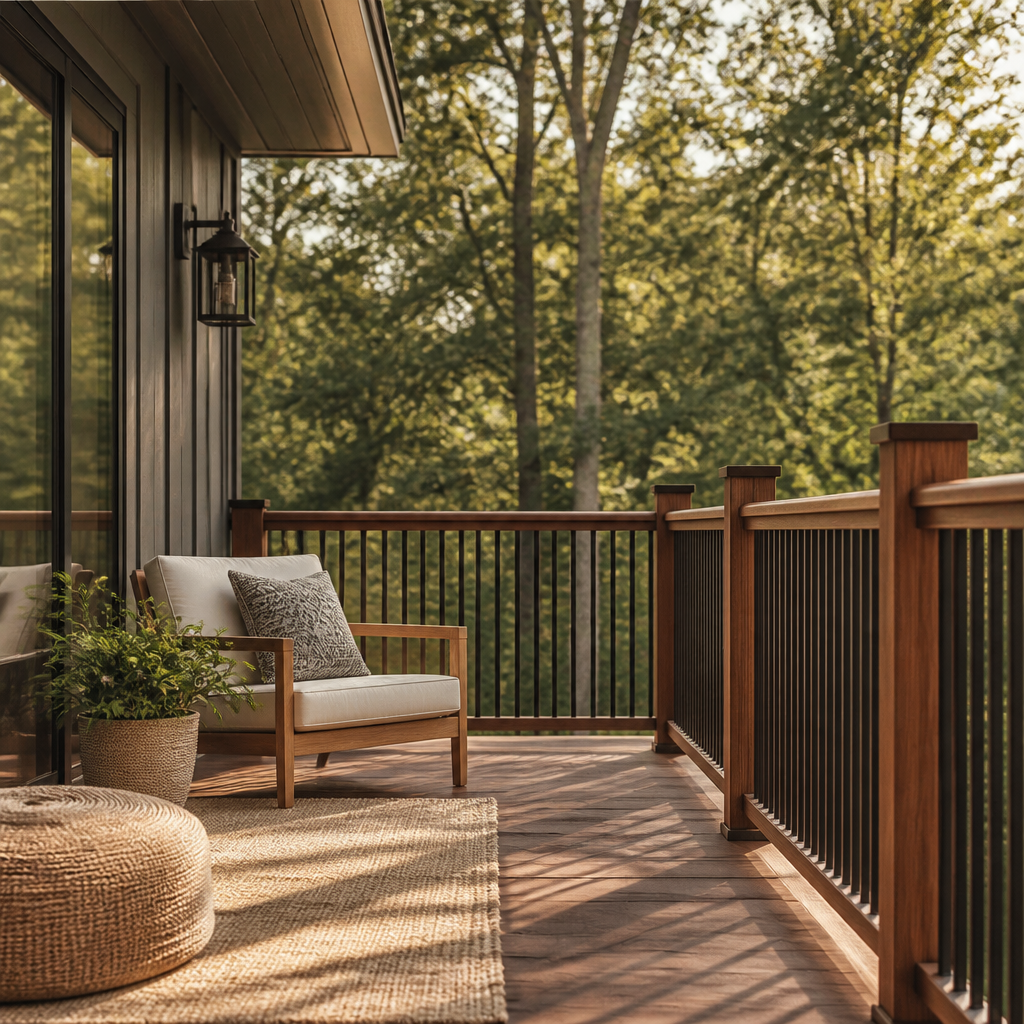
The patio should also feel distinct from the broader yard. It needs enough structure that people instinctively know where dining, lounging, or gathering happens once they step outside.
How to plan it cleanly
Track sun, shade, and privacy first
Before choosing furniture, note where the patio is hottest, windiest, most exposed, and most comfortable across the day.
Choose the patio's main job
Decide whether dining, lounging, or mixed use matters most. One clear priority usually produces a stronger layout than trying to do every outdoor activity at full scale.
Place the main furniture group with circulation in mind
Keep enough room to move in and out of the house, around chairs, and between planters or side tables so the patio still feels easy once furnished.
Add shade and lighting where people actually linger
Umbrellas, pergolas, or portable shade matter most over seating and dining zones, while evening light should support meals, conversation, and safe walking.
Choose outdoor materials by maintenance tolerance
Select furniture, rugs, and fabrics you are realistically willing to clean, cover, or store rather than the pieces that only look best on install day.
Edit until the patio feels usable, not crowded
If the furniture blocks movement or the room feels packed before people even arrive, remove pieces before adding more accessories.
What makes the room fail in practice
When those basics are solved, the patio starts to feel like a place people naturally drift toward instead of a nicely furnished zone that stays empty.