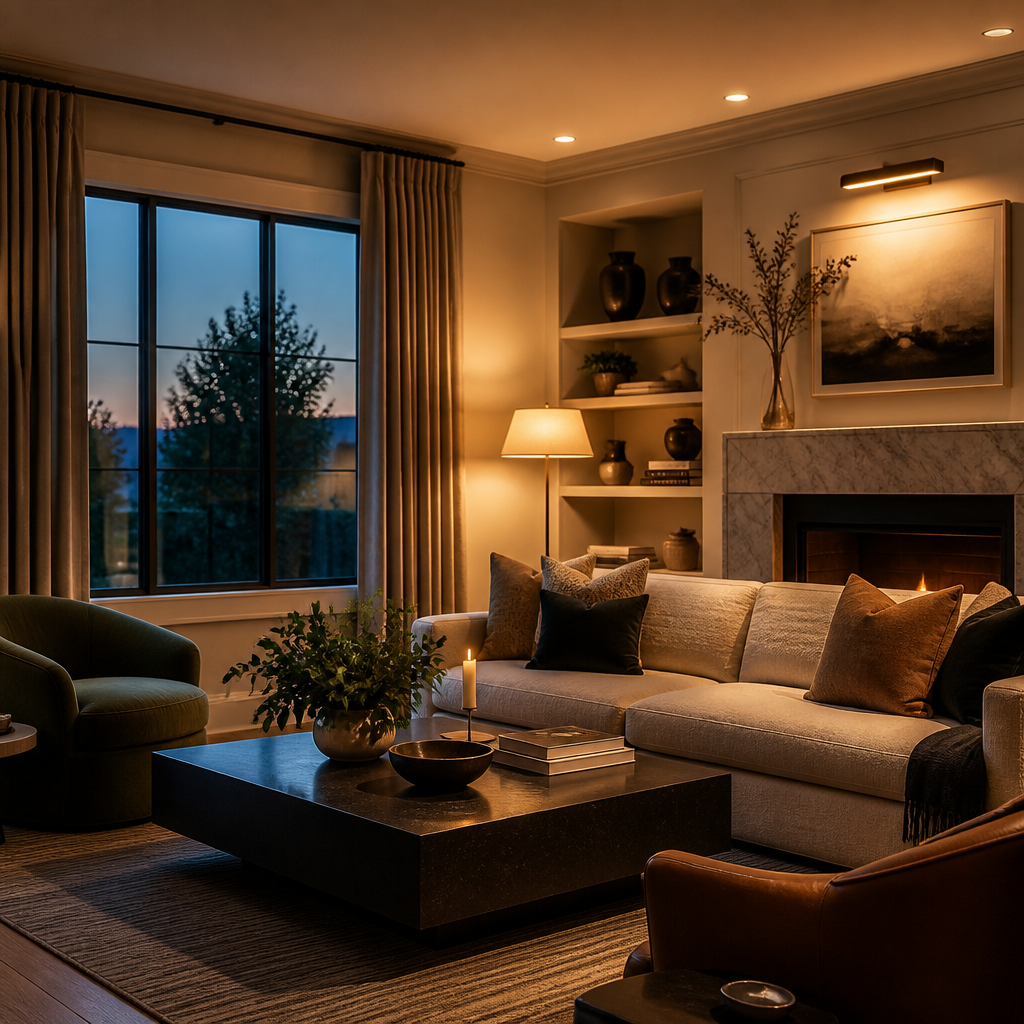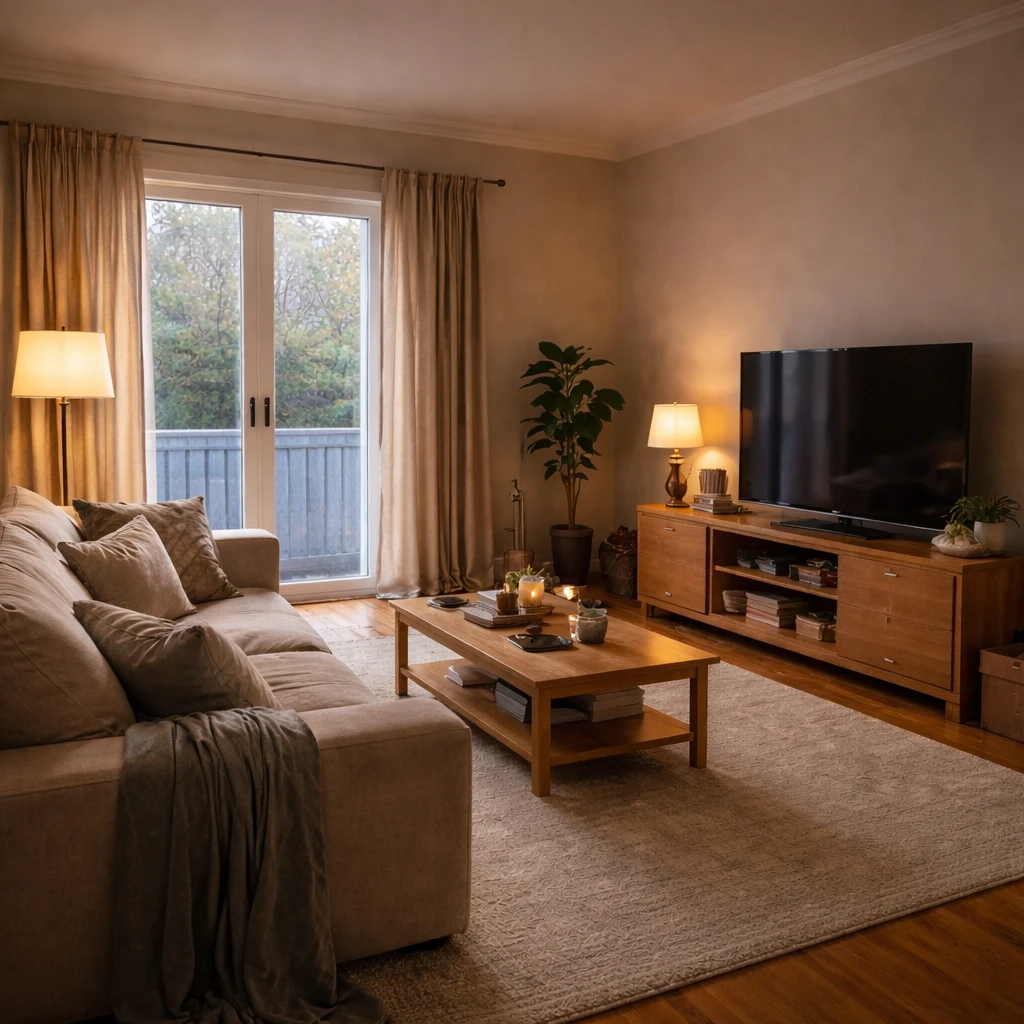
Lighting a living room is more about layers than about choosing one beautiful fixture. Most rooms that feel flat or harsh after dark are only using one source, usually a ceiling light, to do a job that needs at least three. A well-lit living room supports different activities, conversation, reading, television, evening lounging, without a single bright light flattening every surface. The sequence that usually produces the best result is: ambient light first, then task light where people sit, then accent light to give the room depth.
Start with the ambient layer. This is your general room illumination, but it should not depend entirely on one overhead fixture. Recessed lights on a dimmer, semi-flush mounts, or multiple shaded fixtures create a softer baseline than a single exposed bulb. If the room has only one central light, consider adding a floor lamp in a corner or sconces on the walls to spread general brightness more evenly.
Task light comes next and should land exactly where people read, work, or write. A reading chair needs a floor lamp that casts downward light without glare. The corners of a sofa should be reachable by a table lamp or a slim arc floor lamp. If the room doubles as a workspace, the desk needs dedicated light that illuminates the task surface without washing across every other surface in the room. The goal is concentrated light where the body is, not uniform brightness everywhere.
Accent light is what makes the room feel finished rather than merely illuminated. Shelves, artwork, mantlepieces, or an architectural feature benefit from a small pool of light that adds dimension. This layer is subtler than task light and should not compete with it. Accent light works best in warmer color temperatures, around 2700K, because the room looks more inviting when sources are warm and the contrast between lit and unlit areas feels intentional.
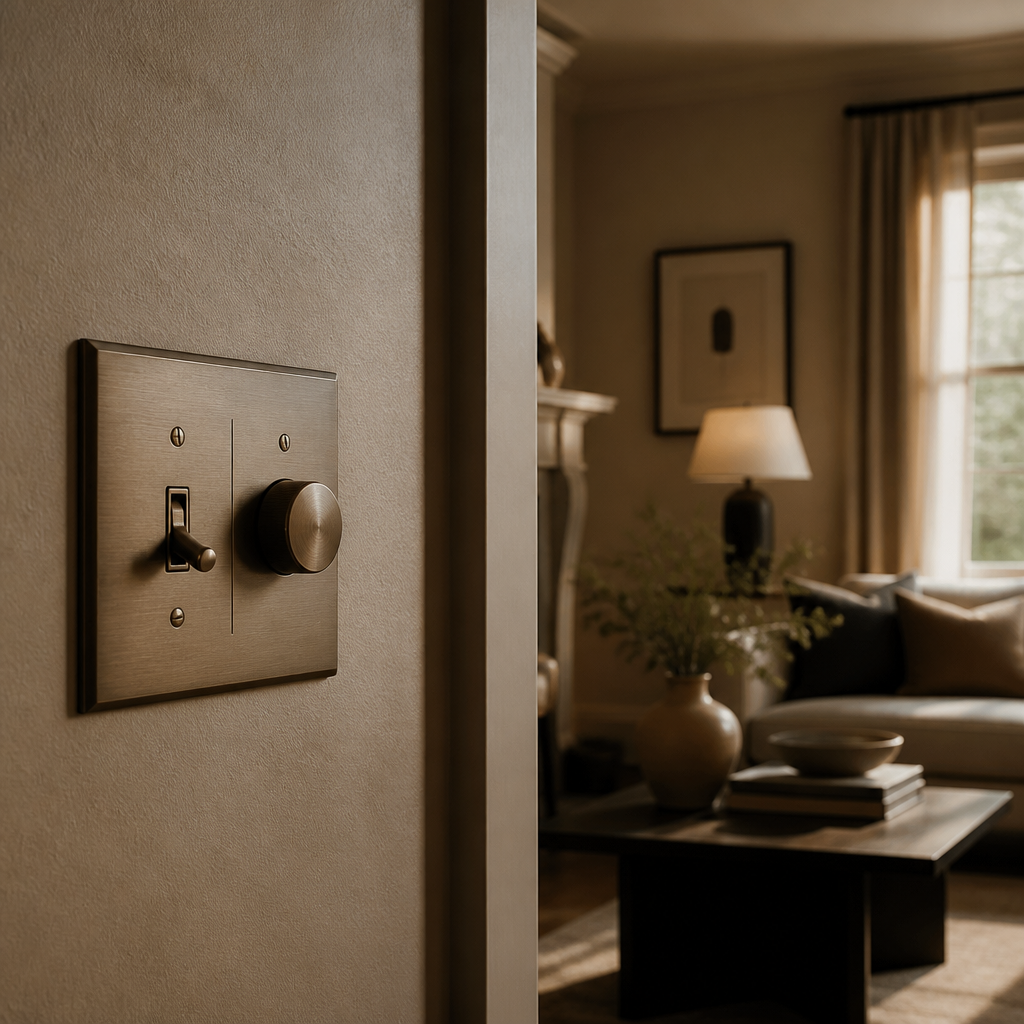
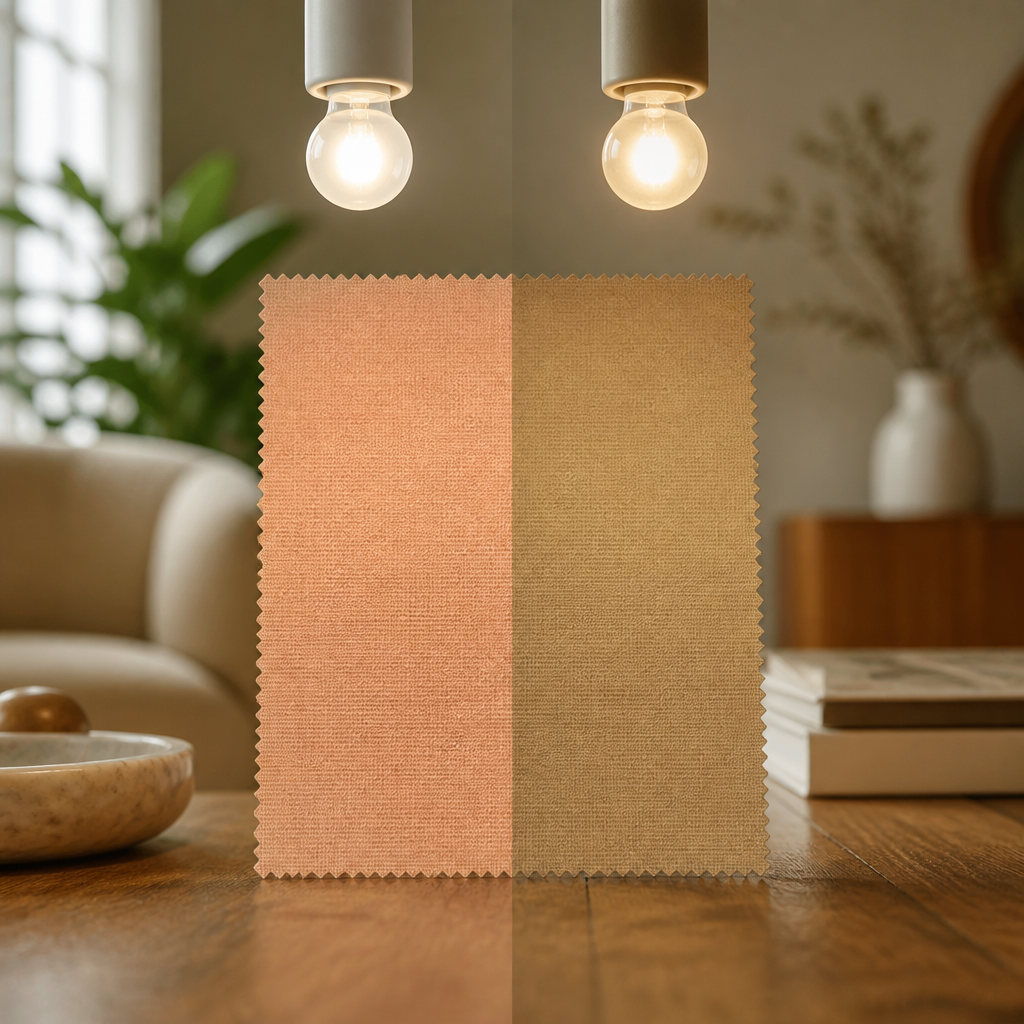
Dimmers and color temperature are worth getting right. Warmer light, usually 2700K in living spaces, tends to flatter faces and furniture. The same room at 4000K can feel clinical even if every fixture is well placed. Dimmers on at least the ambient and accent layers let the room shift from practical daytime use to relaxed evening use without adding or removing a single fixture. If you can only change one thing, add a dimmer to the main overhead. It does more for mood than most people expect.
The rules that matter
Living-room lighting works best when it is tied to behavior, not fixture shopping. The room needs separate answers for reading, television, conversation, circulation, and evening atmosphere, which is why layered light is so much more effective than one brighter ceiling solution.
This guide stays focused on how to build those layers in a living room specifically: where task light belongs, how accent light adds depth, and how warm ambient light changes the room's social comfort after dark.
The underlying principle is that good living-room light should support the furniture plan and soften the room at night without making the space feel dim or underpowered. Light is one of the fastest ways to make the room feel more finished without changing the layout.
How to work through the decision
List the evening jobs the room has to do
Conversation, reading, television, games, and occasional work all need different levels and placements of light.
Build a soft ambient layer first
Create general brightness that makes the room usable without flattening it. This should not depend entirely on one ceiling fixture.
Add task light where people actually sit
Reading chairs, corners of the sofa, and any occasional work spot need focused light that does not spill glare across the whole room.
Use accent light to give the room depth
Shelves, artwork, fireplaces, or darker corners benefit from smaller pools of light that make the room feel layered at night.
Control glare and color temperature
Warm light usually flatters living rooms best, but placement matters just as much so screens, shiny tables, and faces all stay comfortable.
Test the room at night from every main seat
A lighting plan is only done when the room feels balanced from the sofa, chair, and main circulation path, not just from one photo angle.
Where people usually get it wrong
A strong lighting plan usually goes unnoticed by guests because the room simply feels more inviting, more usable, and more intentional from every main seat.