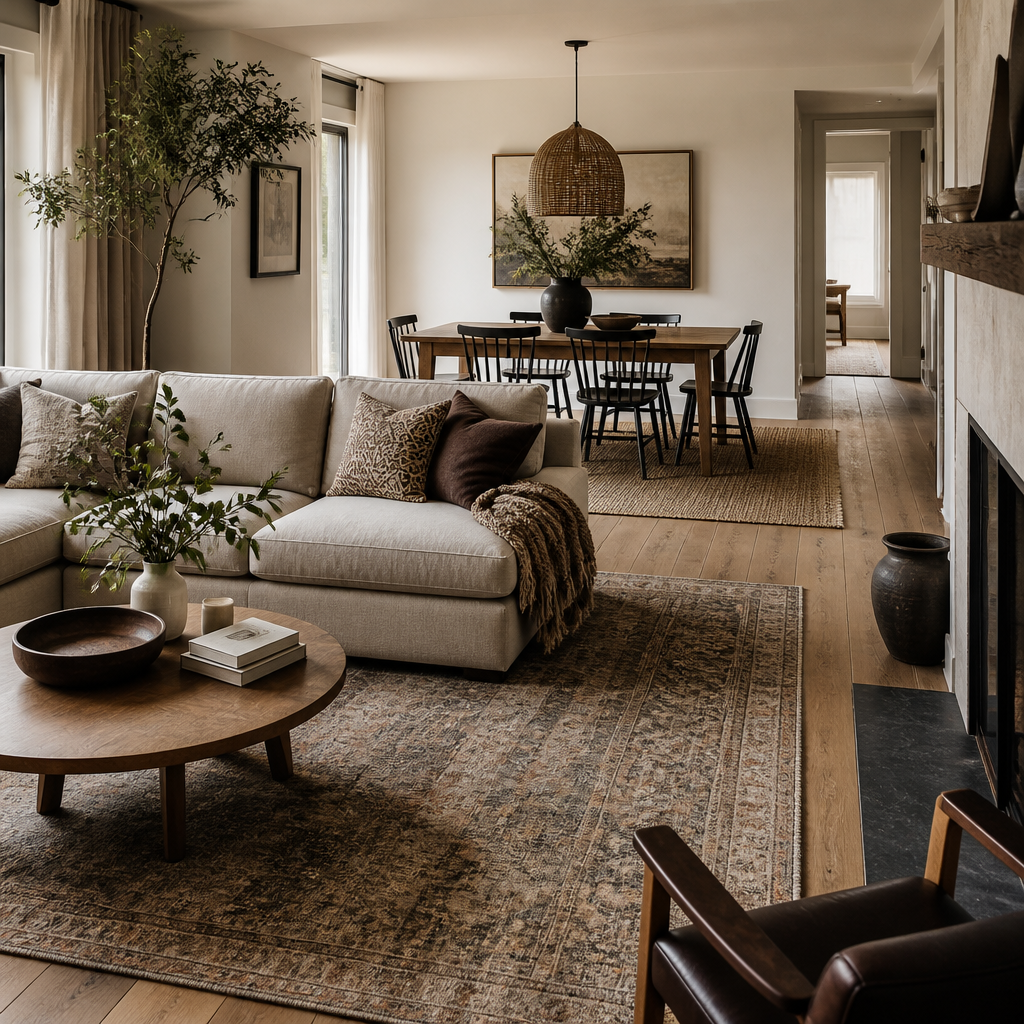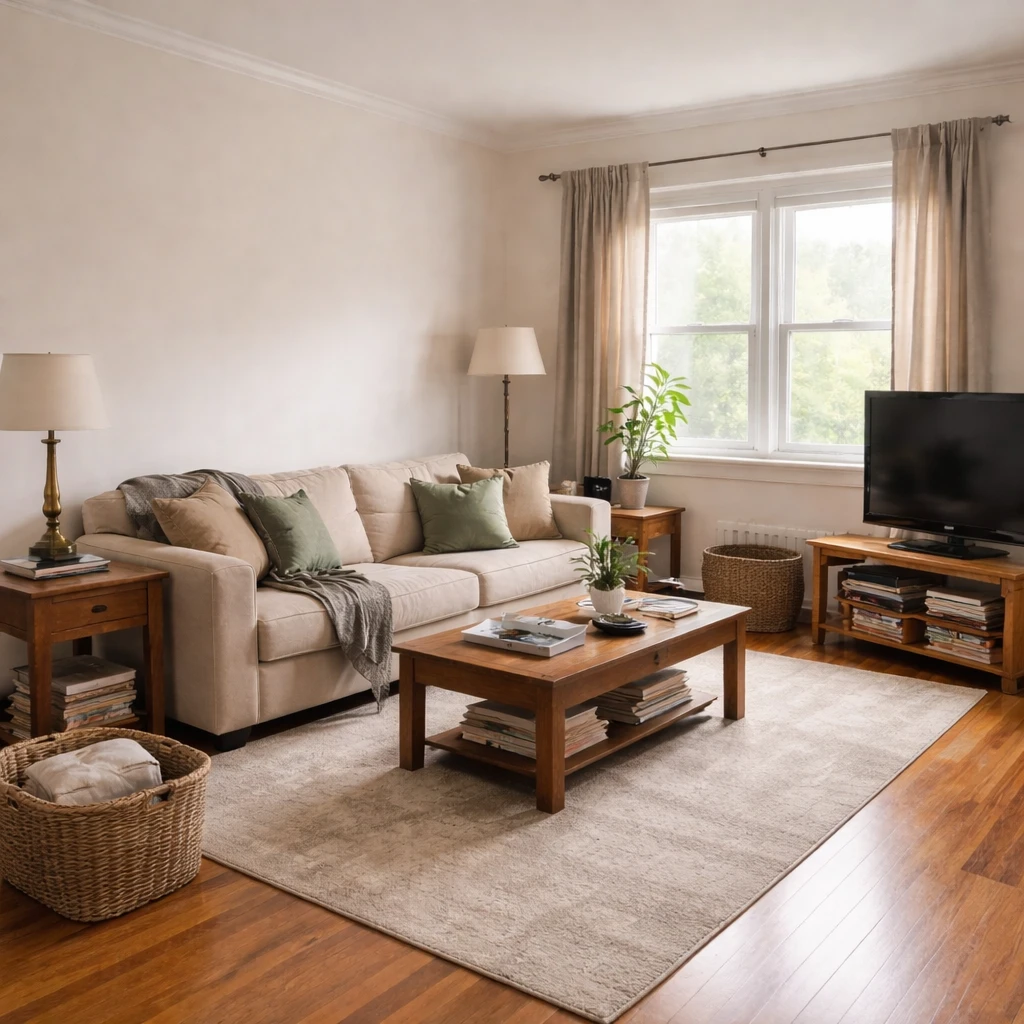
The living room is typically the most used shared space in a home and sets the tone for the entire residence. Before choosing any furniture, determine the room's primary purpose. Does it serve as a conversation space, a television lounge, a reading room, or a flexible area that has to support multiple overlapping uses? Your answer shapes every layout decision that follows. Many living rooms try to serve too many masters at once, resulting in a space that never feels fully settled.
Proportion matters more than accumulation. A room can feel unfinished with too little furniture, but it more often feels expensive when a few correctly scaled pieces are given enough space to breathe. Rug sizing, table spacing, lamp placement, and walkway clearance all influence whether the room feels intentional or improvised. A coffee table about 18 inches from the sofa edge, a walkway at least 36 inches wide, and a rug large enough to catch the front legs of the main seating pieces are the kind of rules that quietly make the room feel right.
Comfort is also more technical than most people expect. Hard floors, bare walls, and one bright ceiling light can make a room look tidy while still feeling echoey and flat at night. Upholstery, rugs, books, and layered lamps help transform the space from a gallery into a place people actually want to linger. A living room is successful when it supports conversation, rest, and routine use at the same time, not when it merely looks correct in a single photo.
What matters most
Living room planning should begin with how the room is actually used, not with a style label. Some living rooms need to support conversation first, others television viewing, family lounging, reading, or flexible overflow for work and play. Those priorities change the correct layout more than any color palette does.
The central design questions are measurable: where people walk, where the focal point belongs, how far seating should sit from a coffee table, and whether lighting supports both daytime and evening use. A well-planned living room usually feels easy to move through because the circulation was solved before the styling began.
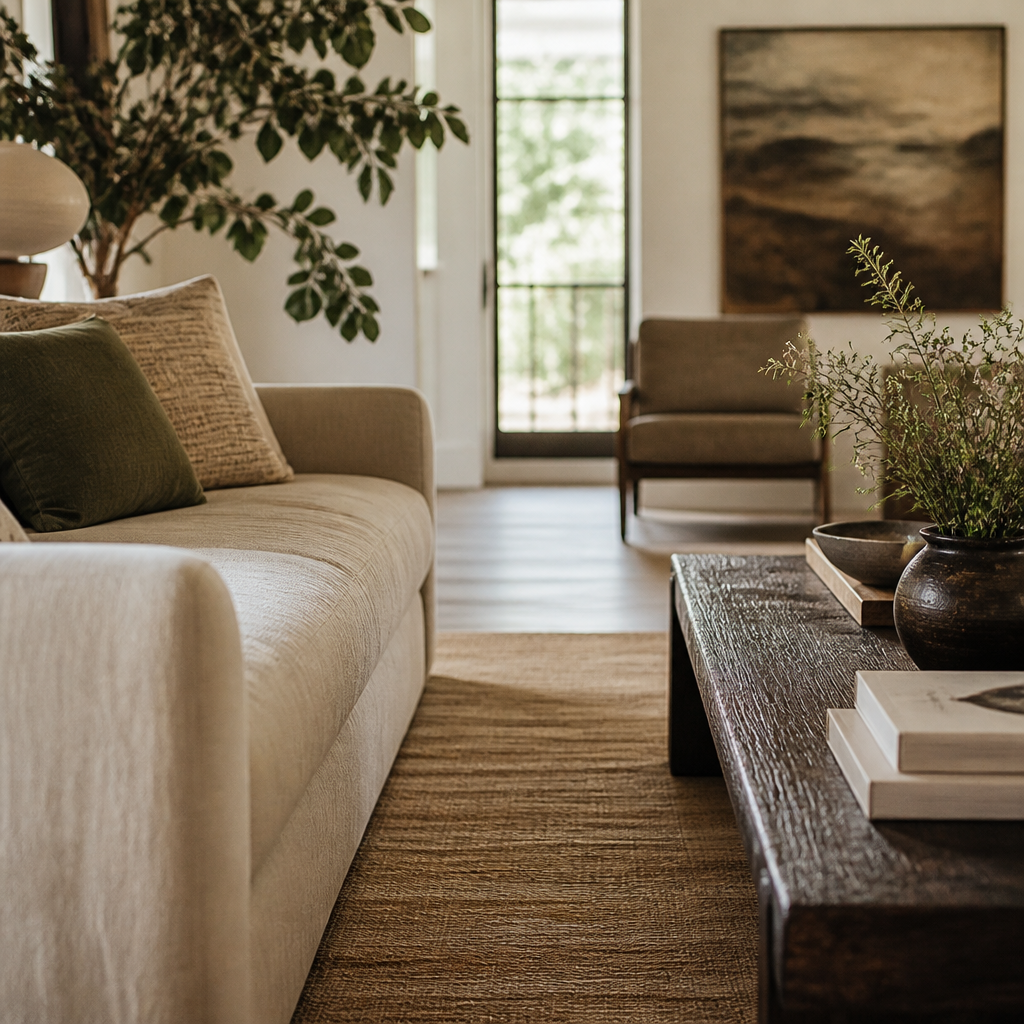
Proportion matters more than accumulation. A room can feel unfinished with too little furniture, but it more often feels expensive when a few correctly scaled pieces are given enough space to breathe. Rug sizing, table spacing, and lamp placement all influence whether the room feels settled or improvised.
This guide is meant to help readers make those decisions with more confidence: what to measure, what to prioritize, and which rules are worth following closely. Living rooms succeed when they support the way the household actually spends time there, not when they imitate a showroom scene.
How to approach it
Measure the room and mark fixed elements
Record wall lengths, window locations, door swings, outlets, fireplaces, and built-ins. These fixed elements determine where large furniture can go and where circulation must remain clear.
Choose the room's primary function
Decide whether the room is mainly for conversation, television, family lounging, entertaining, or some combination. Function determines the focal point, seating density, and storage priorities.
Lay out seating around the focal point
Anchor the main seats first. Keep coffee tables about 18 inches from the sofa and maintain roughly 30 to 36 inches for walkways so the room feels usable rather than crowded.
Size the rug and lighting correctly
Use a rug large enough for at least the front legs of major seating to rest on it. Layer ambient, task, and accent lighting so the room works for reading, conversation, and evening use.
Balance storage with visual breathing room
Add storage where clutter tends to accumulate, but avoid filling every wall. Open space is part of the composition; it keeps the room calm and improves movement.
Refine in phases
Start with layout and anchor furniture, then address lighting, textiles, and smaller objects. This sequence prevents expensive mistakes and makes it easier to correct proportion problems early.
What to pressure-test
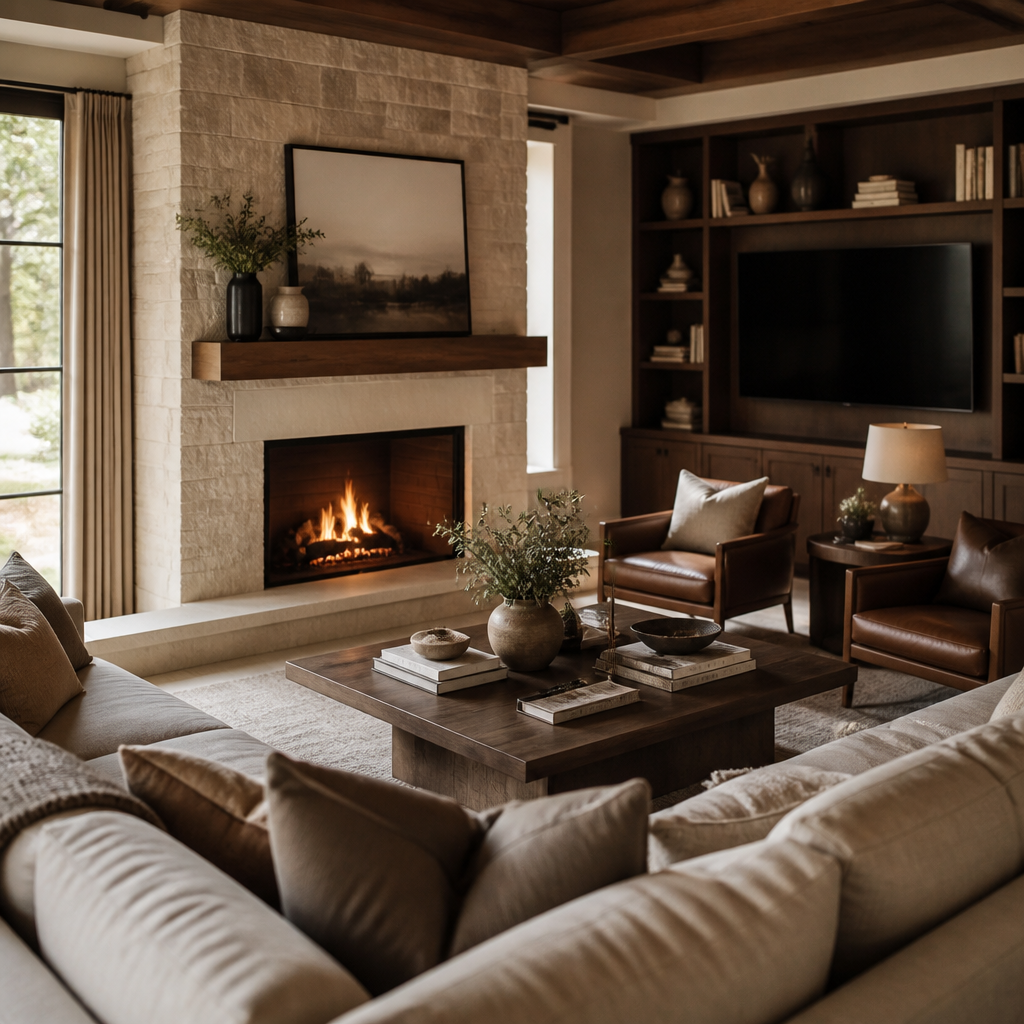
Open-plan living rooms deserve extra attention because they often carry too many jobs at once. In combined living, dining, and kitchen zones, rugs, lighting groups, and furniture orientation do the work walls used to do. A room can look large on plan and still feel chaotic if the seating group has no clear boundary or if the main walkway cuts directly through the conversation zone. The fix is usually not more furniture. It is clearer zoning.
Comfort is also more technical than most people expect. Televisions, speakers, hard flooring, and bare walls can make a room look finished while still sounding tiring. Upholstery, rugs, drapery, and bookshelves help absorb sound, while layered lamps make the room usable after dark without flattening faces and surfaces. Natural light and plants help too, but only if the room still protects circulation and seating comfort. A living room is successful when it supports conversation, rest, and routine use at the same time, not when it only looks correct in one afternoon photo.