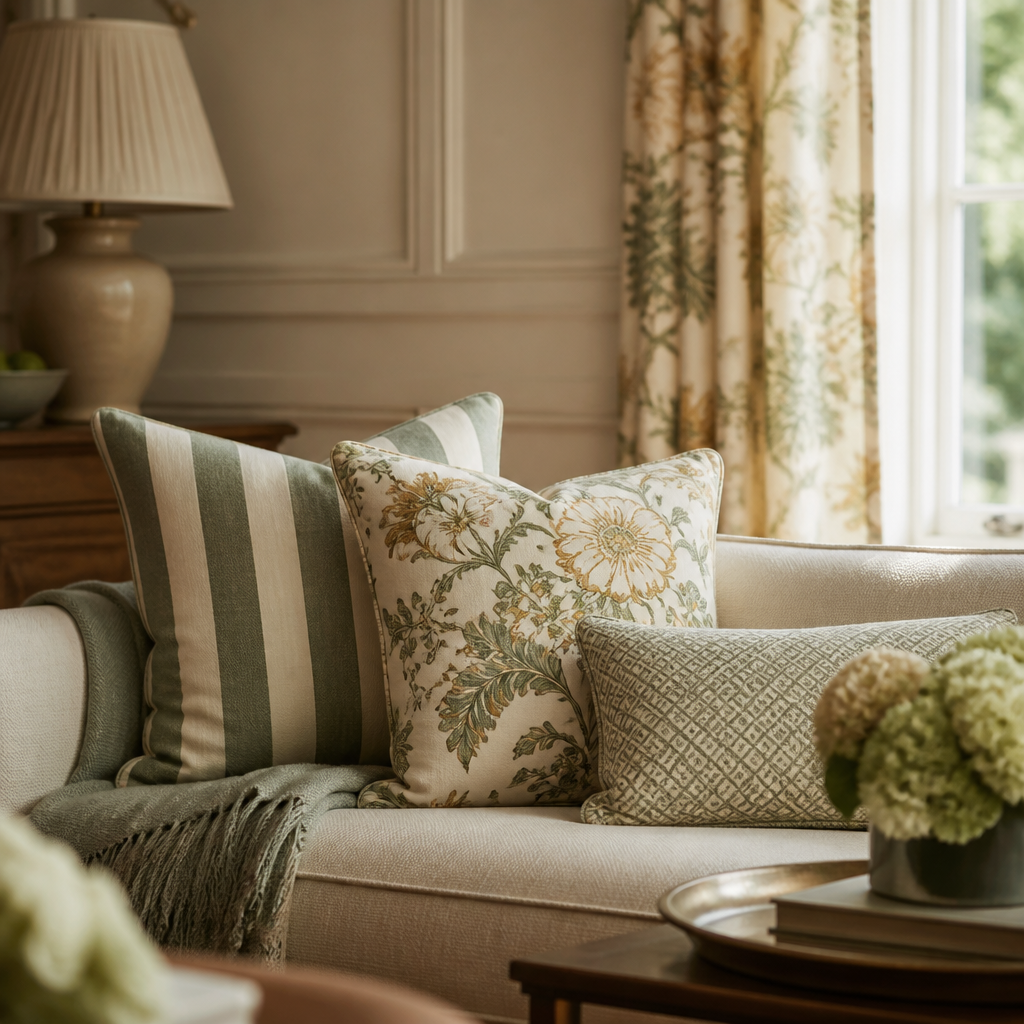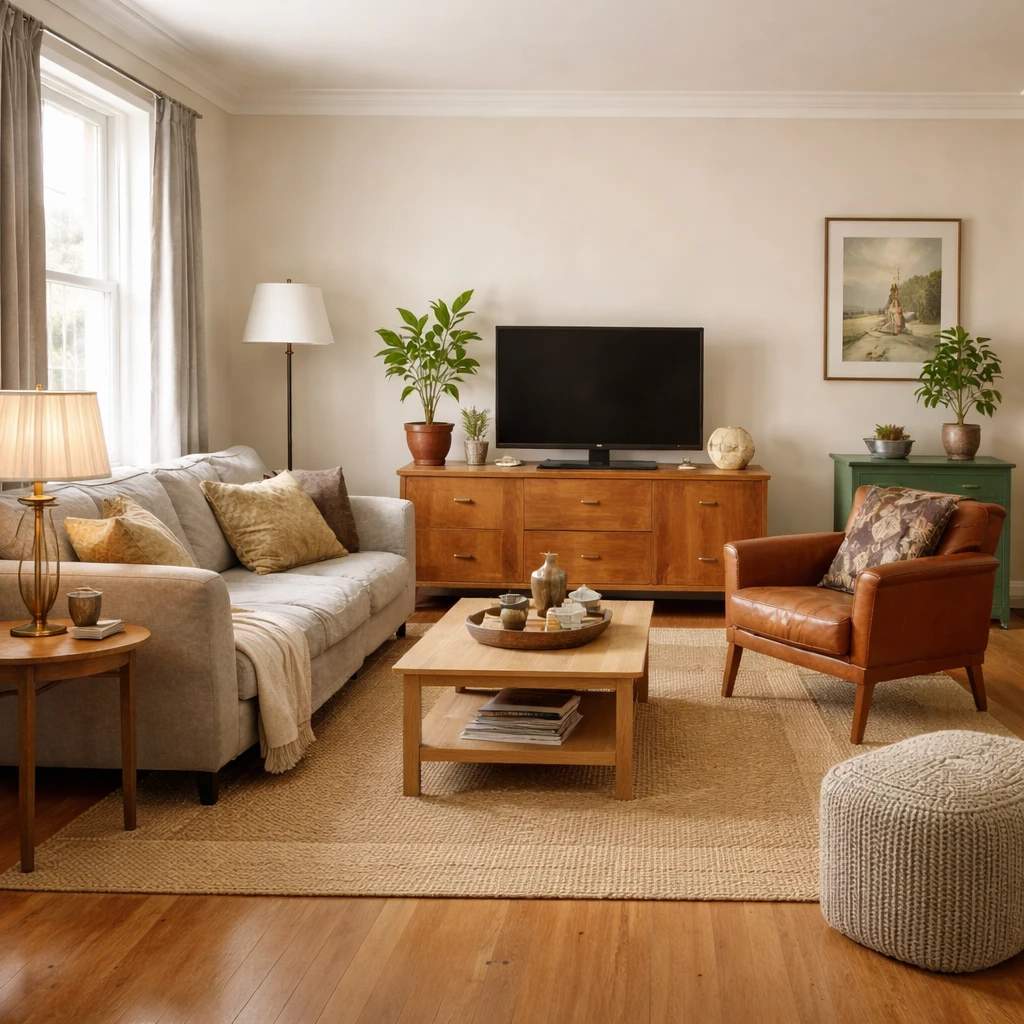
Mixing furniture styles successfully depends on hierarchy first and novelty second. One style should lead, usually about 70 to 80 percent of the room's visual weight, while one or two others enter through a chair, a table, lighting, or a concentrated finish family. Without that hierarchy, the room becomes a polite argument where nothing wins. Good mixed rooms feel edited. Bad mixed rooms feel undecided.
The real bridge between styles is rarely the style name itself. It is proportion, color temperature, finish, or silhouette. A traditional rug and a clean-lined modern sofa can coexist if their scale is compatible and their palette shares enough undertone to feel related. If the forms are more varied, the finishes usually need more discipline. Mixed-style rooms often need tighter palettes than single-style rooms do for this reason.
Testing combinations should happen with actual samples whenever possible. Lay wood finishes, fabric swatches, metal tones, and paint cards together under the room's real light. Photograph them and look again later; proportion and clash are often easier to catch once the eye has cooled. Architecture should keep veto power. Some rooms want continuity with one strong disruption. Others want layered contrast. The room's ceiling height, molding, floor species, and window shape usually tell you how far a style mix can stretch.
What defines the look
Mixing styles successfully depends on hierarchy first and novelty second. One style should lead, usually around 70 to 80 percent of the room's visual weight, while the second acts as interruption, spice, or tension. Without that hierarchy, the room becomes a polite argument where nothing wins. The dominant style is usually established by the largest upholstered pieces, case goods, and architectural relationship to the room. The secondary style enters through a chair, a table, lighting, art, or a concentrated finish family. Good mixed rooms feel edited. Bad mixed rooms feel undecided.
The real bridge between styles is rarely the style name itself. It is proportion, color temperature, finish, or silhouette. A traditional rug and a clean-lined modern sofa can coexist if their scale is compatible and their palette shares enough undertone to feel related. A rustic table and a refined dining chair can work if they agree on visual weight and the metals nearby do not start a separate argument. This is why mixed-style rooms often need tighter palettes than single-style rooms do. If the forms are more varied, the finishes usually need more discipline.
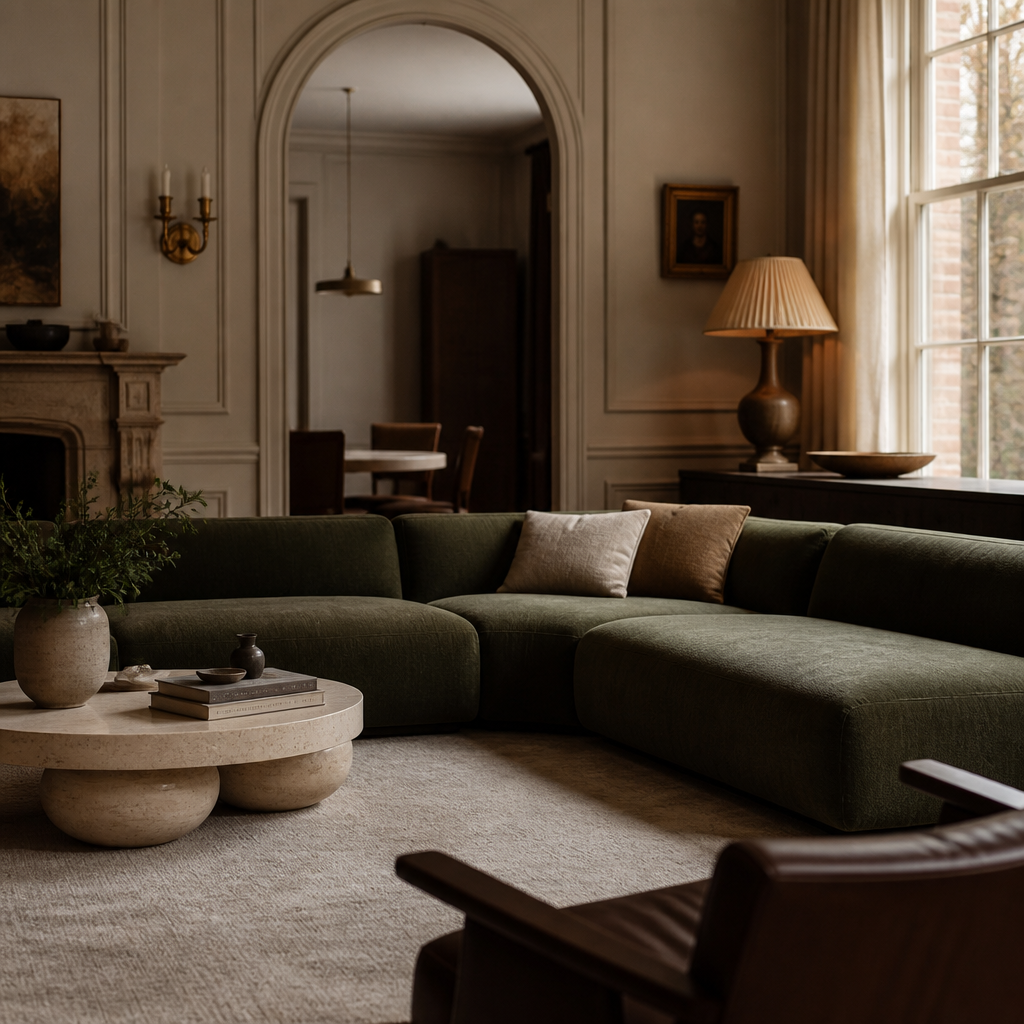
Testing combinations should happen with actual samples whenever possible. Lay wood finishes, fabric swatches, metal tones, and paint cards together under the room's real light. Photograph them and look again later; proportion and clash are often easier to catch once the eye has cooled. Pattern mixing follows the same rule set as style mixing: one large-scale note, one medium, one small, all connected by at least one repeated color. If two pieces are both loud in shape, color, and finish, they need a quieter mediator between them or one of them needs to leave the room entirely.
How to apply it well
Identify the style that will carry most of the room
Determine which existing or planned pieces establish the dominant language, usually the largest upholstered and case-good pieces. This is your 70-to-80 percent base. Without that hierarchy, mixing becomes argument rather than composition.
Choose one supporting style that adds tension usefully
Select a second style that sharpens the room rather than duplicates it. Two strong voices are usually enough. Adding a third before the first two are reconciled is how rooms become eclectic only in the sense that they never made a decision.
Create the bridge through material, palette, or proportion
Find one shared wood tone, one recurring finish family, or one controlled color story that lets the two styles speak to each other. The bridge is rarely the style label itself; it is usually a repeated undertone or visual weight that keeps the room from splitting into camps.
Test the combination with actual samples and silhouettes
Lay finishes and fabrics together in the room's real light and compare the pieces as a set rather than one by one. This is where you catch the brass that is too yellow, the walnut that is too red, or the chair profile that makes the contrast feel theatrical instead of deliberate.
Edit out anything that introduces a third language accidentally
Remove or reconsider pieces that do not support either the dominant or the supporting style. The room needs friction, not noise. If an object requires a long explanation to justify its place, it is often the piece that should leave.
Balance the room by adjusting visual weight, not equal representation
Step back and make sure one style still leads while the second adds interruption in the right places. The goal is not a 50/50 split. It is a room that feels personal, layered, and coherent because the contrast has been managed rather than merely collected.
What makes it feel forced
Architecture should keep veto power. A heavily ornamented room can rarely absorb five more stylistic speeches from the furniture without turning noisy. Conversely, a plain room can often handle more tension because the shell is calm enough to support it. Ceiling height, molding profile, floor species, and window shape all help determine how far a style mix can stretch before it feels theatrical. Some rooms want continuity with one strong disruption. Others want layered contrast. The shell usually tells you which one you are dealing with if you stop trying to overpower it.
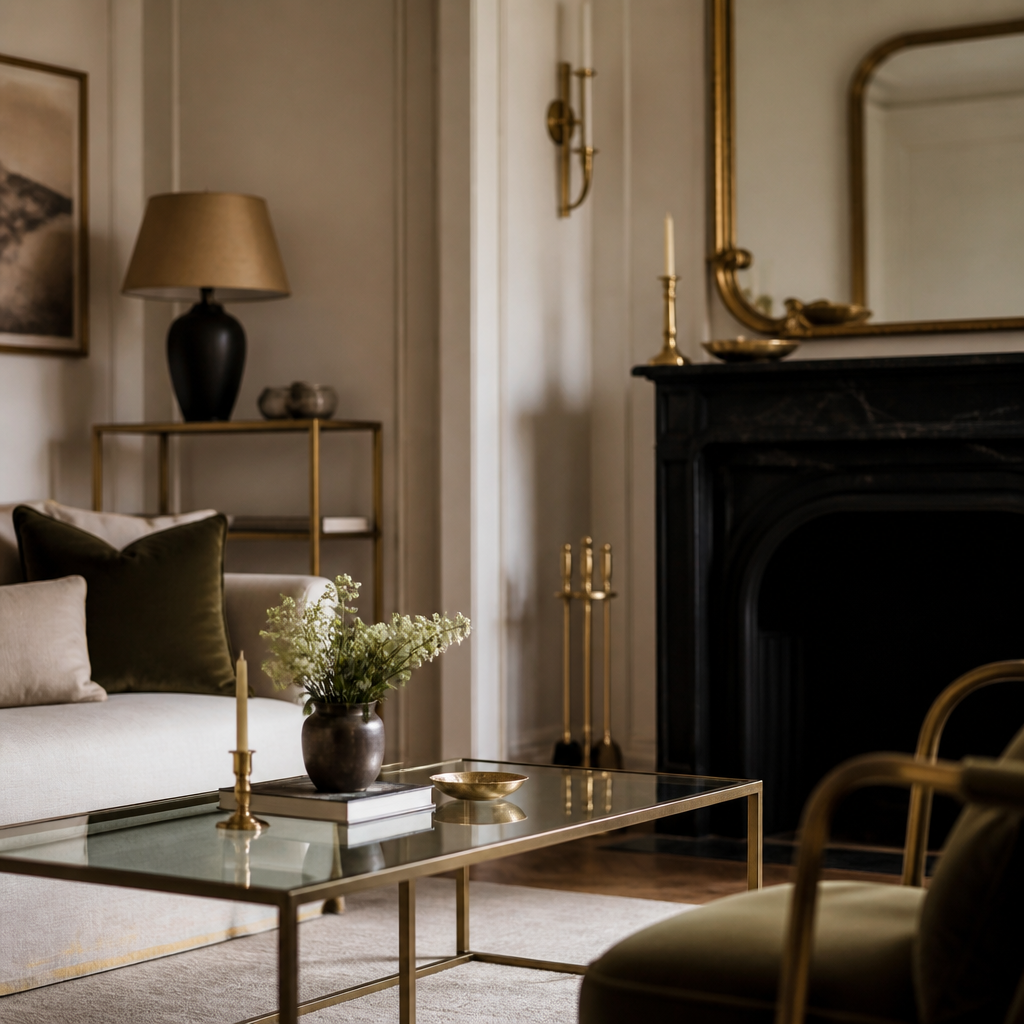
The best mixed-style rooms feel inevitable in hindsight. Nothing is too on-the-nose, nothing is too matchy, and nothing looks like it was purchased just to prove that eclecticism was attempted. That result comes from ruthless editing, repeated materials, and a willingness to let one element take the lead instead of asking every object to be equally expressive. Mixing styles is not about proving range. It is about creating conversation between pieces that would be flatter on their own.