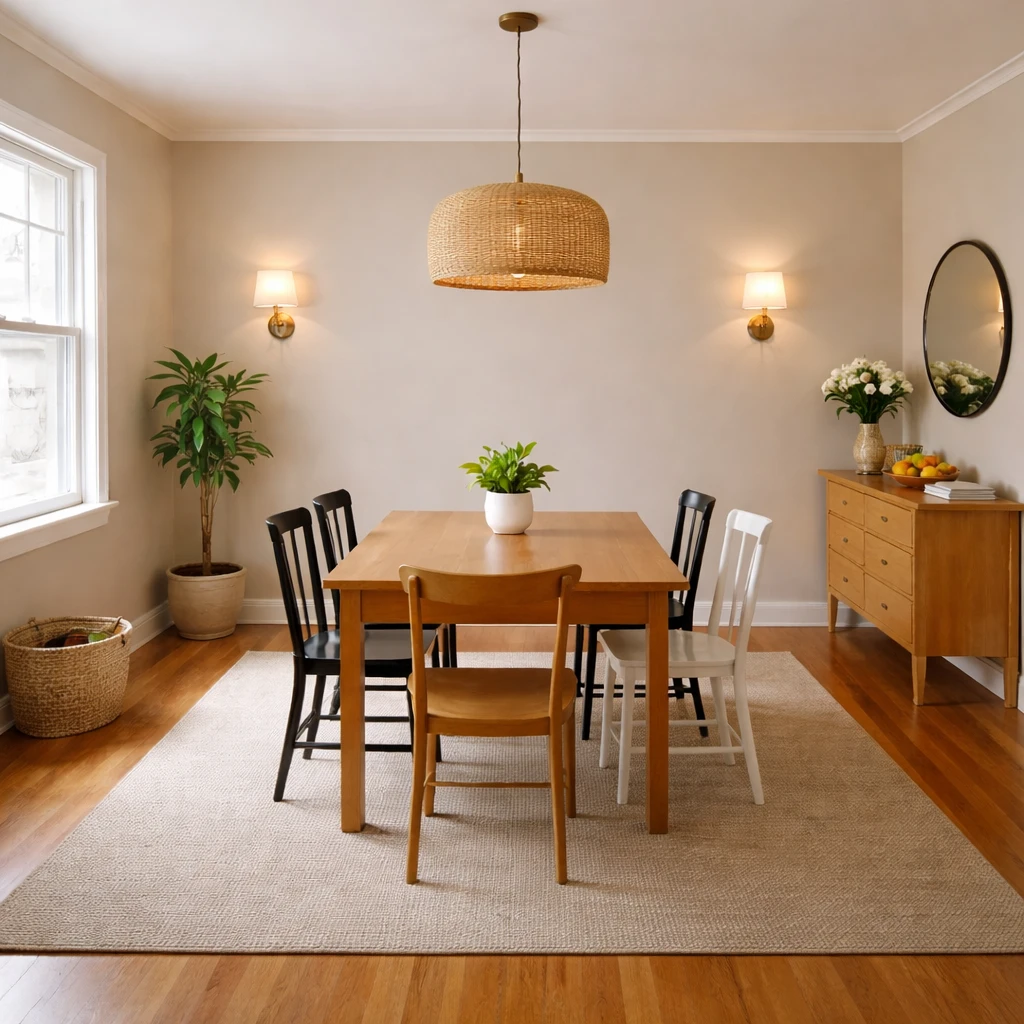
The dining room's function has evolved—some families use it daily for meals, others primarily for holidays and gatherings. Your layout should reflect how you actually use the space, not how design magazines suggest it should be used. If you eat at a kitchen counter most days, the dining room might be better repurposed as a home office, playroom, or dual-purpose space that can flex between uses.
The most important constraint is table size. Measure your room and map out: the table itself, chair pull-back space (at least 24 inches per seat), and traffic pathways around the table (minimum 36 inches). A common mistake is buying a table that's too large for the room, which makes every meal feel like navigating an obstacle course. Leave enough space to pull chairs out comfortably and walk behind seated diners without contorting.
Lighting over dining tables should hang 30-36 inches above the table surface—high enough that taller guests won't bump their heads but low enough to create intimate ambiance. Consider a dimmer switch to adjust mood for different occasions. Rug placement matters: either all furniture legs on the rug (ideal) or at minimum the front legs, to anchor the table and prevent chair legs from catching on uneven flooring.
Start with the room itself
Dining rooms are among the clearest proof that proportion governs hospitality. A room can be beautifully finished and still feel subtly annoying if the table is too large, the chairs scrape into the wall, or the chandelier hangs as if it belongs to a different table entirely. The first planning decision is not style. It is frequency: how often does this room host daily meals, homework, holidays, or all three? A dining room used six nights a week should not be arranged like a ceremonial space opened only for December photographs. Daily use deserves easier circulation, practical storage, and furniture that does not perform formality at the expense of comfort.
Clearances are what separate graceful dining from apologetic dining. A practical minimum is about 36 inches from the table edge to the nearest wall or storage piece so chairs can pull back and people can move around seated diners; 42 inches is more comfortable if serving happens regularly. Table shape should answer the room itself. Rectangular tables usually suit long rooms, round tables improve diagonal circulation in square rooms, and oval tables often split the difference when you want capacity without aggressive corners. These decisions affect not just look, but the simple emotional question of whether people relax once they sit down or spend the evening negotiating elbows and pathways.
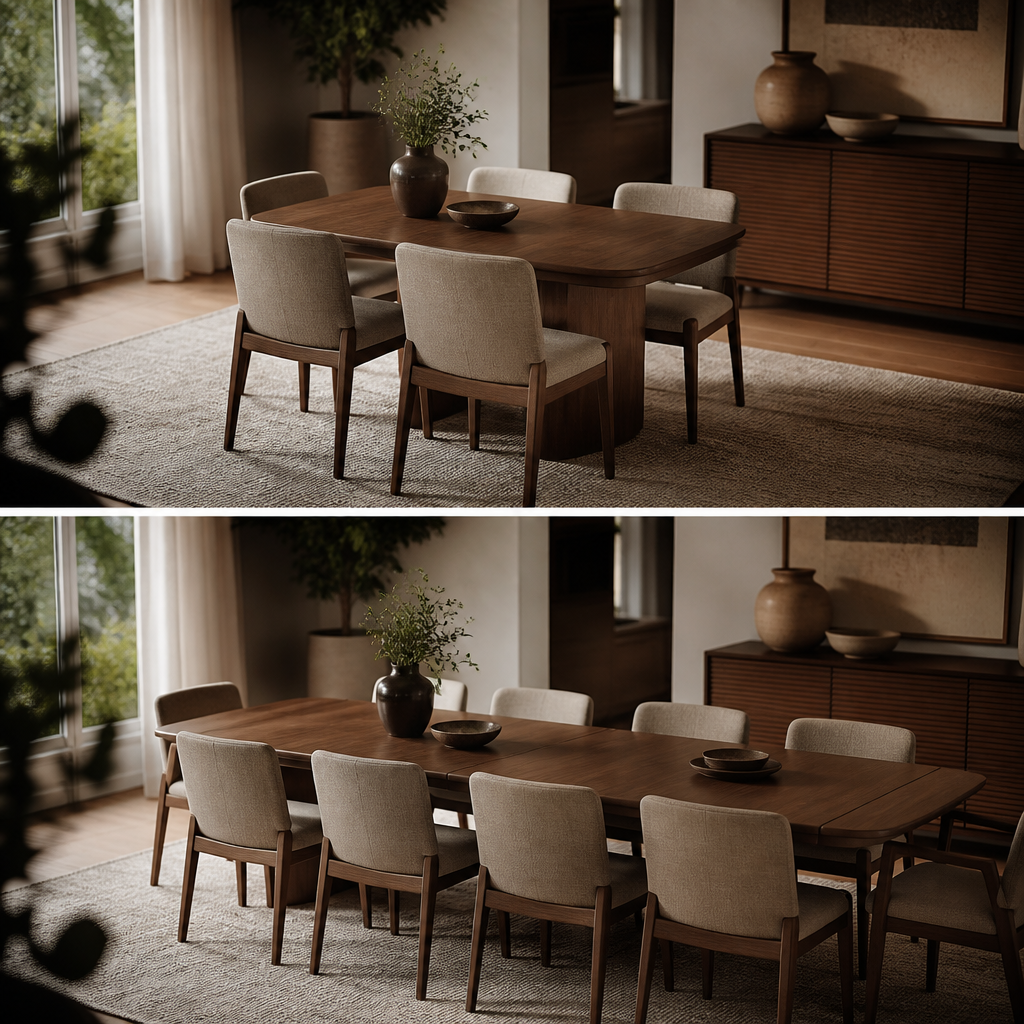
Lighting establishes the room's center and its mood. A chandelier or pendant should generally hang 30 to 36 inches above the tabletop in an 8-foot room, rising incrementally with taller ceilings, and it should be scaled to the table rather than to the empty room volume. Color temperature around 2,700K to 3,000K is usually most forgiving for food and skin. If the room doubles as a homework or work zone, the overhead light will rarely be enough on its own; supplemental lamps or dimmable layered lighting keep the room from becoming either too theatrical for daytime or too flat for dinner. One pretty fixture does not automatically equal a well-lit room.
How to plan it cleanly
Measure the room and serving clearances
Dining rooms work best when the table is sized after the circulation is understood. Aim for about 36 inches of clearance around the table so chairs and people can move comfortably.
Match table shape to the room
Round tables often improve circulation in tighter rooms, while rectangular tables usually suit longer spaces. The architecture should inform the geometry, not the other way around.
Plan for daily use before occasional hosting
A room that seats twelve twice a year but feels cramped every day is not a success. Let the most frequent use case drive the core arrangement.
Size the rug and light to the table
If using a rug, extend it far enough that chairs remain on it when pulled out. Chandeliers typically hang about 30 to 36 inches above the tabletop, adjusted for ceiling height and fixture scale.
Support the room with practical storage
Sideboards, buffets, and closed storage reduce visual clutter and make hosting easier by keeping serving pieces and linens near the table.
Leave enough emptiness for the room to breathe
Dining rooms feel more formal and more comfortable when they are not overfurnished. Negative space improves movement, sightlines, and the sense of occasion.
What makes the room fail in practice
Supporting furniture should earn its footprint. Sideboards and buffets are useful when they relieve the kitchen and make serving easier, but only if they preserve movement. Storage around 20 to 24 inches deep is usually enough for plates, linens, and serving pieces without strangling the room. Chair choice matters just as much as table choice: most dining tables sit 28 to 30 inches high, so chairs around 18 inches high preserve the 10- to 12-inch gap that keeps thighs comfortable. Upholstery can be wonderful in a dining room, but only if the fabric is selected with spills, repeated use, and actual cleaning habits in mind.
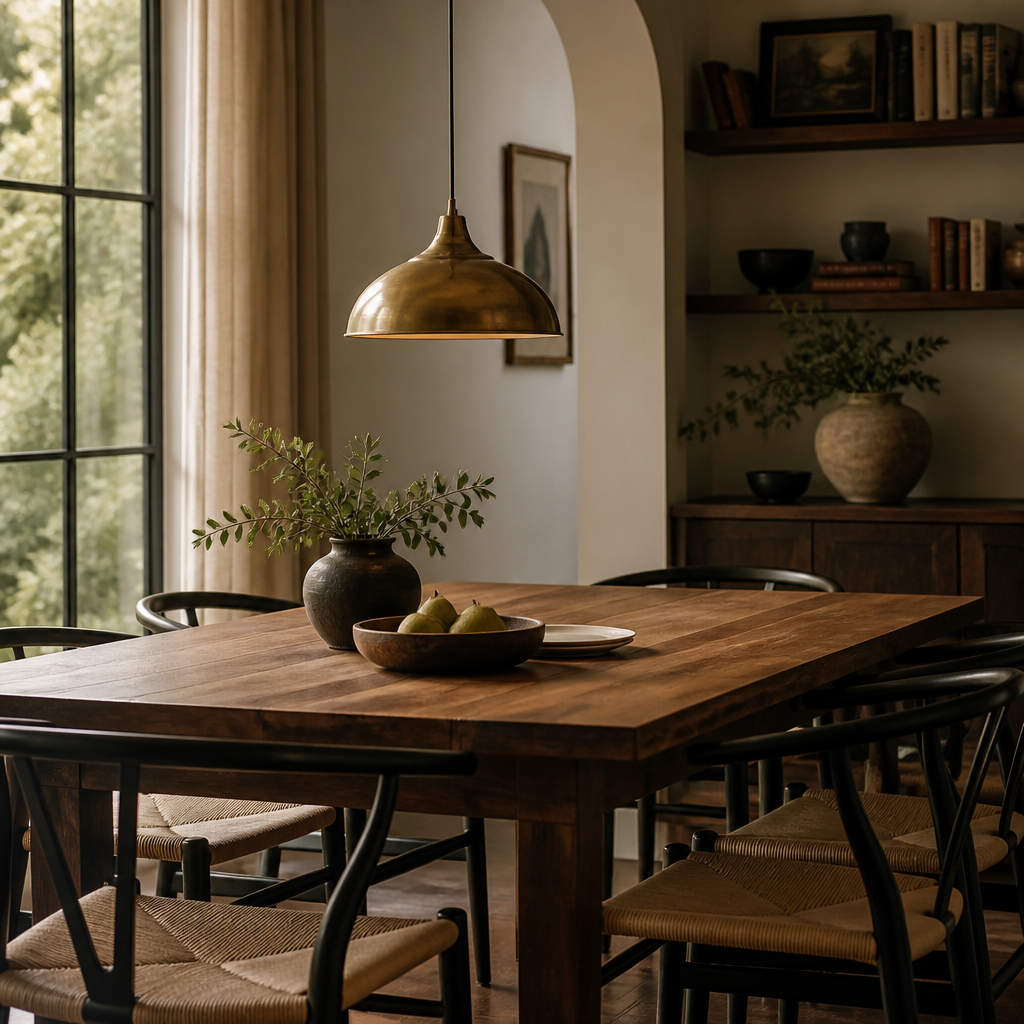
What makes a dining room feel truly good is less about grandeur than about ease. The room should support conversation, allow chairs to move cleanly, flatter people at night, and handle its real workload without fuss. Acoustics matter here too; hard floors, glass, and bare walls can make a dinner for six sound like a room for twelve. A rug, lined curtains, or a few upholstered surfaces can soften reverberation noticeably. When these practical elements are solved first, the decorative part of the room starts to feel obvious, and the room becomes what it should be: not a staged backdrop, but a place people want to stay in after the plates are cleared.
