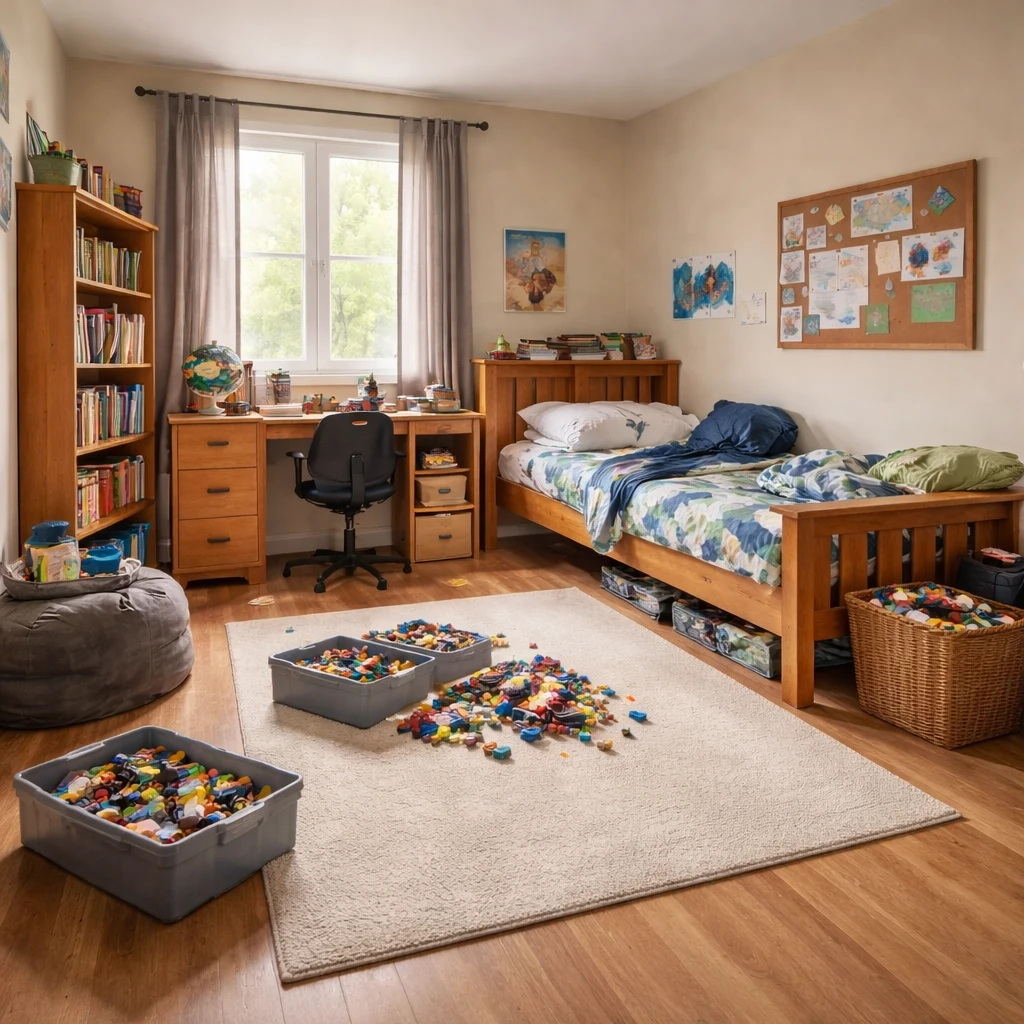
Kids' rooms need to serve evolving needs—what works for a toddler won't work for a tween. The smartest approach is choosing adaptable furniture and storage systems that grow with your child rather than buying age-specific pieces you'll replace in a few years. A bed with a trundle that converts to guest seating, dressers with removable drawer organizers, and adjustable shelving all extend investment life.
Involve children in age-appropriate decisions—a toddler can choose between pre-selected options; a school-age child can have meaningful input on colors and themes; a teenager should have significant autonomy. This builds buy-in and teaches decision-making while ensuring the room meets practical requirements: adequate sleep space, sufficient storage, and appropriate study area if needed.
Safety is non-negotiable: anchor heavy furniture to walls to prevent tipping, choose non-toxic paints and finishes, avoid cords from blinds within reach, and ensure adequate ventilation. Storage should be accessible to your child's height—a child can't clean up if they can't reach where things belong. Low hooks, accessible cubbies, and beds with manageable under-bed storage support developing independence.
Start with the room itself
Children's rooms need to be planned as changing systems rather than fixed visual identities. A toddler needs low reach storage and open floor area, a school-age child needs a desk and better book organization, and a teenager needs privacy, charging access, and a room that no longer reads like a nursery annex. That is why the smartest kids rooms are built on durable, neutral foundations, flooring, paint, bed frame, storage shell, then updated through cheaper layers such as bedding, art, lamps, and removable wall graphics. The room should be able to grow without requiring a full emotional and financial reset every three years.
Zoning matters more here than style labels. Most successful kids rooms need a sleep zone, a storage zone, and either a play or study zone depending on age. Keep at least about 24 inches of access beside the bed and 30 to 36 inches along the main path from door to bed or desk. In smaller rooms, preserving open floor area is often more valuable than adding one more cabinet, because children use rooms dynamically: they spread out, build, read on the floor, and move between activities much more fluidly than adults do. A room packed wall to wall with furniture may look organized in a photo and feel suffocating by bedtime.
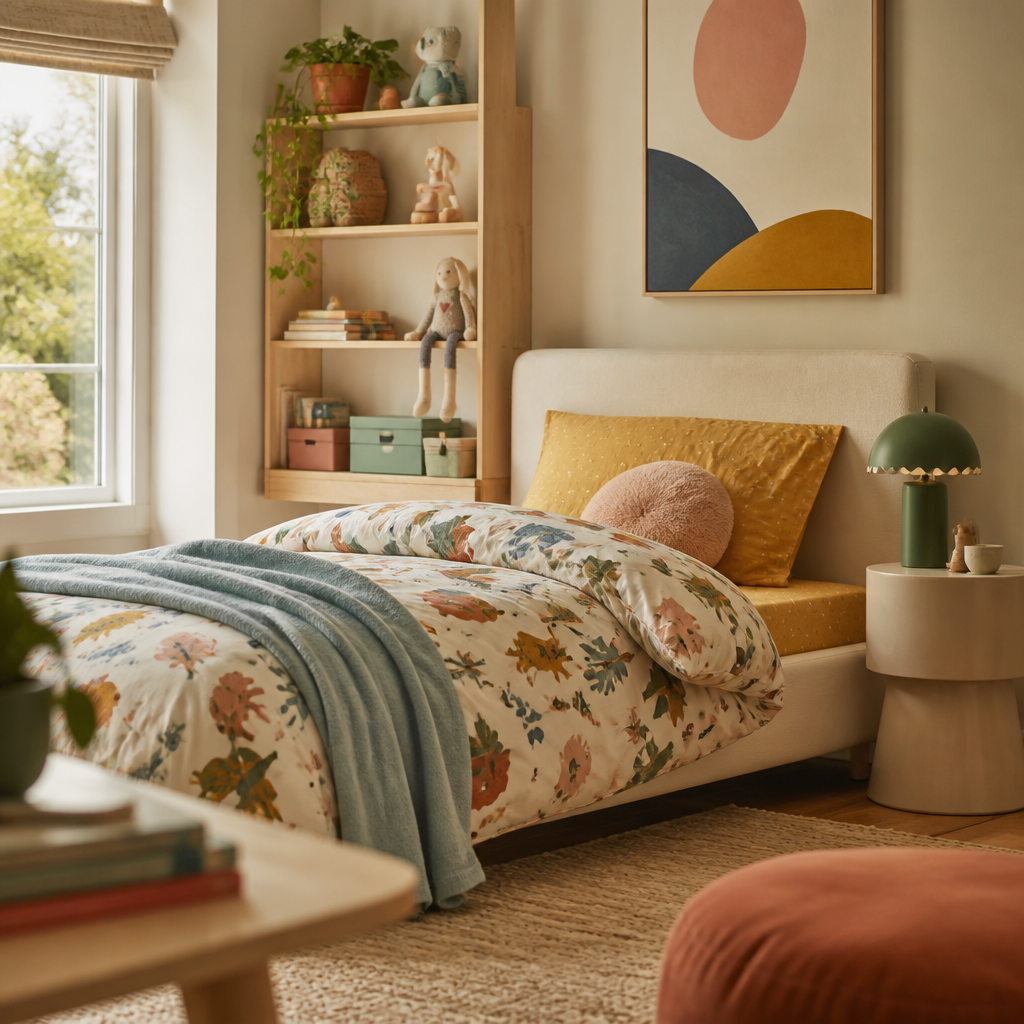
Storage should be matched to the child's reach and actual habits. Frequently used items belong below roughly 48 inches for younger children and below 60 inches for older ones so they can clean up without adult intervention. Open bins are excellent for toy rotation, but closed drawers and cabinets matter just as much because visual quiet supports sleep and faster room resets. Dressers above 30 inches should be anchored under CPSC anti-tip guidance, and shelving should be evaluated for climb risk before styling. A child's room should encourage independence, but it should never require perfect behavior to remain safe.
How to plan it cleanly
Measure the room and plan for growth
Record dimensions, window positions, and door swings. Kids' rooms change every two to three years; plan furniture placement that adapts from toddler to tween. A twin bed now beats a toddler bed you will replace in eighteen months.
Zone the room by activity, not by age
Divide the space into sleep, study, and play zones. The bed anchors the sleep zone, a desk with adjustable height anchors the study zone, and open floor space anchors play. As the child grows, play space converts to study space.
Choose furniture that grows with them
Beds that extend from toddler to twin, dressers that double as changing tables, and desks with adjustable legs outlast their themed alternatives by years. Avoid furniture shaped like race cars — the child will outgrow the room before the dresser.
Invest in storage that hides what you cannot curate
Bins, cubbies, and closed storage for the 800 toys you cannot edit down. Open shelving for the twelve books and three displayed toys that look intentional. Kids' rooms need more storage than you think, and almost none of it should be visible.
Pick durable, washable, and replaceable surfaces
Performance fabric on upholstery, wipe-clean paint on walls (eggshell or satin), and rugs that can go in the washing machine or be replaced without guilt. Stains are not a possibility; they are a timeline.
Layer lighting for homework, play, and wind-down
A ceiling fixture for general visibility, a task lamp at the desk (aim for 50-75 foot-candles at the work surface), and a dim, warm reading light near the bed. One overhead light cannot serve every activity a child's room demands.
What makes the room fail in practice
Furniture and light need to support growth, not just current charm. A twin bed remains the most flexible footprint for most children, and adjustable or properly scaled desks become important as soon as homework becomes routine. Reading and study zones generally want around 300 lux of light, enough for sustained visual comfort without eye strain. Task lamps should be positioned to avoid glare on paper or screens, and room-darkening or blackout treatments are often worth more than decorative extras once school schedules tighten and bedtime consistency matters. The room's job is to make sleep, focus, and cleanup easier, not just to look cheerful at 2 PM.
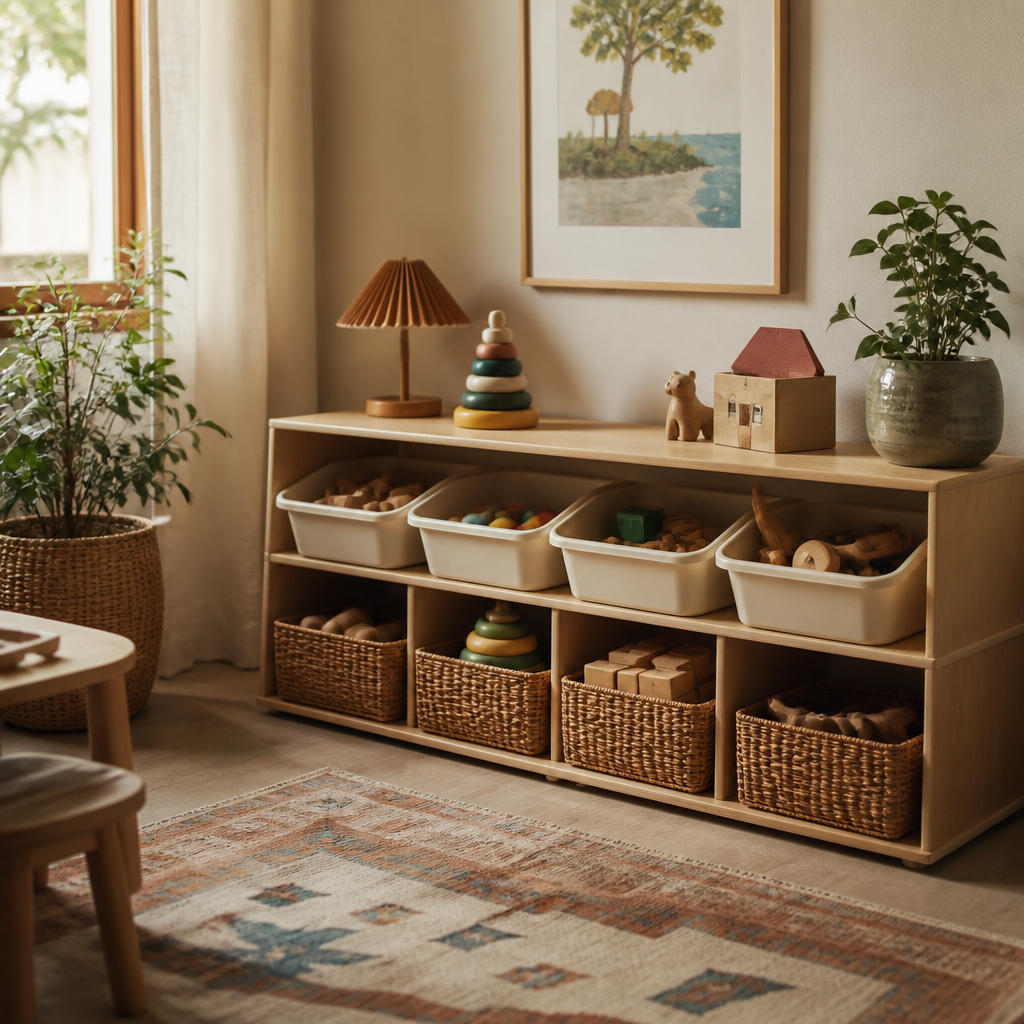
The best kids rooms feel less themed and more intelligently supportive. They absorb growth spurts, new hobbies, more books, less toys, and changing taste without turning into a war between practicality and personality. That usually means investing in the pieces that are structurally hardest to replace well, the bed, dresser, wardrobe, desk, and being much less sentimental about the layers that children naturally outgrow. Good children's design is not about creating the cutest room. It is about creating a room that still works after the child using it has changed.
