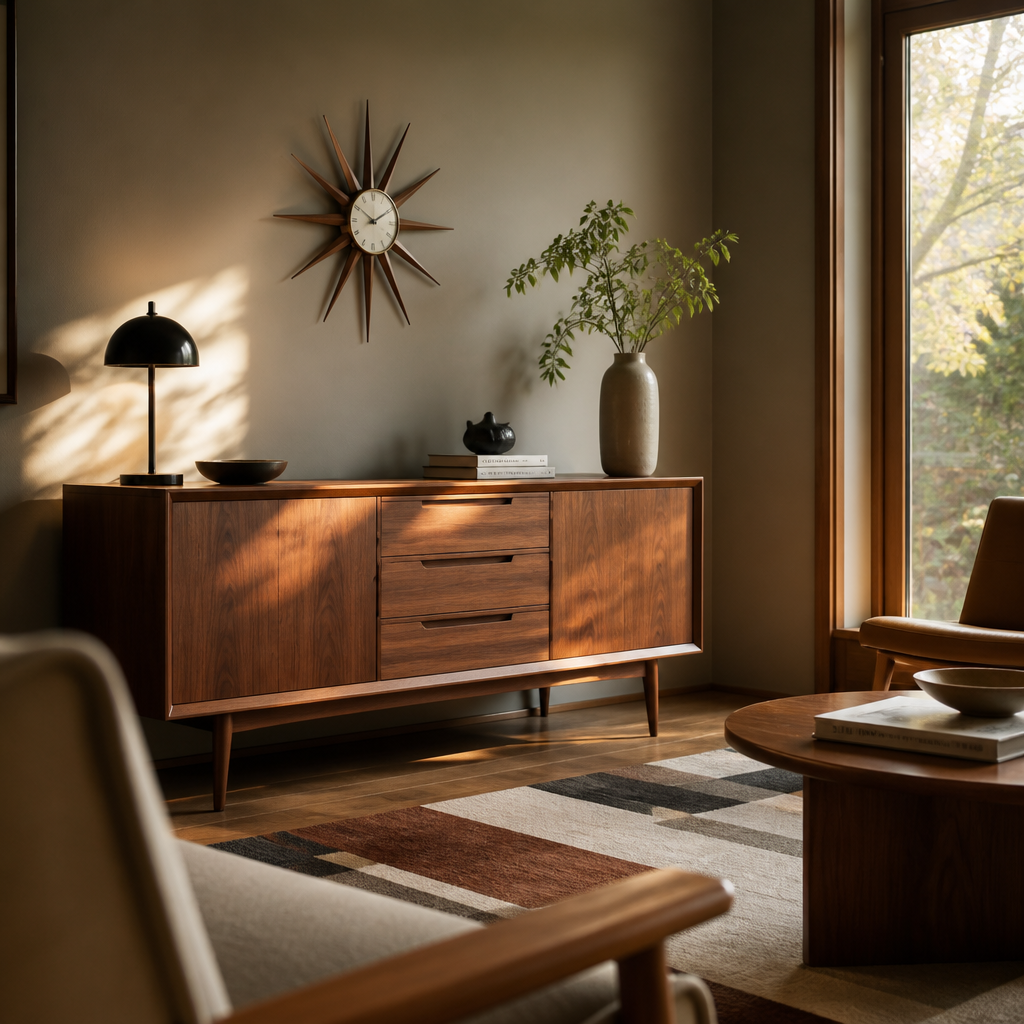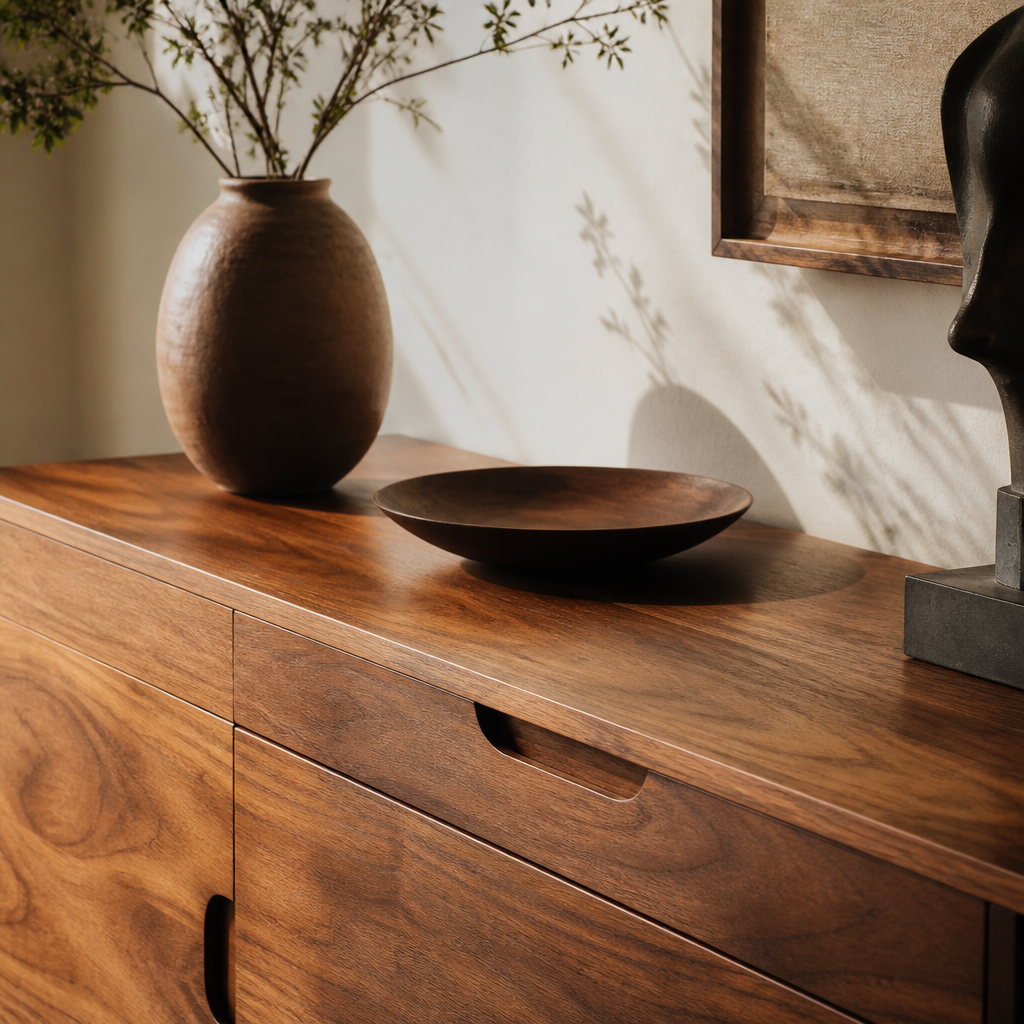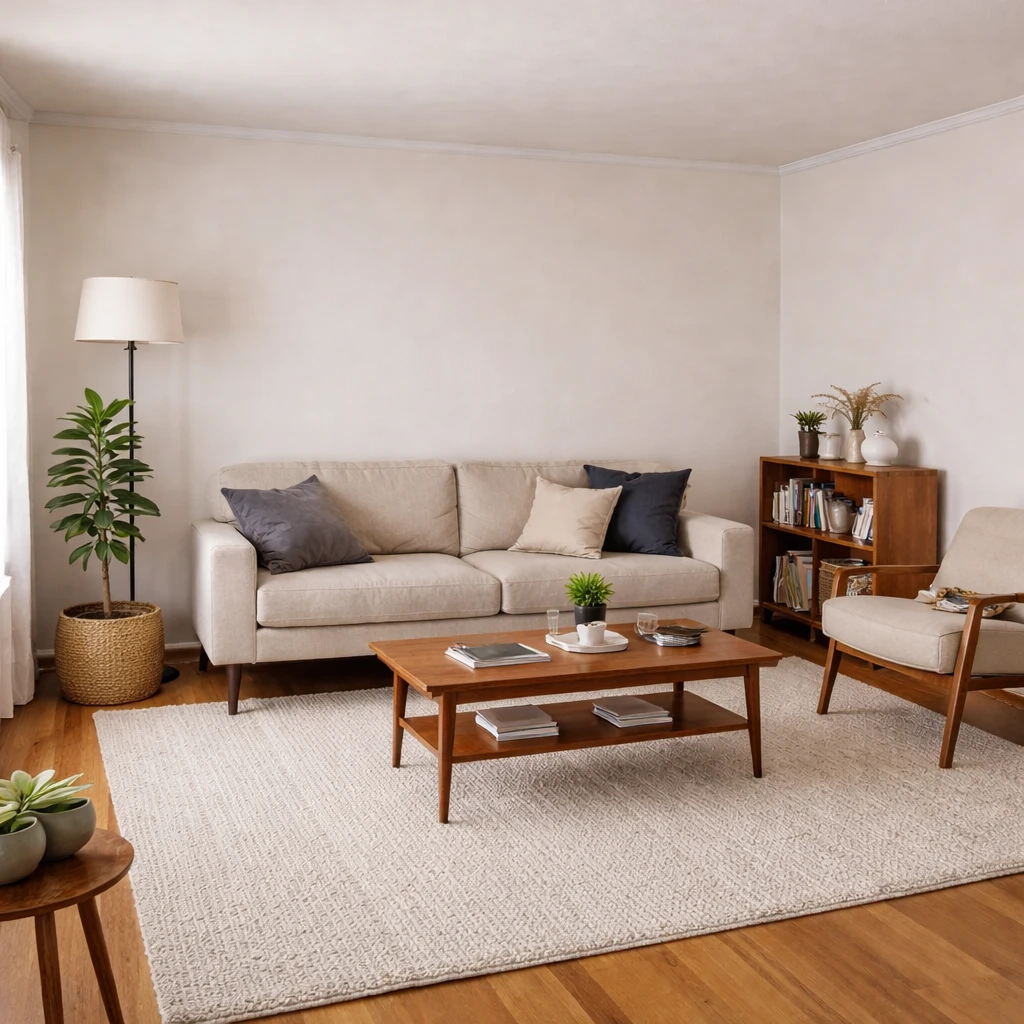
Mid-century modern (MCM) refers to design from roughly 1945-1969, a period of unprecedented innovation and optimism. The aesthetic emphasizes clean lines, organic curves, and a seamless blend of indoor and outdoor spaces. It's one of the most enduringly popular styles because it feels both retro and contemporary—timeless rather than dated.
Signature elements include: tapered legs (on everything from sofas to coffee tables), starburst and atomic-age motifs, geometric patterns, mixed materials (wood and metal, glass and stone), and bold accent colors (mustard yellow, teal, orange, olive green). Furniture from this era was designed for modern living—form follows function with decorative flair.
Authentic MCM requires quality over quantity. Original pieces from the era are highly sought after and expensive, but reproduction quality has improved significantly. The key is restraint: the style isn't about filling every corner with period pieces. A few genuine MCM furniture items in a clean-lined room create impact; too many make it feel like a museum rather than a home.
What defines the look
Mid-century modern design, roughly 1945 to 1969, emerged from a specific historical moment. Post-war prosperity in the United States met new manufacturing capabilities developed during wartime research. Designers such as Charles and Ray Eames, Eero Saarinen, and George Nelson had access to materials and techniques that did not exist before the war: molded plywood with compound curves, fiberglass-reinforced polyester, and bent steel with thin-wall tubing. The resulting furniture was not retro; it was futuristic. The reason it still looks contemporary seventy years later is that it was designed for a future that happened to arrive.
The mid-century canon rests on specific designer-material collaborations. Charles and Ray Eames began experimenting with molded plywood in 1941, developing leg splints for the U.S. Navy that introduced compound-curve pressing technology. George Nelson's 1956 Marshmallow Sofa assembled eighteen circular cushions on a painted steel frame with internal rubber washer suspension. Hans Wegner's Wishbone Chair, designed in 1949, required more than one hundred production steps, including a hand-woven paper cord seat that took a skilled craftsman approximately fourteen days to complete per chair. Manufacturer relationships defined distribution: Herman Miller and Knoll maintained quality control through licensing agreements that specified materials, dimensions, and construction methods.
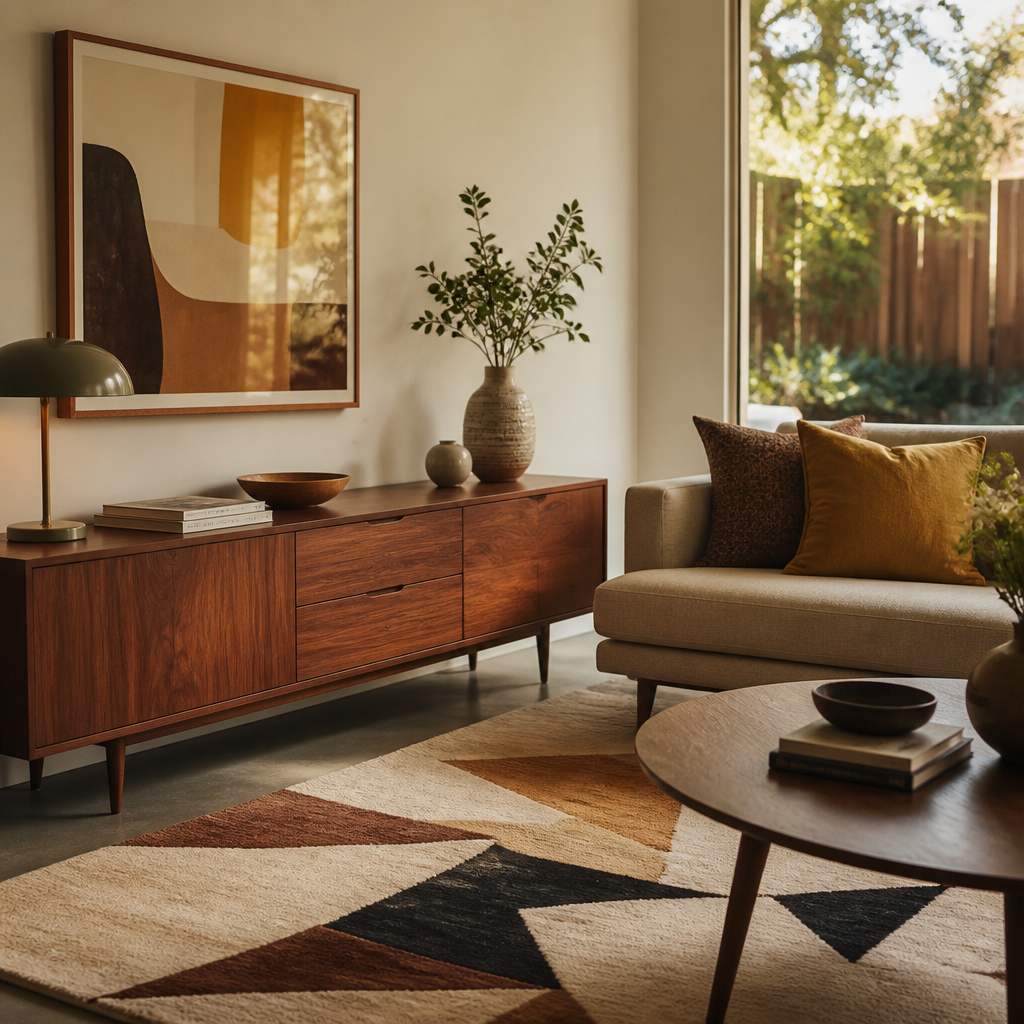
Proportions in mid-century furniture were designed for the modest rooms of the 1950s, not the expansive spaces of later decades. Tapered legs on sofas and chairs expose floor area, making rooms feel lighter. Low-profile credenzas with horizontal grain emphasize wall width rather than height. These proportions work best in rooms with eight-foot ceilings and compact footprints, where the furniture's slender lines prevent visual crowding. The period's signature color palette reflected an optimistic break from wartime austerity: mustard yellow, avocado green, teal, and burnt orange paired with warm walnut or teak wood tones. Applied to modern rooms, the palette should be used strategically: a single teal armchair against a cream wall creates a focal point, while covering every surface in period color produces a costume rather than an interior.
How to apply it well
Check the room against the era's intended proportions
Mid-century furniture was built for relatively modest rooms, so begin by making sure the key pieces preserve enough wall margin and floor visibility to feel light. Long horizontal credenzas, low sofas, and leggy chairs usually work better than oversized sectionals or tall case goods that erase the period's buoyancy.
Choose pieces where the silhouette does the talking
Prioritize tapered legs, organic curves, gentle geometry, and clean casework over decorative ornament. The strength of the style is that form itself becomes the visual event. If the piece needs carved detail or nostalgic props to read mid-century, it is probably missing the point.
Let wood carry the warmth and authority
Use walnut, teak, rosewood, or similarly rich woods as the major warm notes in the room and keep wall colors comparatively quiet. Mid-century rooms often feel most convincing when the furniture provides the color presence and the envelope stays calm enough to frame it.
Use pattern as punctuation, not wallpaper
Limit geometric prints, starburst notes, and bold textiles to a few intentional placements so the room feels collected rather than themed. A rug, a lamp, or one expressive chair can do the period work more elegantly than trying to make every surface recite the decade.
Keep the composition low, horizontal, and breathable
Maintain lower eye lines through sofas, credenzas, and chairs, and preserve visible floor under most pieces. The room should feel relaxed and open, not crowded by vertical statements. If the furniture reads heavy and upright, the style begins drifting out of period almost immediately.
Assemble the room like a collection, not a set
Start with one or two strong anchor pieces in honest materials, then add lighting, art, and textiles with enough time between decisions to keep the room from becoming a costume. Mid-century style becomes more believable when it feels accumulated through judgment rather than purchased in one aesthetic sprint.
What makes it feel forced
The market for mid-century furniture now includes both original vintage pieces and contemporary reproductions. An original Eames lounge chair and ottoman from the 1950s commands premium auction prices, while licensed reproductions with molded plywood and leather upholstery typically range from $800 to $2,500. The common mistake is buying replicas with veneer over particle board that delaminates within years, or selecting pieces that copy the silhouette without the engineering. Authentic mid-century design prioritizes structure and material honesty. When incorporating the style, choose pieces that demonstrate the construction integrity the designers intended — exposed joinery, honest materials, and proportions that respect the room rather than overwhelming it.