Minimalism isn't about having less for the sake of it—it's about intentional reduction to amplify what matters. The goal is a space that feels calm, functional, and personally meaningful without visual noise. This requires more discipline than maximalism because every object becomes significant when there's so little else to look at.
Practical minimalist design starts with decluttering: keep only items that serve a function or bring genuine joy. Then organize everything visually (open shelving requires more discipline than closed cabinets because everything is visible). Finally, add back only what the space needs—typically quality over quantity, with breathing room between pieces.
The benefit of minimalism is maintenance: fewer surfaces to dust, fewer items to organize, and clearer thinking in simplified environments. But it's not for everyone—some people find minimal spaces stressful rather than calming. The right aesthetic depends on your psychology, not design trends. Choose what actually makes you feel good, not what Instagram tells you to want.
What defines the look
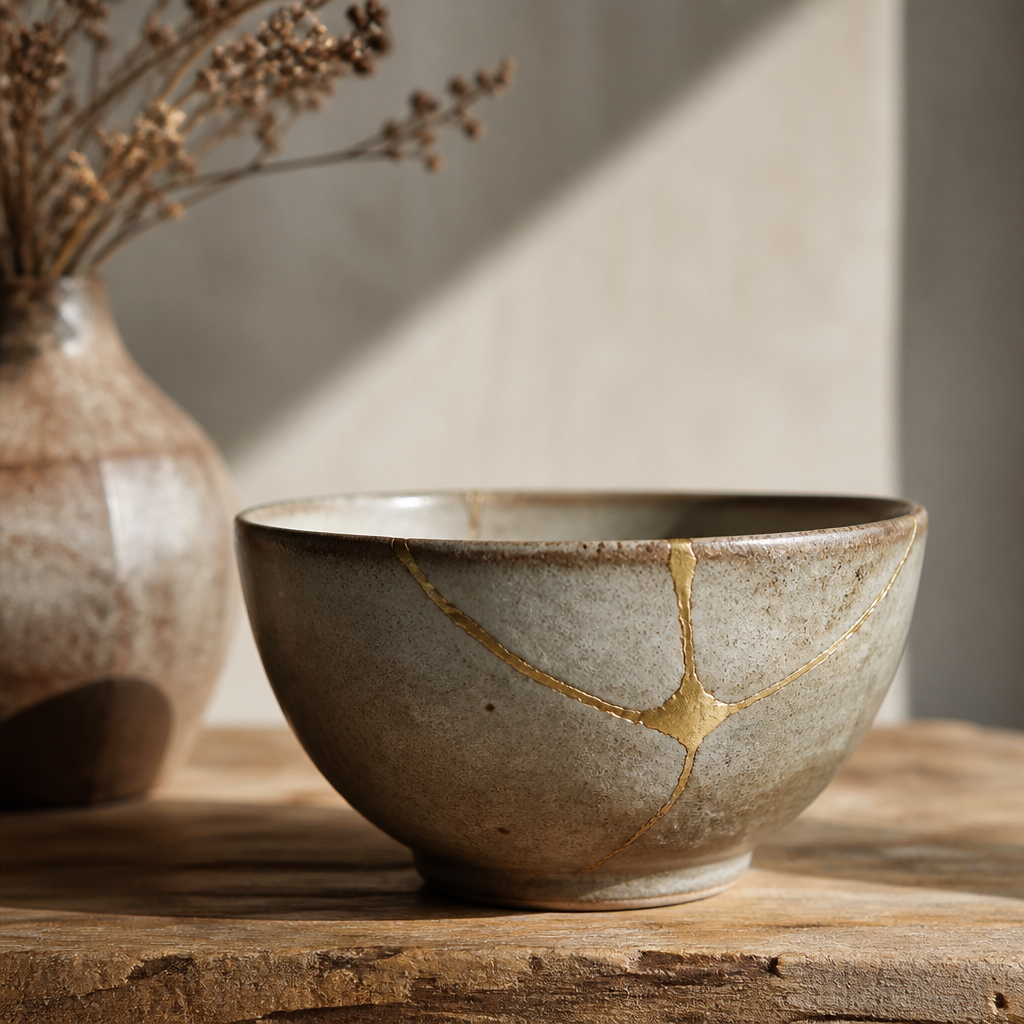
Minimalism as an interior philosophy predates Western adoption by several thousand years. Japanese ma describes the conscious use of empty space as an active design element rather than an absence of content. In traditional Japanese architecture, ma governs the intervals between structural posts, the margins around a tokonoma alcove, and the silence between objects in a tea room. Dieter Rams articulated a Western parallel in his ten principles of good design, which demand that good design be innovative, useful, aesthetic, understandable, unobtrusive, honest, long-lasting, thorough, environmentally friendly, and reduced to its essential minimum. These principles suggest that restraint in object count directly supports cognitive function.
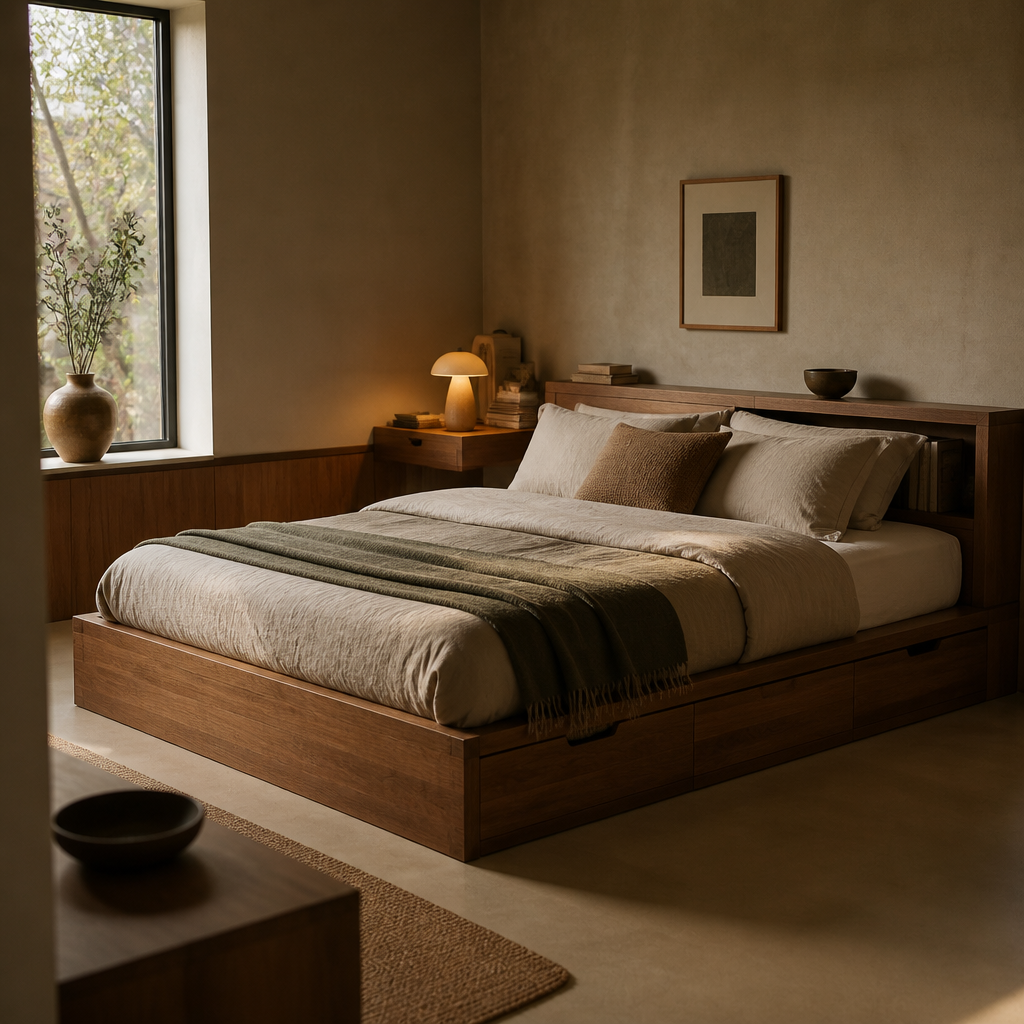
The capsule room concept, adapted from fashion philosophy, translates to interiors through a limited collection of high-quality, interchangeable pieces that function together across seasons and purposes. This differs fundamentally from asceticism, which renounces comfort for moral discipline. A minimalist room can contain a single expensive sofa if that sofa is exactly the right proportion, material, and comfort for the space. Quality supersedes quantity, but comfort is not sacrificed. Multi-functional furniture is essential because every piece must earn its footprint: platform beds with integrated storage eliminate the need for separate dressers, nesting tables expand only when needed, and a single sculptural floor lamp can provide ambient, task, and accent illumination.
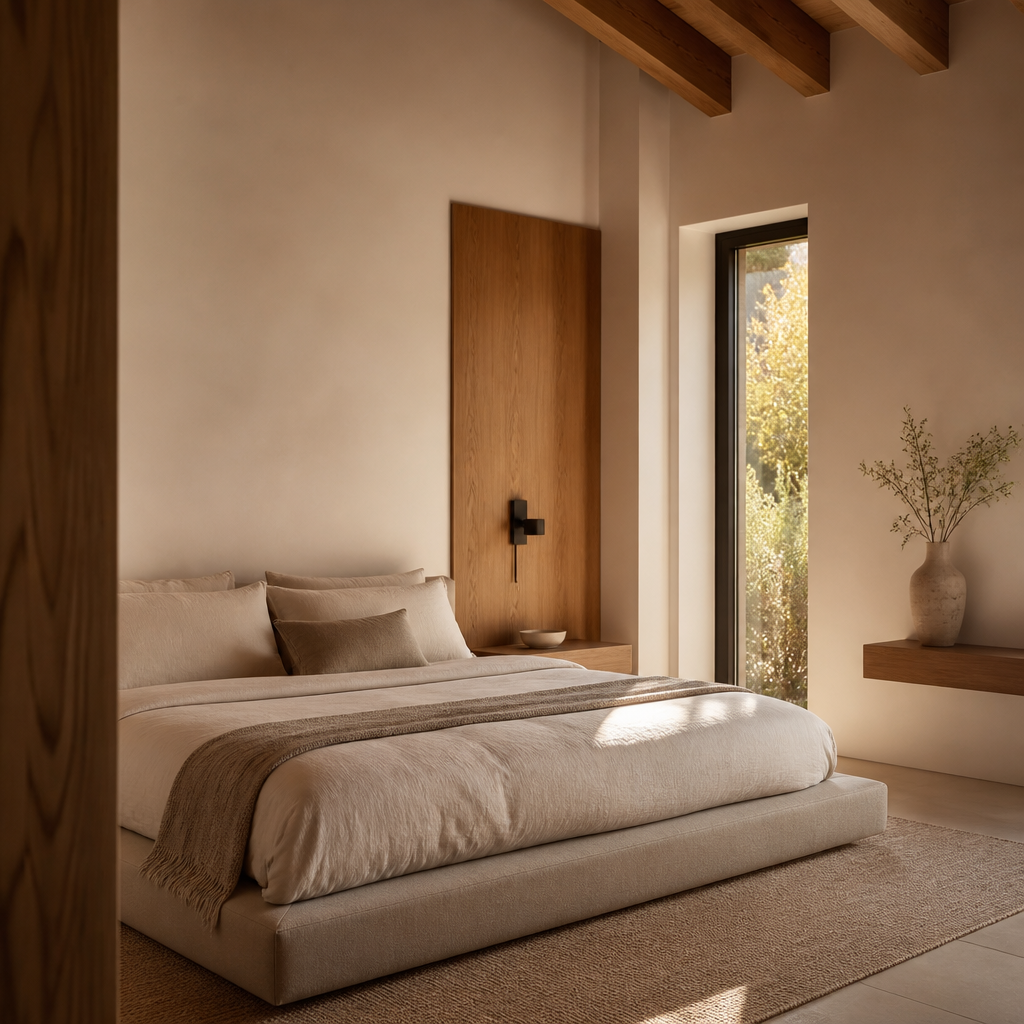
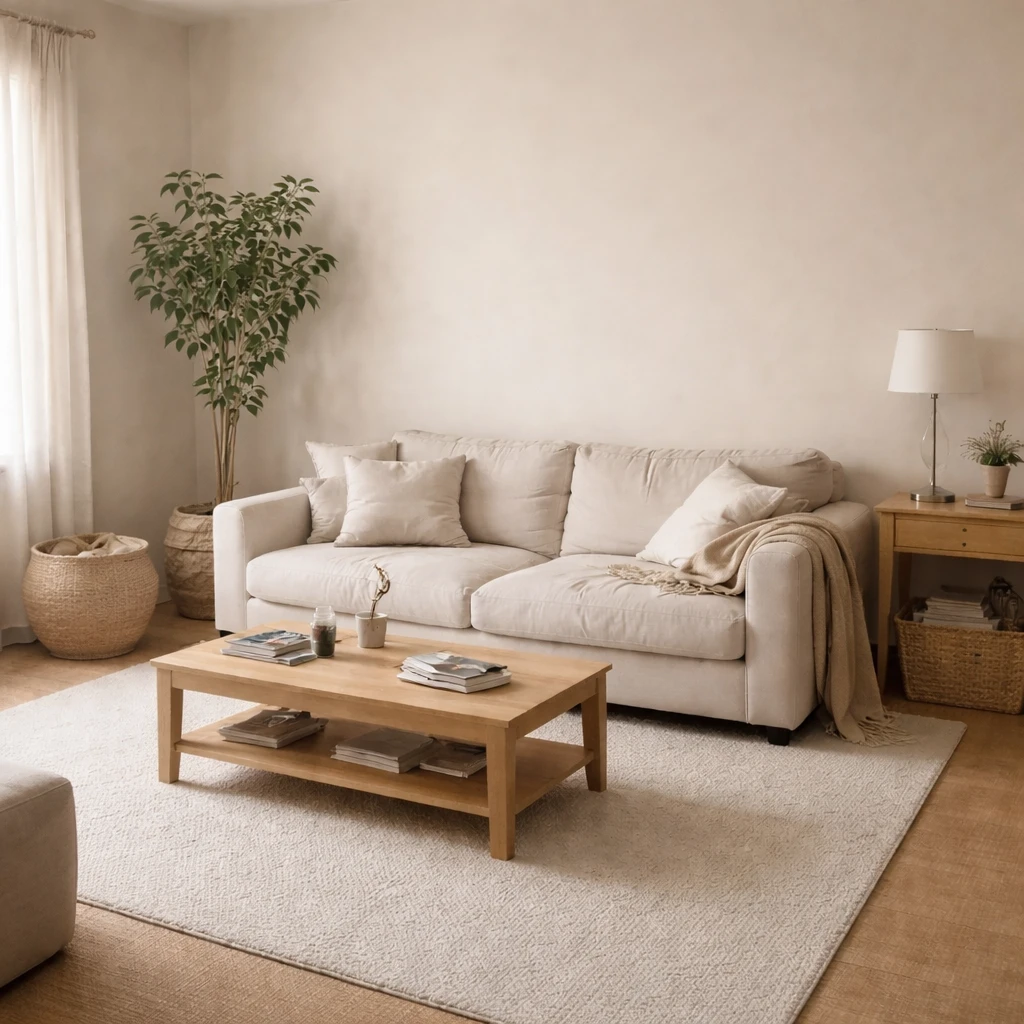
Palette options generally fall into three categories. Warm whites and natural woods create Scandinavian-inspired calm, where pale oak or ash prevents the space from feeling clinical. Cool grays and concrete tones produce urban serenity that references industrial materiality without its raw edge. Stark black and white with a single accent color generates graphic impact that relies on contrast rather than complexity. Each palette should be applied consistently across walls, furnishings, and textiles to prevent visual fragmentation. Research in environmental psychology indicates that visual clutter elevates cortisol levels and reduces sustained attention, while simplified environments produce measurable decreases in stress biomarkers.
How to apply it well
Audit every object for purpose, beauty, or both
Walk through the room and remove anything that does not solve a real function or contribute genuine visual value. Minimalism is not about deprivation; it is about refusing categories of objects that exist only because nobody edited them out. Start by eliminating duplicates, then remove decorative filler that the room no longer needs.
Concentrate the budget in a few highly resolved pieces
Because a minimalist room leaves everything more exposed, construction quality and scale become much more obvious. Choose fewer anchors with stronger proportion, better materials, and longer life rather than scattering money across many average pieces. In this style, one weak sofa or cheap case piece becomes the room's loudest mistake.
Build a tightly controlled palette and keep it honest
Use two neutrals, or two neutrals plus one accent at most, and keep wood, stone, and metal temperatures compatible. Minimalist rooms feel calm because the eye is not constantly re-sorting competing tones. If a color does not improve clarity or mood, leave it out.
Hide the working mess behind smooth storage
Closed cabinetry, disciplined cable management, and planned drawers are not optional here. A minimalist room fails fastest when everyday clutter has nowhere to go and starts colonizing the visible surfaces. The room should still support life fully, just without narrating every receipt, charger, and spare cord in plain view.
Use texture to create depth without visual chatter
Rely on linen, wool, matte plaster, pale timber, stone, and brushed metals to keep the room tactile and human. When pattern is reduced, texture carries more of the emotional weight. That is what keeps minimalist rooms from feeling clinical or morally severe.
Stop at clarity, not emptiness
Preserve enough negative space that the room can breathe, but keep the elements that make the space actually livable and warm. The goal is not to prove how little you can own. It is to create a room where nothing unnecessary competes with what matters.
What makes it feel forced
The most common mistake in minimalist interiors is creating a space that feels cold rather than calm. This usually happens when materials are too uniformly synthetic, when every surface is hard and reflective, or when the absence of objects becomes an end in itself rather than a means to clarity. Another error is confusing minimalism with cheapness: reducing object count only works when the remaining pieces are of sufficient quality to sustain attention and use over time. A successful minimalist room feels like a deep breath, not an empty box.