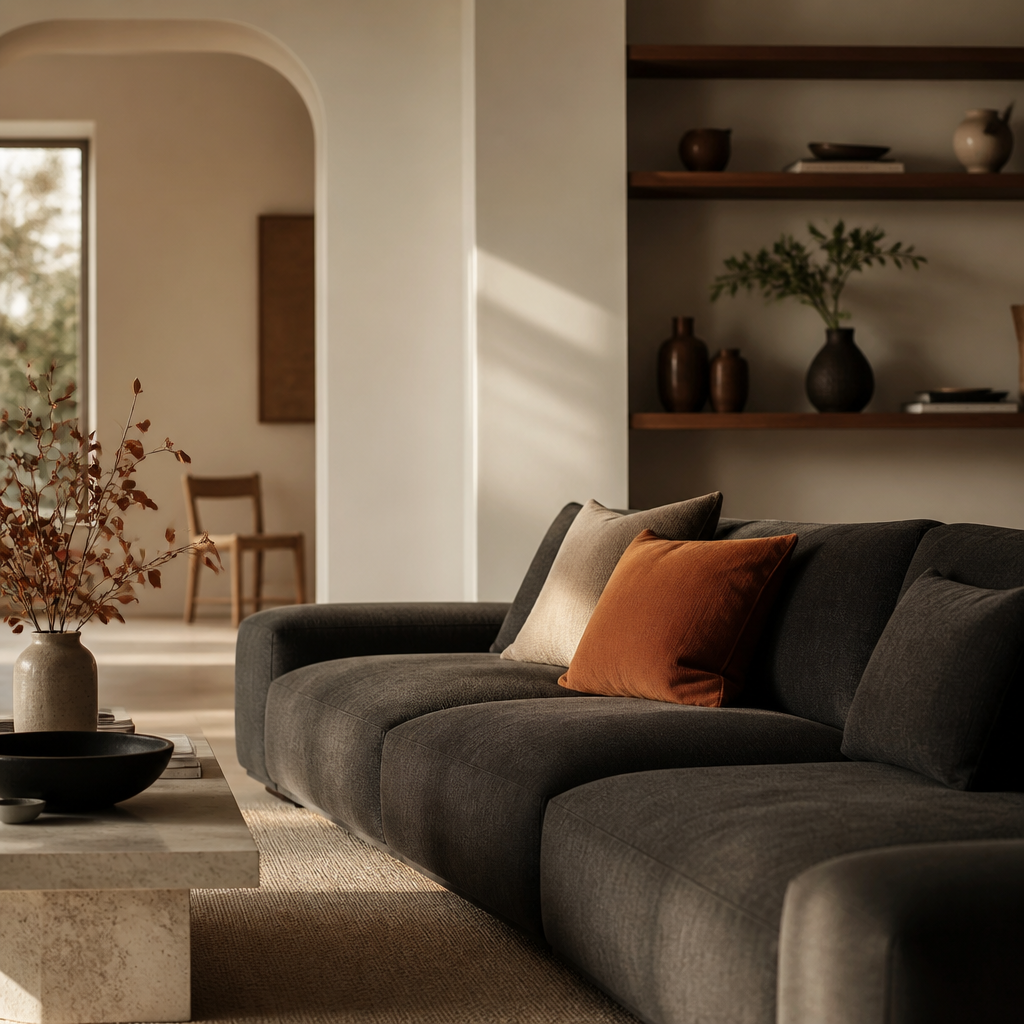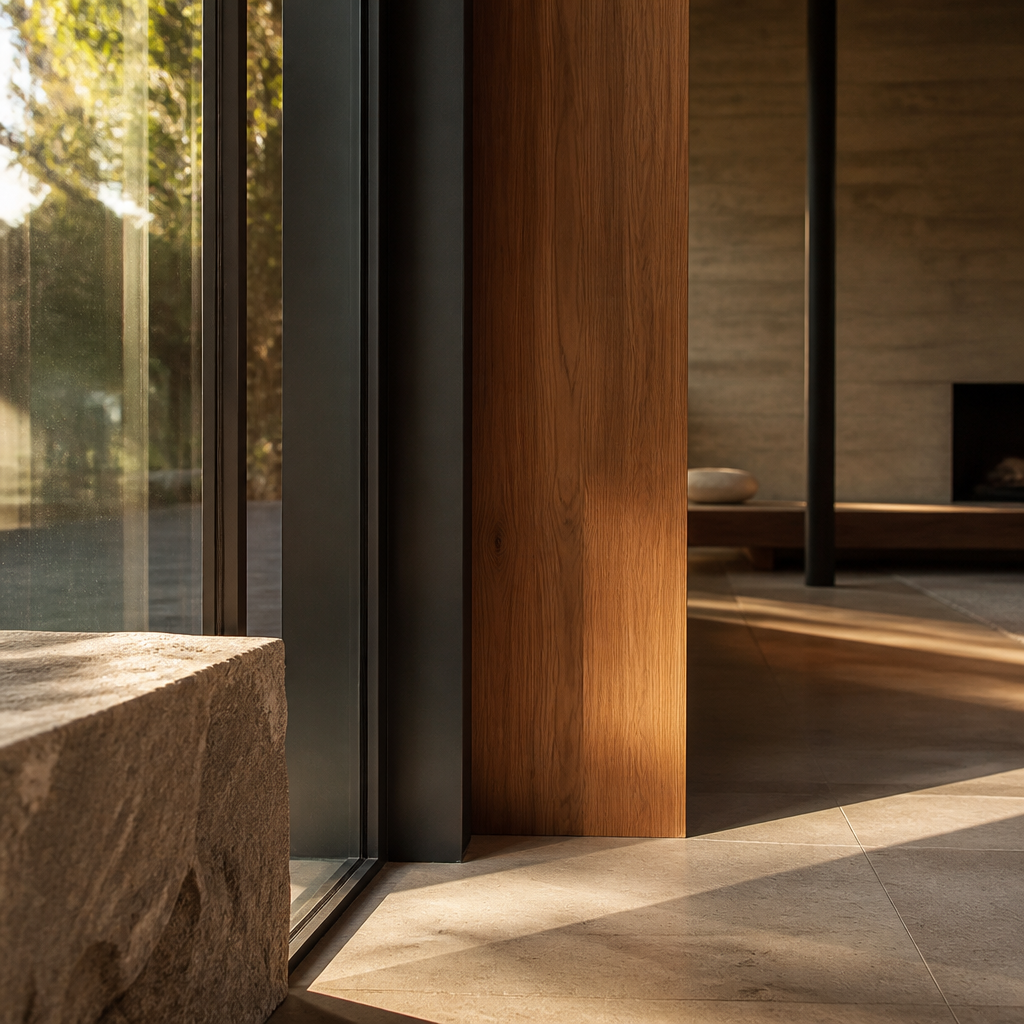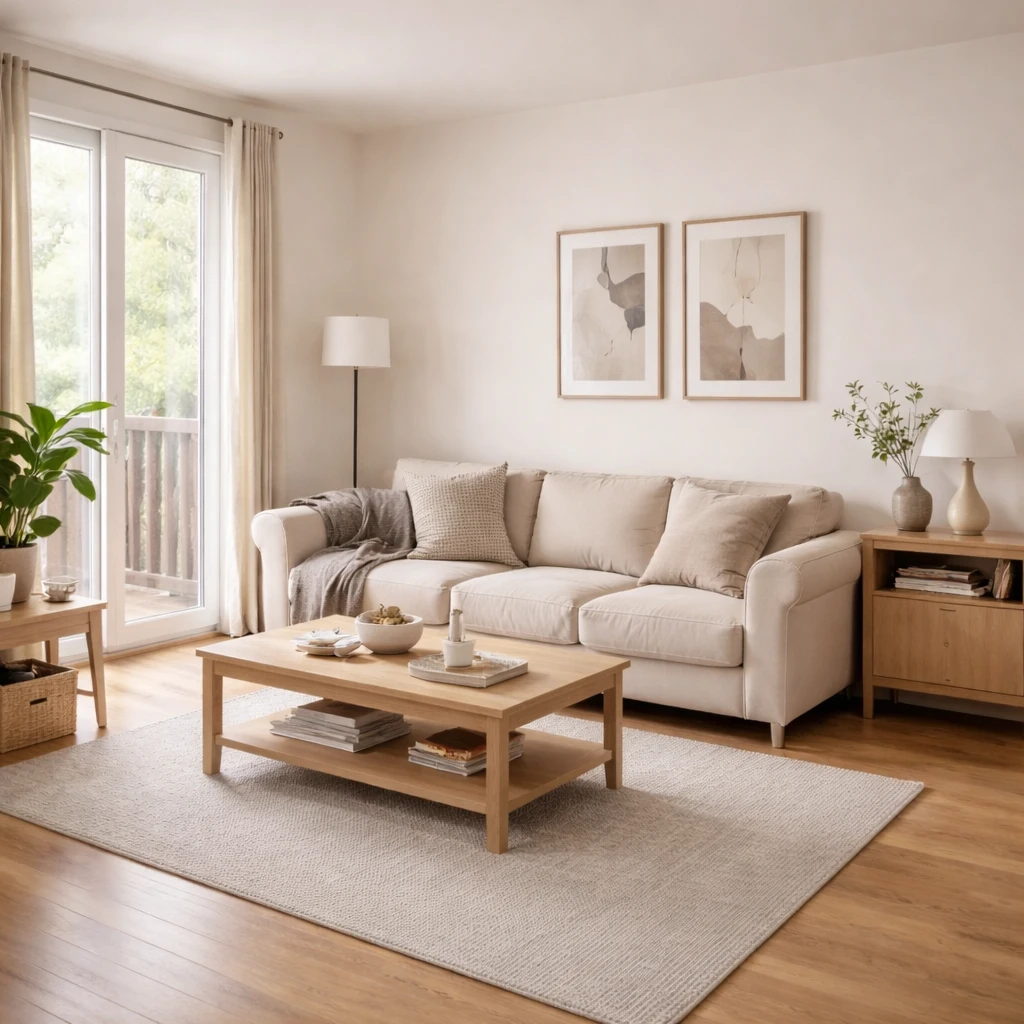
Modern interior design emerged from the modernist movement of the early-to-mid 20th century, emphasizing clean lines, open spaces, and functional simplicity. The aesthetic isn't about being current—it's about a specific design philosophy that values form following function. Understanding this history helps you execute the look authentically rather than generically.
Key characteristics include: minimal ornamentation, geometric shapes, monochromatic color schemes with bold accent colors, and materials like glass, steel, concrete, and natural wood. Furniture often features exposed legs, sleek surfaces, and modular designs. The goal is spaces that feel open, uncluttered, and intentionally curated rather than randomly accumulated.
Modern design requires restraint. Every piece in the room should earn its place—decorative items serve a purpose or are eliminated. This doesn't mean sterile or cold; warm wood tones, soft textiles, and thoughtful lighting add warmth. The key is editing ruthlessly and resisting the urge to fill every surface. Less truly is more when executed thoughtfully.
What defines the look
Modern design traces its origins to the Bauhaus school, founded in Weimar, Germany, in 1919. Walter Gropius established the institution on the principle that form follows function, arguing that ornament should emerge from utility rather than be applied to it. Le Corbusier's Modulor system combined the golden ratio with an average human height of 1.83 meters to align structural dimensions with bodily scale. Mies van der Rohe's principle of "less is more" championed refinement through precision rather than ornament. When modern design feels cold, it is usually because this principle has been misunderstood as "remove everything" rather than "let everything earn its place."
Applying modern principles to an actual room requires attention to visual weight and spatial flow. A sofa with a clean silhouette and exposed legs makes a room feel lighter because floor remains visible beneath it. A glass coffee table reduces apparent mass without sacrificing function. Geometric lighting at 2700K provides warm, layered illumination instead of harsh overhead glare. Wall-mounted desks and floating vanities preserve floor area, which is particularly valuable in compact rooms. Each element should clarify the space rather than compete with it.
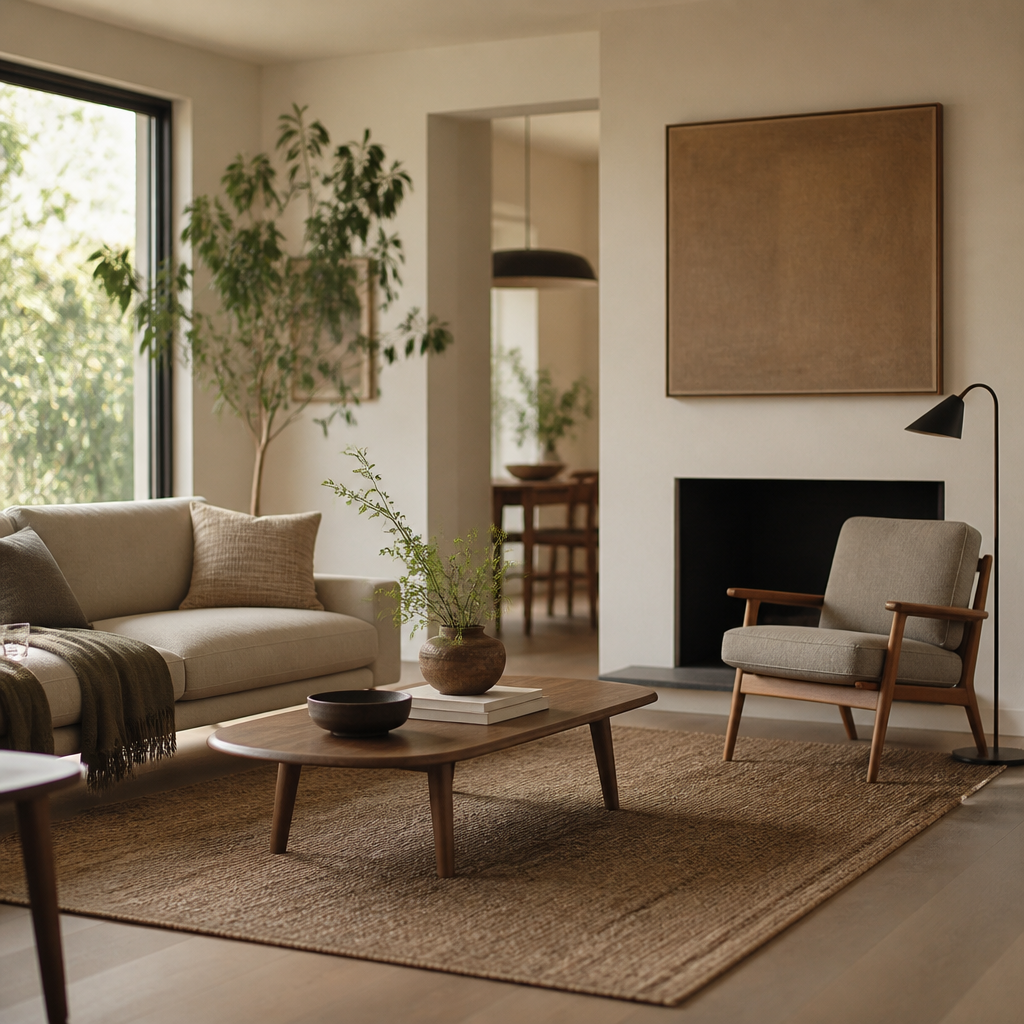
Material innovation defined modern furniture and remains central to the style. Tubular steel, pioneered by Marcel Breuer's 1925 Wassily Chair, reduced structural mass while maintaining strength. Molded plywood techniques developed by Charles and Ray Eames during the 1940s produced chairs with compound curves impossible in solid wood. Engineered quartz resists staining and etching but can discolor under sustained heat above 300 degrees Fahrenheit, while concrete and steel surfaces read as honest and unadorned. The palette matters as much as the material: monochromatic schemes with bold accents, warm neutrals paired with natural wood tones, or stark black and white with a single sculptural object each produce different modern interiors.
How to apply it well
Edit the room until the architecture and anchor pieces read clearly
Remove clutter, surplus side furniture, and decorative filler before bringing in anything new. Modern rooms depend on visual clarity. If the eye cannot identify the primary seating, main surface, and strongest architectural line within seconds, the room is carrying too much noise.
Choose low-profile furniture with disciplined geometry
Use pieces with exposed legs, clear structure, and clean silhouettes rather than ornate arms, heavy skirts, or decorative carving. The form should carry the interest. In practical terms, that usually means fewer but better-scaled pieces, with enough floor visible beneath them to reduce visual weight.
Set a narrow palette before selecting accents
Base the room in two or three controlling tones, often warm white, charcoal, black, natural wood, or concrete gray, then add one accent only if the room still needs tension. Modern rooms feel coherent because color is restrained enough that proportion and material can do the real work.
Use light to emphasize volume and clean lines
Keep windows minimally dressed where privacy allows, then layer recessed, pendant, and floor lighting so the room reads clearly after sunset. Fixtures should feel architectural or sculptural, not ornamental. Good modern lighting highlights planes, edges, and circulation rather than decorating over them.
Specify materials that look better when left honest
Glass, steel, stone, concrete, and straightforward timber finishes belong here because they do not need imitation or embellishment to feel substantial. Avoid faux-rustic distressing, decorative trim, or finishes that try to mimic more expensive materials. Modern rooms get stronger when the surface tells the truth.
Finish by protecting negative space as part of the design
Do not backfill every shelf, tabletop, or wall once the room looks finished. Leave open zones so the anchors can breathe and the geometry can stay legible. In modern rooms, emptiness is not leftover space. It is one of the deliberate compositional tools.
What makes it feel forced
The most common mistake in modern interiors is conflating modernism with minimalism. Modern design welcomes warmth, texture, and even bold color when these choices serve structural clarity. Another frequent error is selecting furniture for appearance alone without considering proportion: an oversized sectional with a low back can overwhelm a modest room, while pieces that are too small feel tentative and unresolved. Authentic modern design feels resolved and intentional, not austere or incomplete.