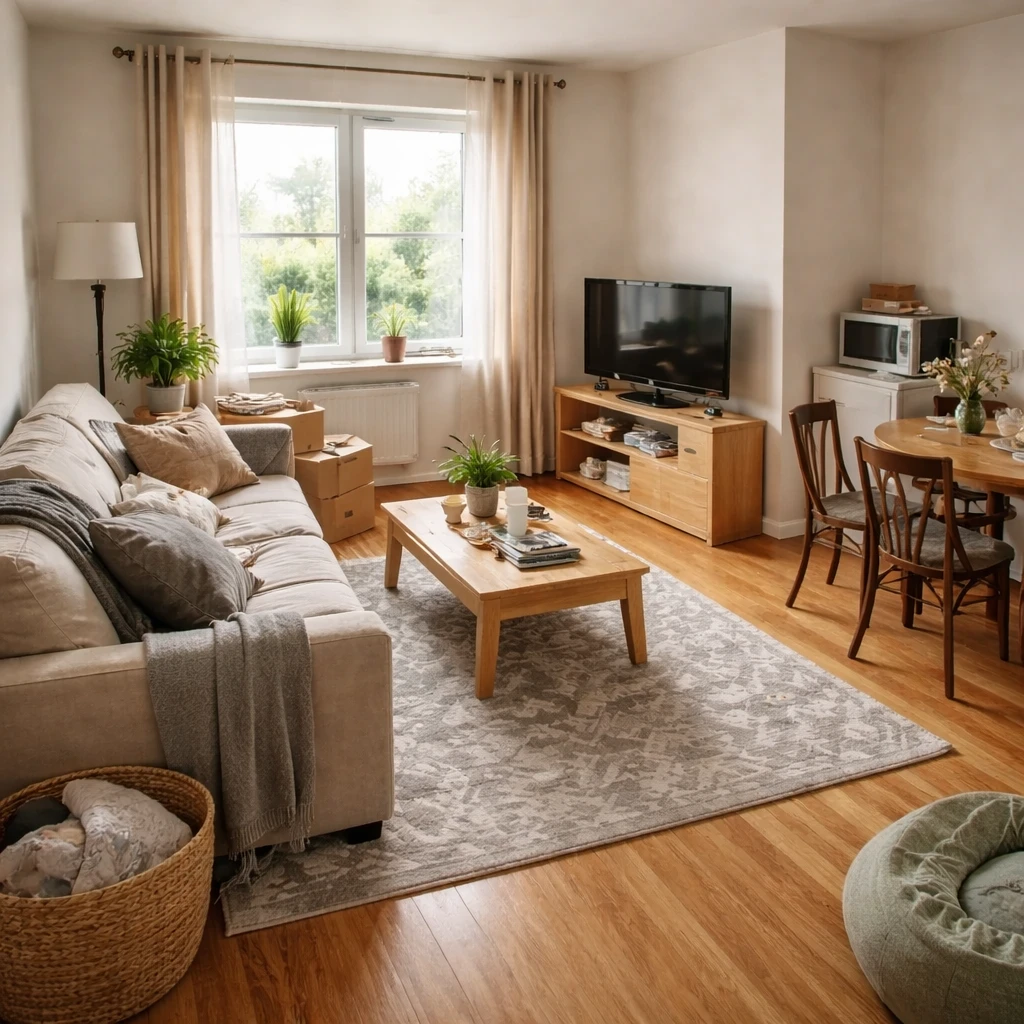
Moving into a new apartment is overwhelming—the to-do list seems endless. Prioritize systematically: first establish basic function (sleeping, eating, bathroom), then add comfort, then style. This prevents spending money on non-essentials while critical needs go unmet.
Essential first purchases typically include: mattress and bedding, basic cookware and utensils, toilet paper and cleaning supplies, and sufficient lighting. These enable daily life. Wait on decorative items until the apartment feels functional—spontaneous purchases often don't fit the space as well as expected.
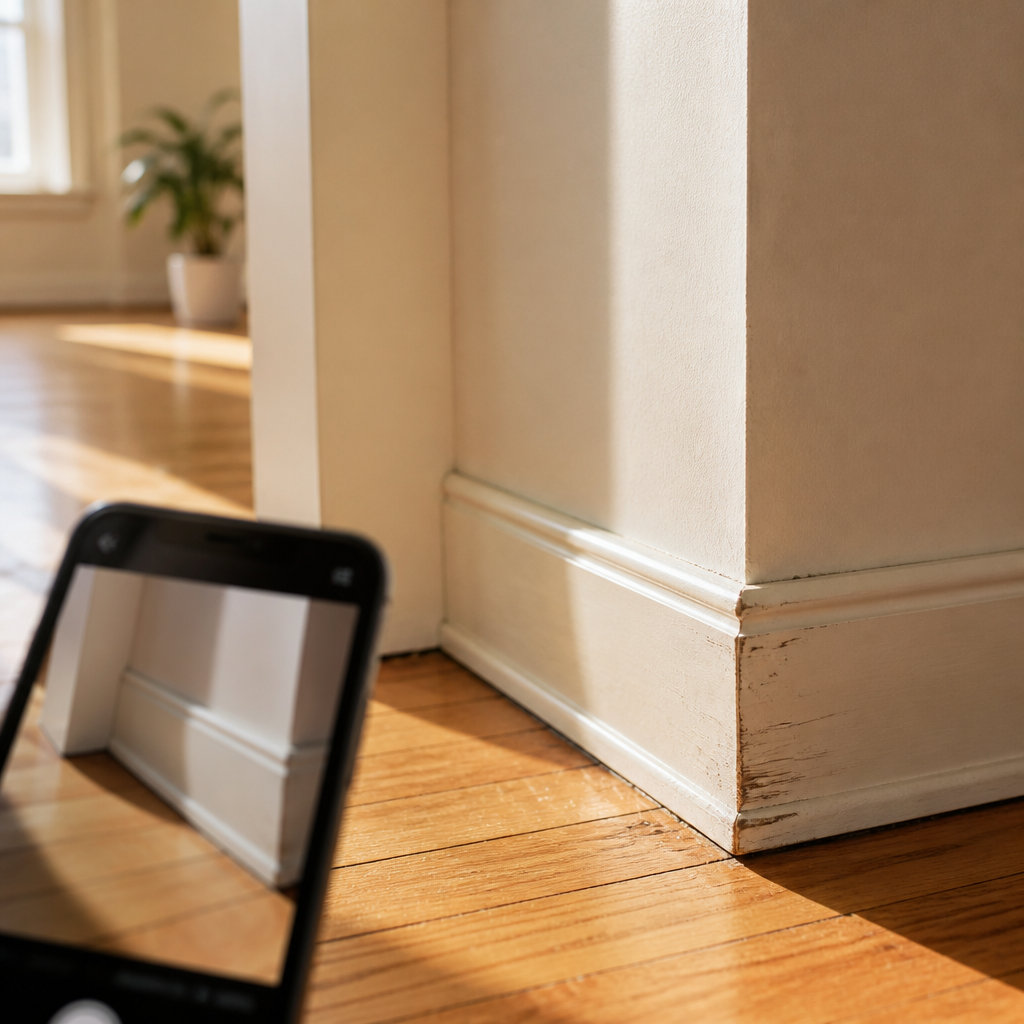
Live in the space before making major decisions: you'll discover problem areas (not enough outlets, awkward corners, poor lighting) that aren't obvious until you're actually living there. Take photos of empty rooms, wait a week, then assess what you actually need versus what you thought you would need.
What smaller rooms need most
Rental design is best understood as a constraint discipline with a long memory. Lease language, security deposit risk, move-out obligations, and the real possibility of relocating again in twelve months all shape what makes sense to buy. That does not make rentals less worthy of design. It simply changes the value equation. The best rental rooms are built from moves that are reversible, portable, and disproportionately effective: lighting that softens landlord-grade fixtures, rugs that quiet ugly floors, furniture that can survive another stairwell, and storage that works in more than one future layout.
What renters should usually buy first is not decoration but infrastructure that belongs to them rather than to the unit. Lamps, curtains, quality rugs, adaptable shelving, and seating that can reconfigure in a new room are often wiser investments than unit-specific hacks. A good rental should feel intentional without pretending to be permanent. In practice that means solving layout and light before trying to add personality. Many rentals feel unfinished not because they lack styling, but because they still rely on one overhead bulb and a furniture plan inherited from whatever fit through the door on move-in day.
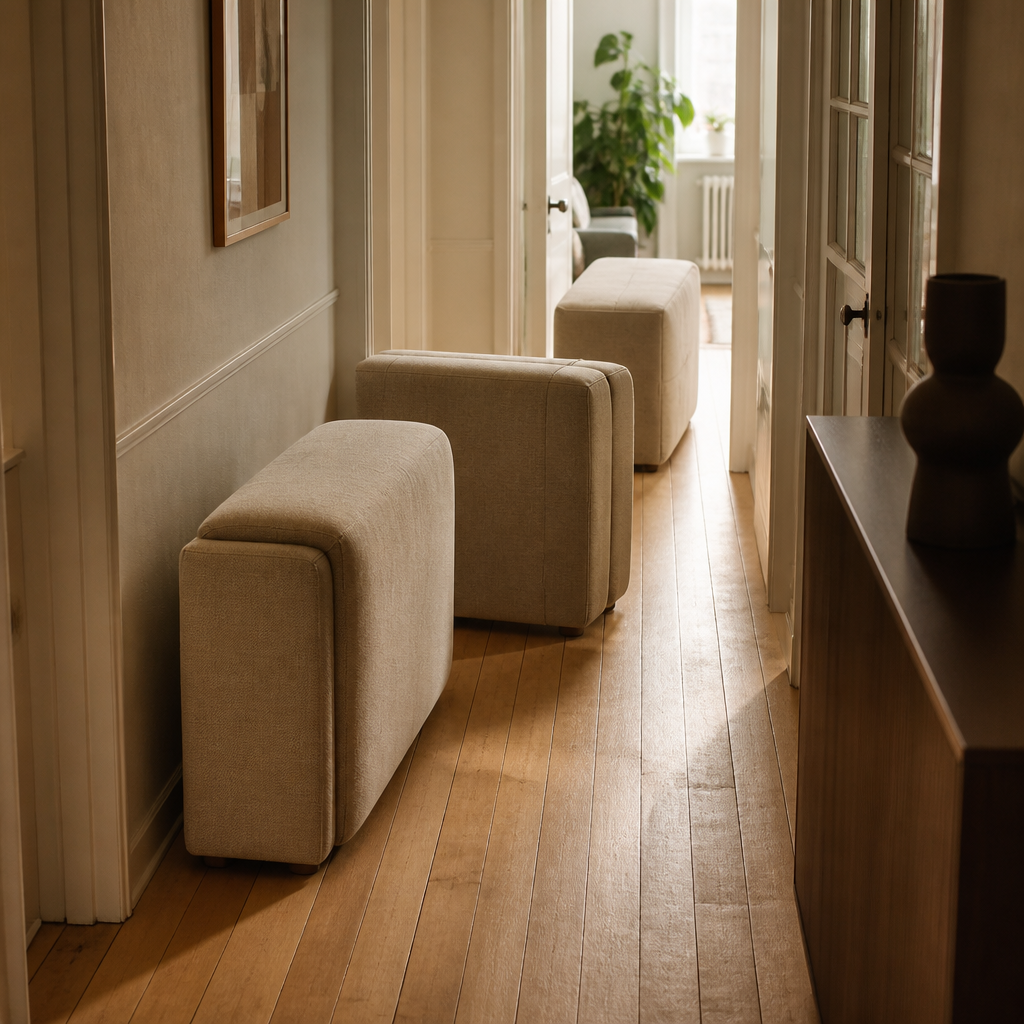
Portability is not a secondary concern here; it is part of design quality. Before buying anything large, measure door widths, stair turns, elevator interiors, and whatever route the piece must travel both now and later. A cheap sofa that cannot make the next move is not actually cheap. Modular seating, tables with removable legs, disassemblable shelving, and storage that can shift from bedroom to living room to office over time often deliver far better value than pieces chosen only for this exact address. The room may be temporary, but the money does not have to be wasted with it.
How to make the space work better
Measure first and list the non-negotiable needs
Before buying anything, record every room dimension and write down what has to work in the first two weeks: sleeping, eating, lighting, storage, and a basic place to sit or work. This keeps the first purchases tied to function instead of impulse.
Buy the anchors that make the apartment livable
Start with the mattress or bed, the main seating, the most necessary table or desk, and enough lighting to use the apartment comfortably at night. Decorative filler can wait; the room needs basic function first.
Set up one room at a time in priority order
Usually the bedroom, bathroom, and living area should be stabilized before you spend money trying to finish every corner at once. A partly complete apartment can still feel good if the most used zones are already working.
Use portable storage before you commit to more furniture
Bins, shelves, carts, and under-bed storage often solve move-in disorder faster than another large case piece. Let the apartment reveal what storage it truly needs before you buy permanent-looking solutions.
Phase spending across the first month
Live with the first setup long enough to notice what the apartment still lacks: more task light, a better entry drop zone, another chair, or a dining surface. Early restraint prevents the classic first-apartment mistake of buying the wrong-sized pieces too soon.
Refine the style only after the routines settle
Once the layout, lighting, and daily essentials are in place, add rugs, art, and smaller pieces that support the mood you want. Apartments usually become more coherent when style follows use instead of racing ahead of it.
What usually makes compact rooms feel worse
Reversible upgrades should be selected with the move-out day in mind. Adhesive products, peel-and-stick finishes, and tension systems can be excellent, but only if they suit the wall condition, heat exposure, and humidity level of the room. The guiding question is simple: can this be removed cleanly without turning the final week of the lease into a patch-and-pray exercise? That mindset naturally favors textiles, plug-in lighting, and freestanding storage over anything that depends on hardwiring, drilling, or heavy adhesive commitment. Rentals reward strategic restraint, not low-grade improvisation.
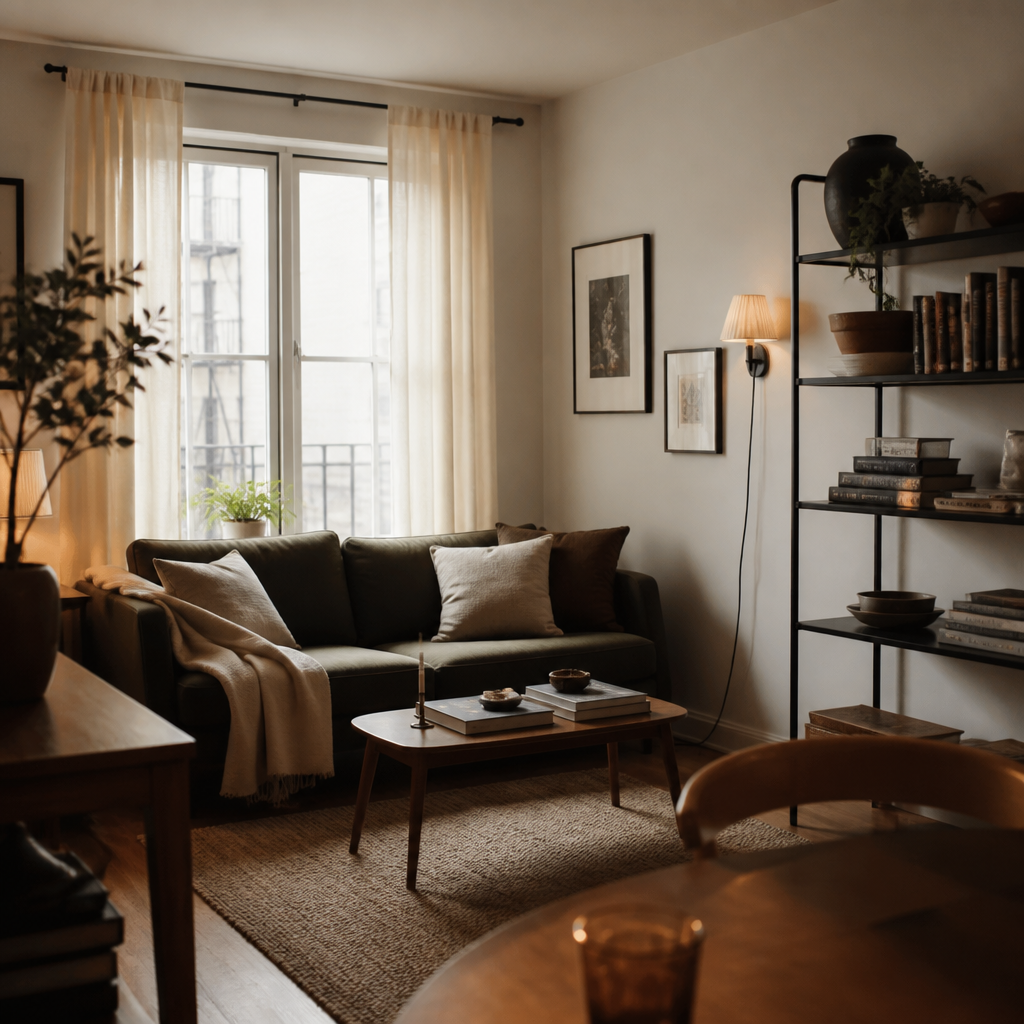
The strongest rental rooms feel settled because the renter has decided what is worth carrying forward. Good design in a leasehold space is not about mimicking ownership. It is about building a personal environment that performs now, protects the deposit, and leaves you with a better kit of furniture and lighting for the next home. When renters spend this way, the room becomes calmer, the move becomes easier, and the design improves from address to address instead of restarting every time.