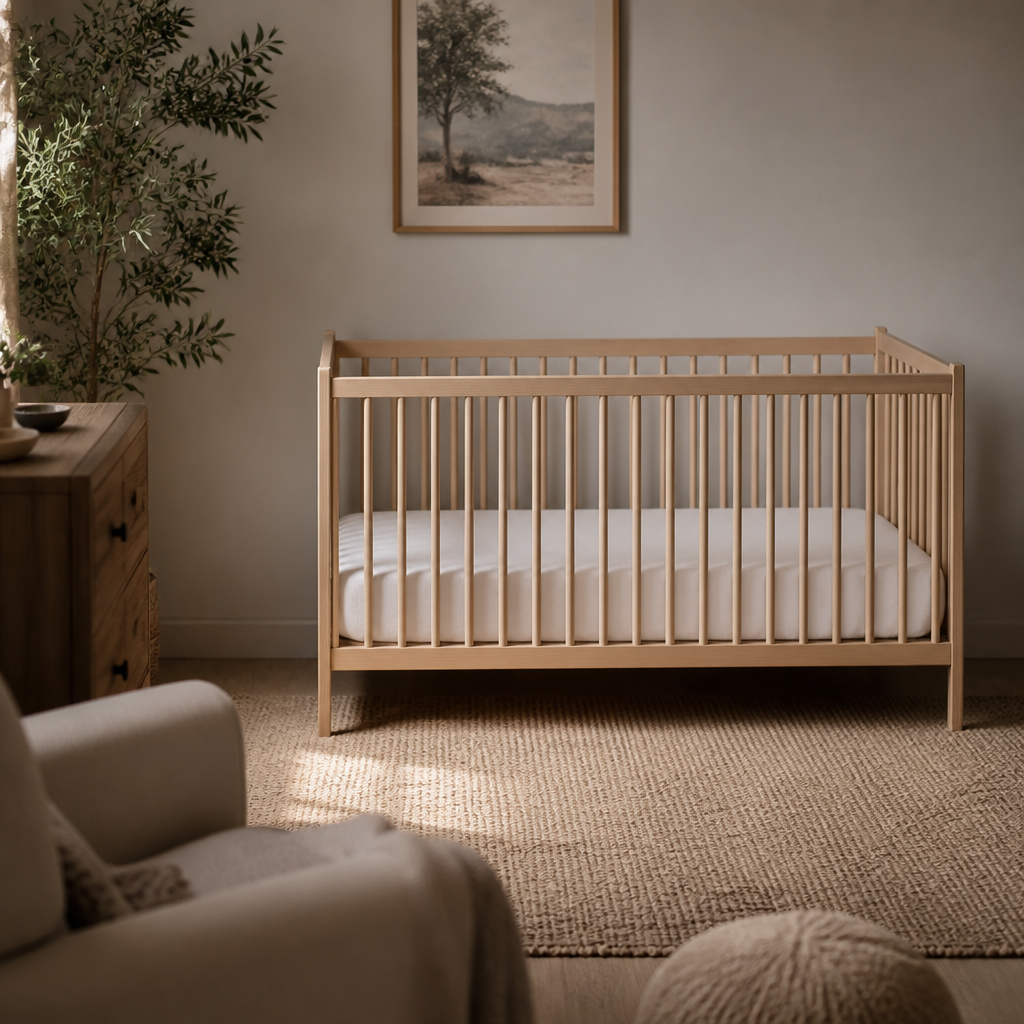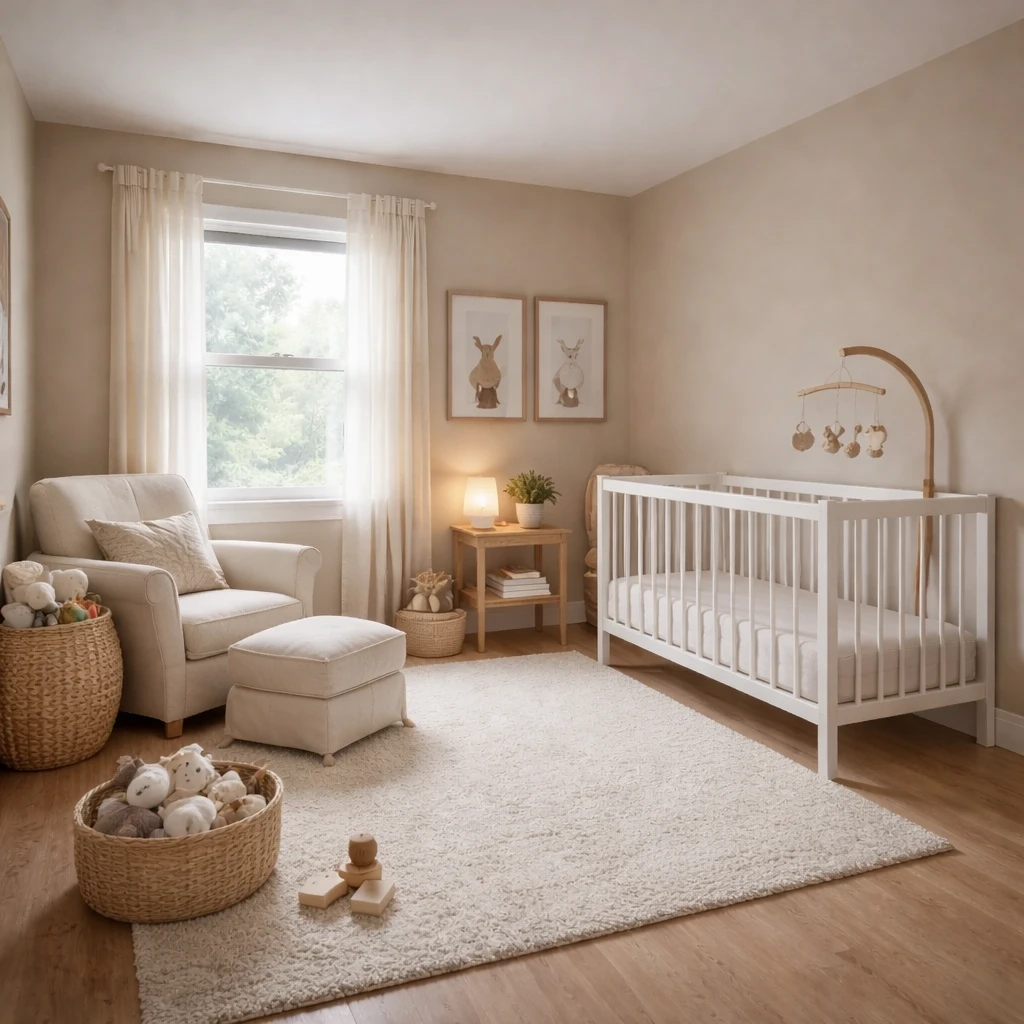
Nursery design balances three considerations: safety for the baby, functionality for caregivers, and aesthetics that will grow with the child. The most important safety standard is safe sleep: a firm, flat crib mattress with nothing in the crib except a fitted sheet. Following AAP safe sleep guidelines isn't optional—it's essential for your child's wellbeing.
Functionality means thinking through nighttime routines: is there a comfortable chair for feeding? Is the changing table at a height that won't strain your back during 3 AM changes? Can you reach everything without setting the baby down unsafely? Adequate lighting that doesn't blind you (red-spectrum nightlights preserve melatonin), accessible storage for supplies, and clear paths to the crib all matter more than matching decor.
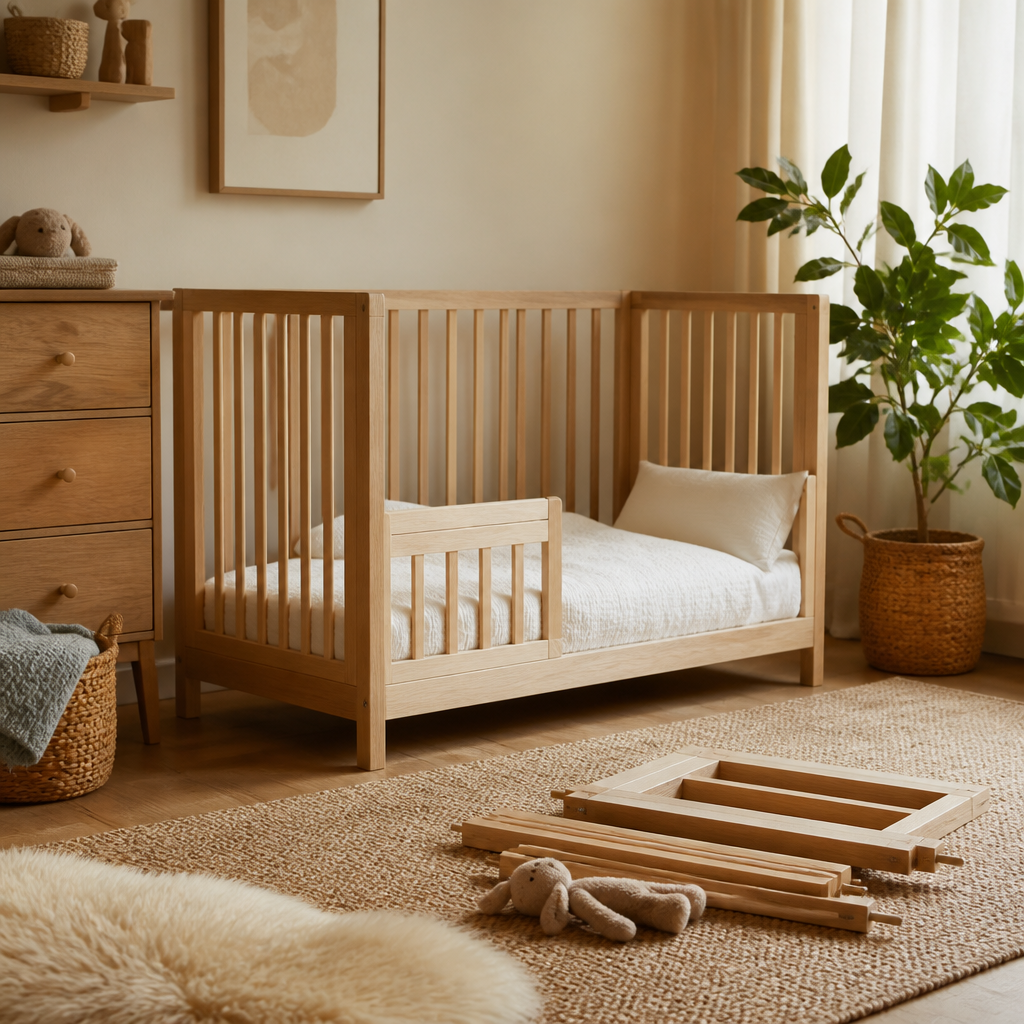
The room will evolve rapidly—nurseries become toddler rooms, then preschool rooms. Choose a theme that can adapt rather than one that's strictly baby-specific. Furniture that converts (crib to toddler bed, changing table to dresser) extends investment value. The best nurseries are calm, organized spaces that work for parents as much as babies, because you'll spend considerable time there in the first years.
Start with the room itself
Nursery design is governed by safety standards that most new parents discover through anxiety rather than preparation. The Consumer Product Safety Commission mandates that crib slats be no more than 2 3/8 inches apart to prevent head entrapment. Cribs must not be placed near windows with corded blinds, near baseboard heaters, or in the path of door swings. Changing tables require guardrails on all four sides. These are not design preferences; they are regulations written in response to real injuries, and every layout decision should Respect them before any aesthetic consideration enters the conversation.
The strongest nursery plans begin with the sleep zone, not with decoration. Crib placement should provide clear sightlines to the door for nighttime checks, and the changing surface should sit within arm's reach of storage so diapers and wipes can be grabbed one-handed at 3 AM. A nursing or feeding chair needs back and arm support for prolonged sitting, and a dimmable lamp positioned so it illuminates the parent's path without shining directly at the infant's face preserves the adult's night vision without fully waking the baby.
How to plan it cleanly
Measure the room and map fixed constraints
Record wall lengths, window positions, door swings, closet doors, and outlet locations. Cribs must sit at least 12 inches from windows with cords, and the changing station needs 30 inches of clearance on at least one side.
Place the crib for safety, then arrange around it
Crib position is the non-negotiable anchor. Place it away from windows, heating vents, and blind cords. Once the crib is placed, the glider, changing surface, and storage radiate from it.
Choose a feeding and soothing station layout
Position a comfortable chair within arm's reach of both the crib and a side table. Add a dim lamp with a warm bulb (2700K or lower) for 2 AM feedings. Overhead lighting wakes the baby; a low lamp lets you stay drowsy.
Plan storage for what is coming
Open shelving for books and baskets, a dresser with a changing topper for clothes and diapers, and a hamper within arm's reach of the changing spot. You will be holding a baby in one arm roughly 90% of the time — everything needs to be within reach.
Select durable, washable finishes
Performance fabrics on the glider, a washable rug from a material that handles spills, wipe-clean paint in an eggshell or satin finish. Nurseries are not the place for silk shades, velvet pillows, or white shag rugs.
Control light and sound intentionally
Blackout curtains for naps, a dimmer switch or low-wattage lamp for nighttime, and a white noise machine placed at least 6 feet from the crib. Sleep environment matters more than wall art.
What makes the room fail in practice
Furniture should be evaluated by safety certification, dimensions, and service life before aesthetics. A crib that converts to a toddler bed extends usefulness by two to three years. A dresser topped with a removable changing tray often outperforms a dedicated changing table because it remains useful after diapers end. Closed storage keeps daily supplies dust-free, while open bins work for blankets, books, and later for toys. In a nursery, flexibility is a practical requirement, not a bonus feature.
The best nursery styles grow with the child rather than locking the room into a six-month visual identity. Scandinavian nurseries use pale woods, soft neutrals, and flexible storage that transition easily into toddler years. Modern minimal rooms rely on clean-lined case goods and hidden storage that can accept new textiles as the child ages. Traditional nurseries use dressers, rockers, and lighting that still make sense once the crib is gone. Define the room's priorities first — safe sleep, feeding comfort, blackout control, storage for clothing sizes in transition, or wall space for a future twin bed — and let those needs shape every later decision.