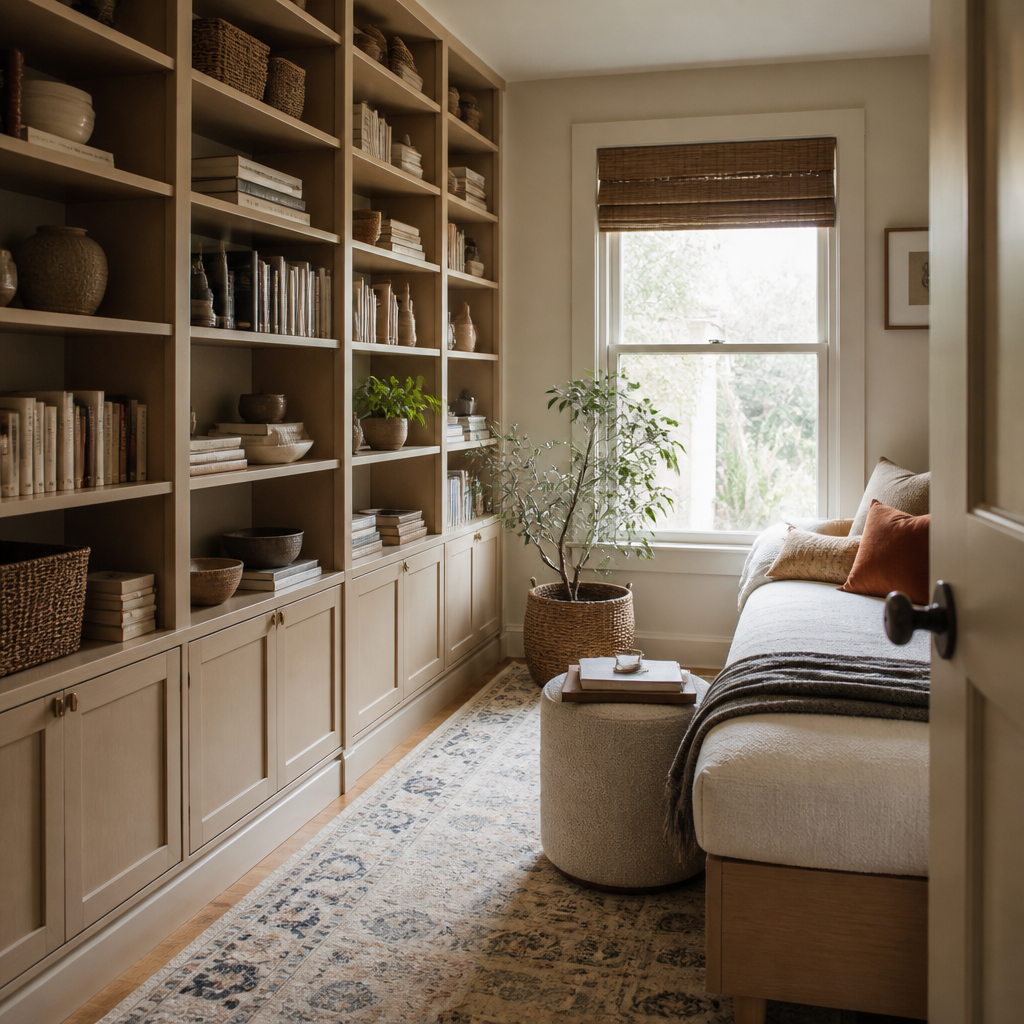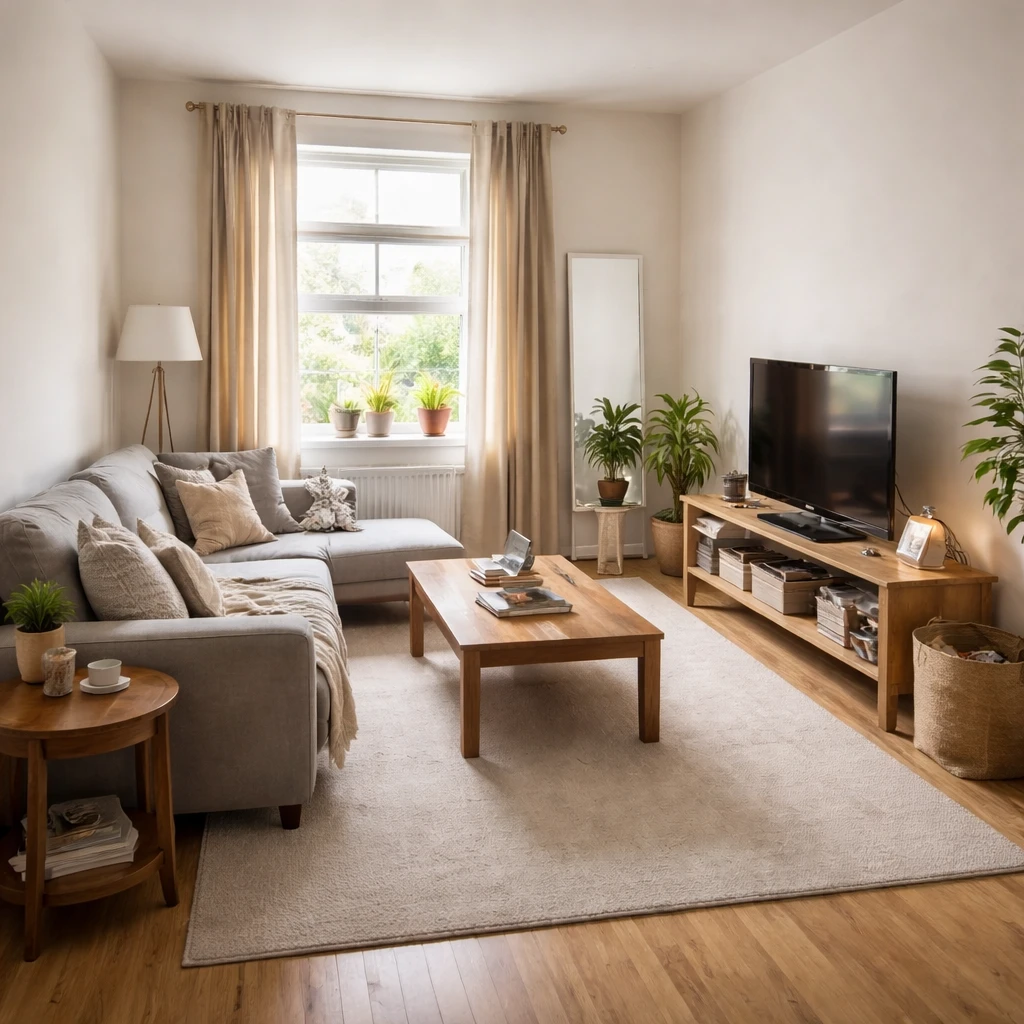
Small space design requires different thinking than larger spaces. The instinct to buy small furniture often backfires—undersized pieces make rooms feel like dollhouses. Instead, choose well-proportioned anchor pieces and build around them. A few right-sized pieces outperform many small ones.
Critical principles include: protecting circulation (every room needs pathways), using vertical space (shelves to ceiling), multi-functional furniture, light colors to expand visually, and strategic mirrors. Leave 'breathing room' around groupings—negative space makes small spaces feel larger.
Storage is paramount in small spaces: every item needs a home. Built-in storage often works better than furniture-based storage. Under-bed space, over-door organizers, and ceiling-mounted storage maximize every square inch. Clutter kills small spaces more than anything else.
What smaller rooms need most
Small-space design is less about making a room look bigger than it is and more about making every square foot behave intelligently. Small rooms punish clutter, bad scale, and unnecessary categories faster than large rooms do. One chair too many, one cabinet too deep, or one badly placed lamp can make the whole room feel compressed. That is why small spaces are usually improved through editing and proportion long before they are improved through decoration. The room has to breathe visually if it is going to feel livable physically.
Proportion is the first real rule. A large piece should usually occupy no more than about two-thirds of the wall it uses, and anything bulkier needs an exceptional reason to stay. Furniture with exposed legs, wall-mounted desks, floating nightstands, and transparent or visually light surfaces can all help because they preserve the sense of floor and volume. This is not an argument for buying flimsy furniture. It is an argument for respecting visual mass. In a small room, the eye notices what blocks space as much as the body notices what blocks movement.
Storage needs to work vertically and selectively. Items used often should generally stay below about 72 inches, while infrequently used things can live higher if access is safe. Closed storage often performs better than open display in very small rooms because it reduces visual fragmentation, but the right balance depends on the user's habits. Some small rooms thrive on sparse restraint, others on dense but ordered layering, and others on highly convertible pieces such as storage ottomans, folding desks, and nesting tables. The point is not to obey one small-space aesthetic. It is to choose the strategy that best serves the room's real daily behavior.
How to make the space work better
Measure everything and draw a scaled floor plan
Record every wall, window, door, and radiator. Note the swing of every door. In small spaces, two inches of error can mean the sofa does not fit through the hallway. Measure twice, order once.
Choose one anchor and let it dictate everything else
The largest piece (usually the bed or sofa) sets the scale. Buy it first, place it, then choose everything else around it. In small rooms, the wrong anchor makes every subsequent decision harder.
Select furniture that does two or three things
Storage ottomans, Murphy beds, drop-leaf tables, and nesting side tables earn their footprint. A sofa that seats three and stores four blankets beats a sofa that only seats three.
Use vertical space aggressively
Wall-mounted shelves, over-door hooks, and tall narrow storage use space that a chest of drawers cannot. The floor is the most expensive real estate in a small room; the walls are free.
Keep sightlines clear and furniture leggy
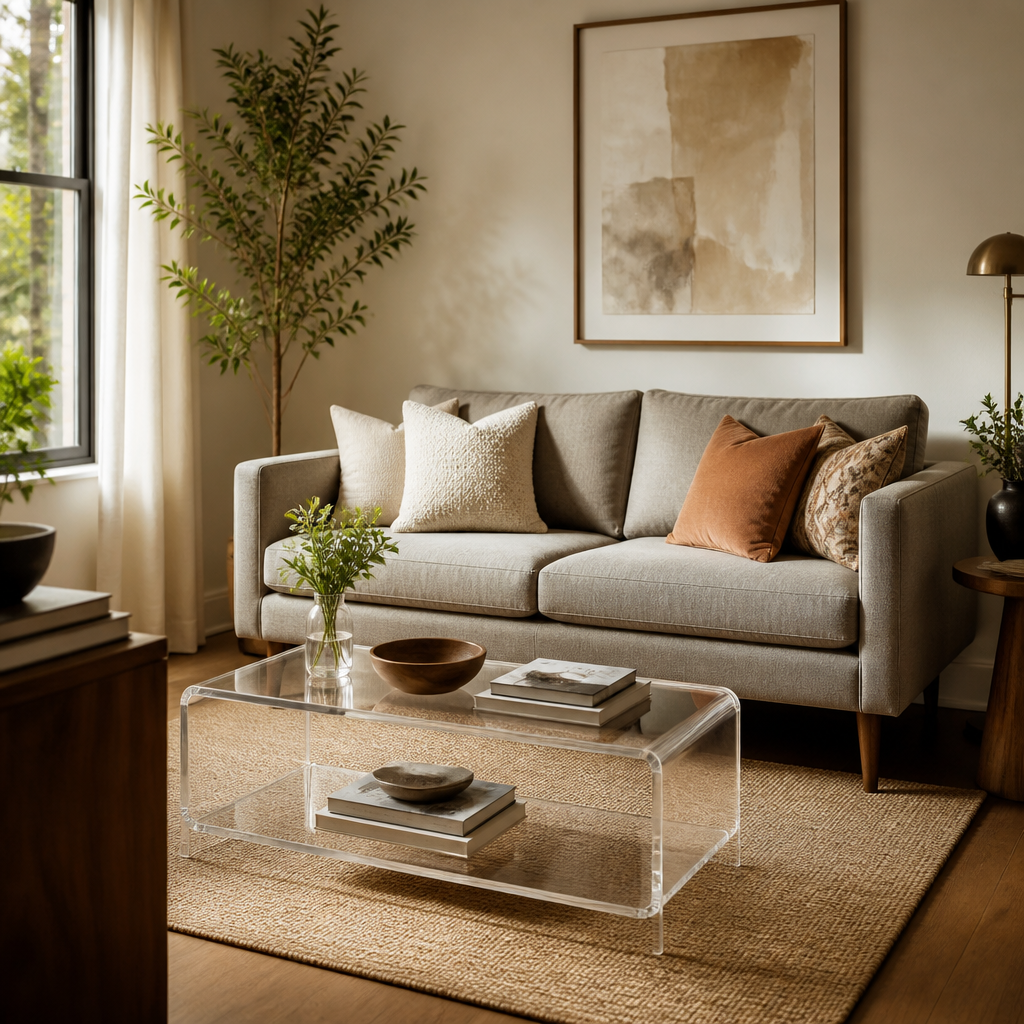
Visible floor space under furniture makes a room feel larger. Sofas and chairs on legs, glass tables, and wall-mounted nightstands all expose more floor than solid, skirted, or low-slung alternatives.
Limit the palette to two or three colors
A single cohesive color scheme prevents visual fragmentation, which is the number-one reason small rooms feel smaller than they are. Save contrast for one intentional accent, not four competing ones.
What usually makes compact rooms feel worse
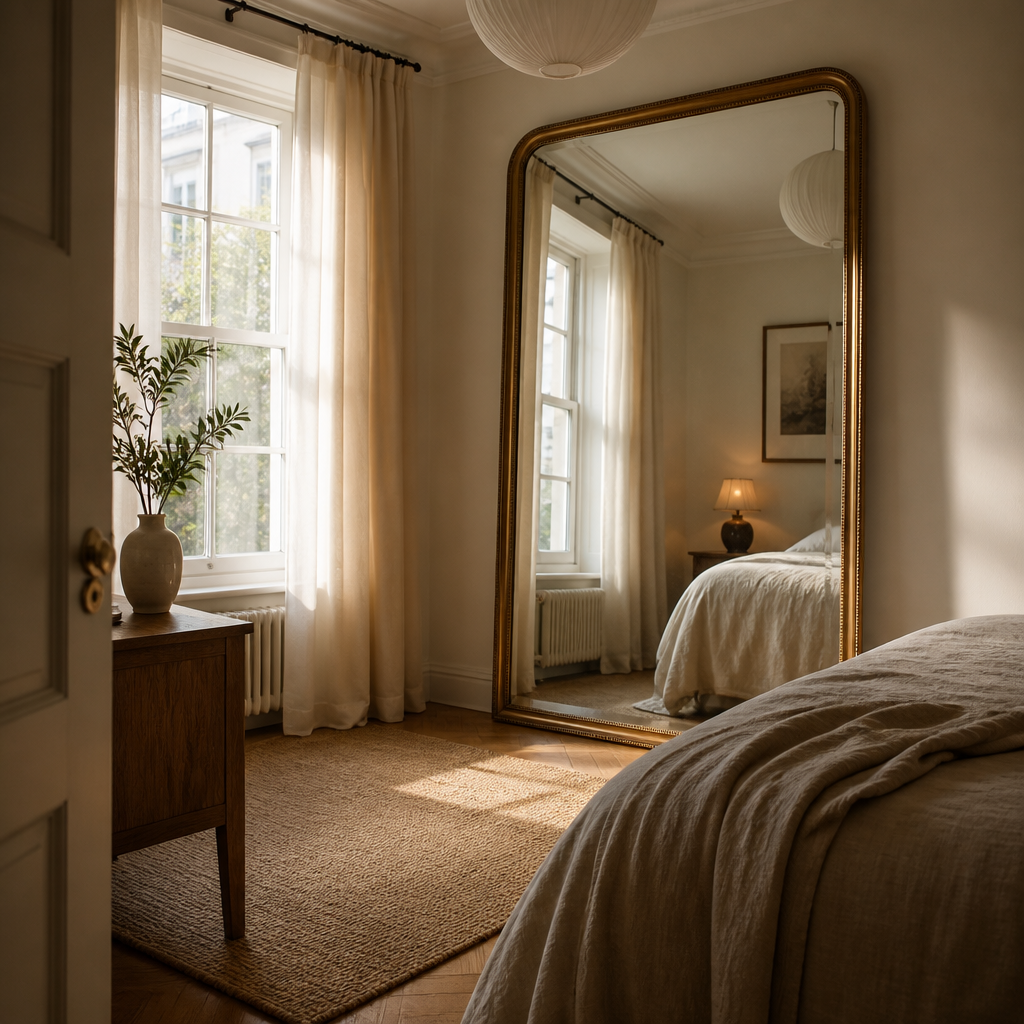
Light and reflection are disproportionately powerful in small rooms. Mirrors work best when they amplify daylight or repeat a strong view, not when they simply double a dark wall. Lamps at multiple heights prevent evening flatness, which is one reason small rooms can feel so much more cramped after dark if they rely on a single overhead fixture. Palette discipline helps in the same way: fewer competing finishes and more continuous value shifts make the room read as one calm volume instead of a set of chopped-up episodes. Small spaces rarely need more personality. They usually need more visual agreement.
Small rooms also demand better spending discipline. One bad anchor piece can waste both space and money at the same time. It is almost always worth prioritizing the bed, sofa, or desk that defines the room, then following with lighting and storage before decorative detail. In compact spaces, a few excellent decisions do more work than many average ones. That is the advantage of designing small: every correct move shows up immediately.