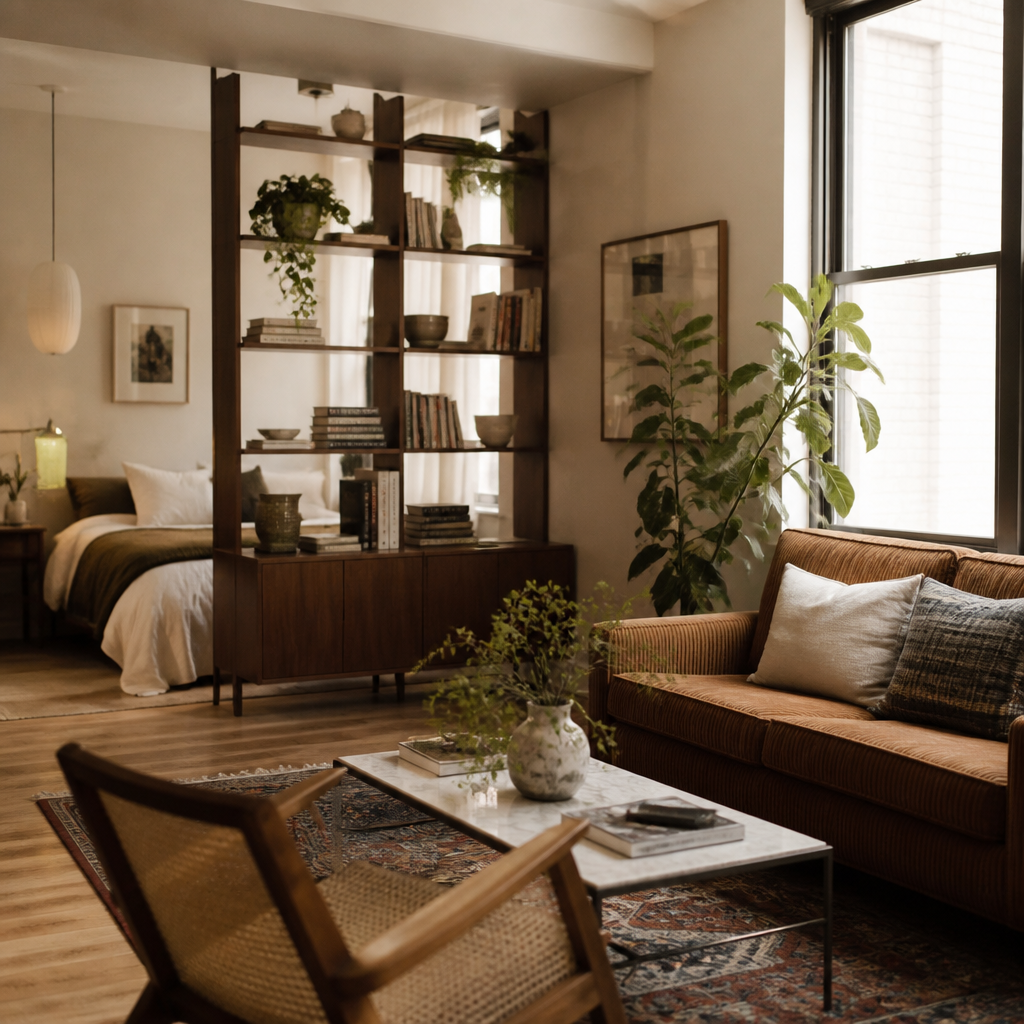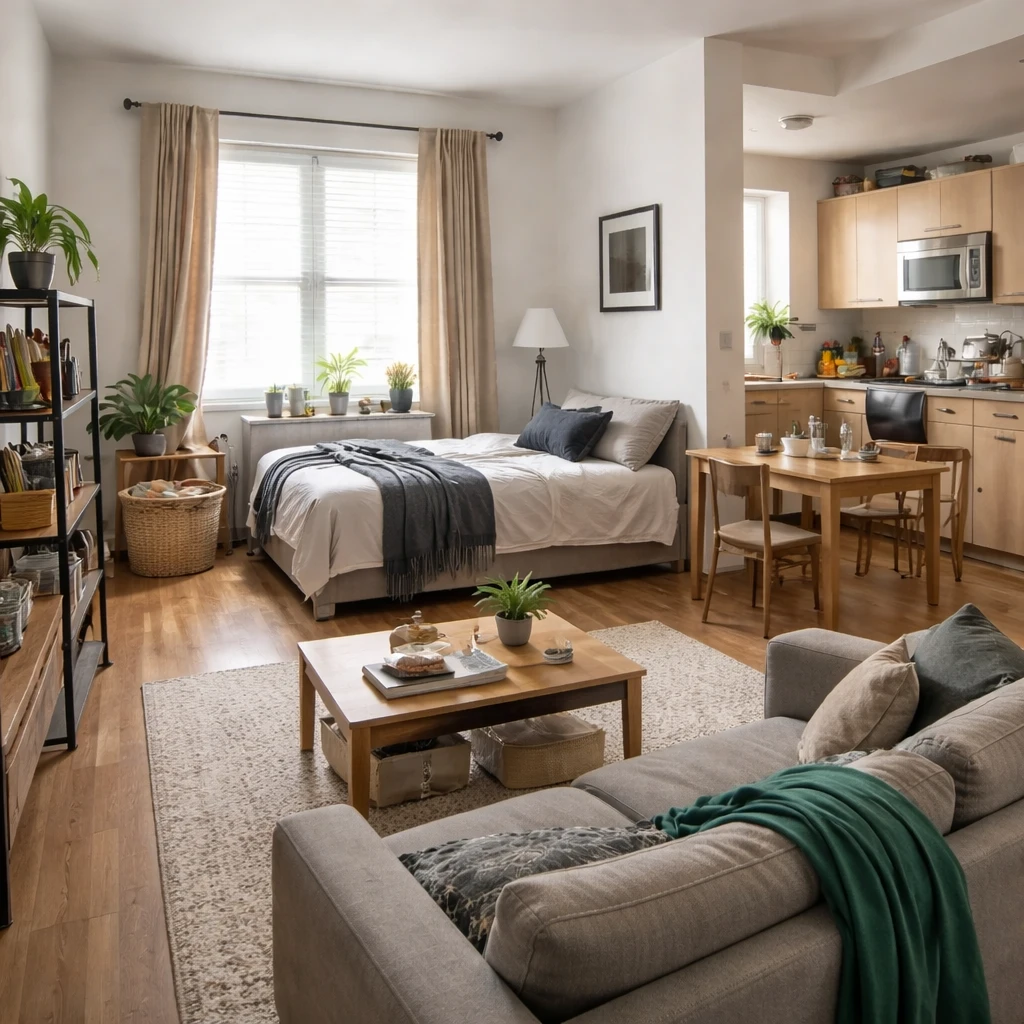
Studio apartment design requires zone planning because you're fitting multiple functions into one space. The key is defining zones first (sleep, work, living, storage), then choosing furniture and arrangement that supports each. These spaces require more intentional design than larger homes.
Effective strategies include: furniture that serves multiple purposes (storage ottomans, sofa beds), vertical storage solutions, visual separation through rugs or partial walls, and keeping circulation paths clear. The goal is a space that feels organized rather than cramped.
Multi-functional furniture is essential: beds with drawers underneath, desks that convert to dining tables, chairs that stack or fold. The best studio designs reveal their cleverness only on close inspection—they look like intentional small-space living, not crowded compromises.
What smaller rooms need most
Studios only start working once the room is treated as a system instead of as a tiny version of a one-bedroom apartment. One volume has to support sleep, work, lounging, storage, and sometimes dining, which means zoning becomes more important than decoration very quickly. The room needs visual boundaries without walls: bed area, work area, living area, and circulation should each read clearly enough that the brain knows what happens where. If every function bleeds into every other function, the room starts to feel like baggage storage with a window.
The first decision is which use deserves the calmest real estate. For some people that is the bed, for others the desk, and for others the seating area because work happens elsewhere. Once that priority is set, everything else can be organized around it. Rugs, open shelving, light placement, and furniture orientation can all act as dividers without stealing daylight the way heavy screens often do. Studios reward plans that are spatially honest rather than socially aspirational. If guests stay twice a year, the room should not be designed around them at the expense of the twelve hours a day you actually live there.
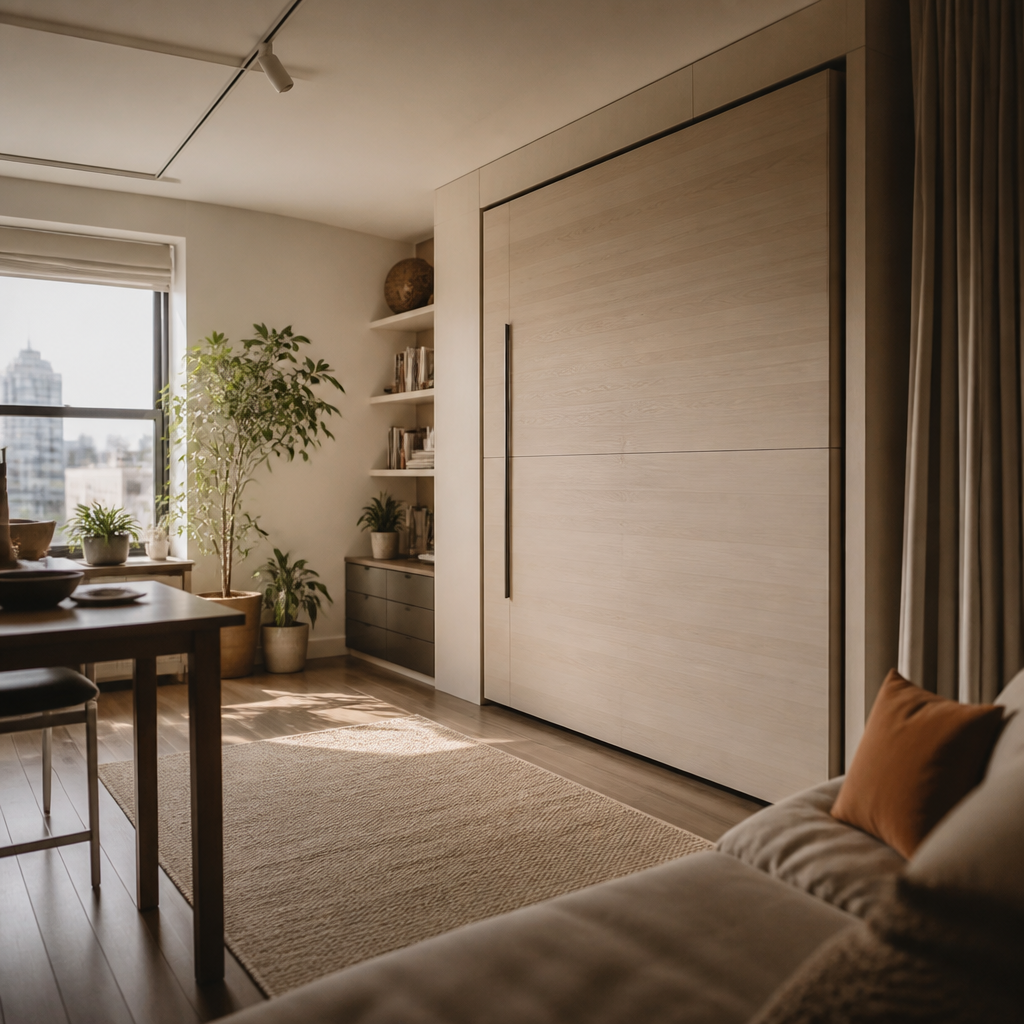
Furniture choice in studios is always a dimension problem first. Deep desks, bulky sectionals, oversized bed frames, and unnecessarily wide media pieces erase usable floor faster than most people expect. Murphy beds and storage beds can be smart, but only when their mechanisms and clearances genuinely improve the room instead of adding complexity. Kitchenettes need equal respect; even compact cooking zones should still preserve workable movement and prep surfaces. A studio succeeds when the furniture preserves floor, wall, and sightline value rather than consuming all three at once.
How to make the space work better
Measure every inch and note what cannot move
Studios reward precision. Record wall lengths, window positions, kitchenette clearances, and door swings. Measure your mattress — yes, it matters. In a studio, every foot of circulation competes with every foot of function.
Define zones with furniture, not walls
A bookcase perpendicular to the longest wall separates sleep from living. A rug under the dining area defines it without a single wall. In studios, zones are created by what sits on the floor, not what divides it.
Choose multi-functional anchor pieces
A bed with drawers underneath replaces a dresser. A dining table that doubles as a desk replaces a home office. A sofa that seats guests and faces the TV replaces both a lounge and a media center. Every piece should earn at least two jobs.
Prioritize vertical storage over floor storage
Wall-mounted shelves, over-door hooks, and tall narrow bookcases store as much as a wide dresser but consume a third of the floor space. In studios, the walls are your closet.
Control light layers for zone separation
A pendant over the dining area, a floor lamp by the sofa, and a bedside task lamp create distinct moods in a single room. When zones share overhead light, the room feels like one undifferentiated box — because it is.
Keep the palette tight and the furniture leggy
Limit yourself to two or three colors throughout the entire space. Choose furniture with visible legs and open bases. Both strategies make a 400-square-foot studio feel 30 percent larger than the same space filled with heavy, dark pieces.
What usually makes compact rooms feel worse
The most common studio mistake is trying to honor every conventional room category in full. A studio usually cannot support a proper living room, proper bedroom, proper dining room, and proper office all at full scale without visual and physical suffocation. That means one or two categories need to be compressed or merged: a console may replace a full desk, a drop-leaf table may replace a dining set, a single lounge chair may be enough if the sofa is correct. Good studio design is essentially the art of deciding which absences will feel liberating instead of lacking.
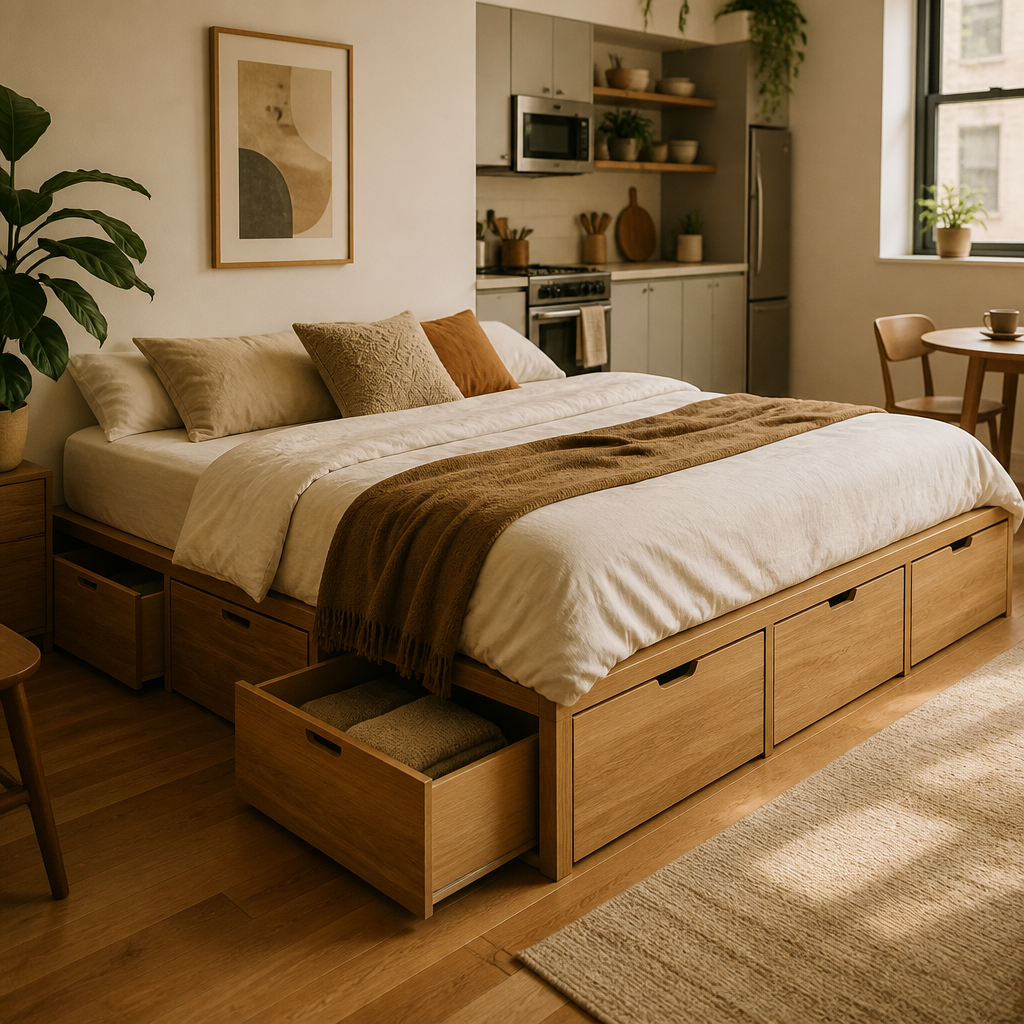
What makes a studio feel sophisticated is not that it disguises its square footage. It is that the room has a believable daily rhythm: where shoes land, where sleep happens, where work starts, where meals fit, and how clutter is contained before it colonizes the whole room. That clarity is what turns one room into several zones without ever pretending the apartment is bigger than it is.